
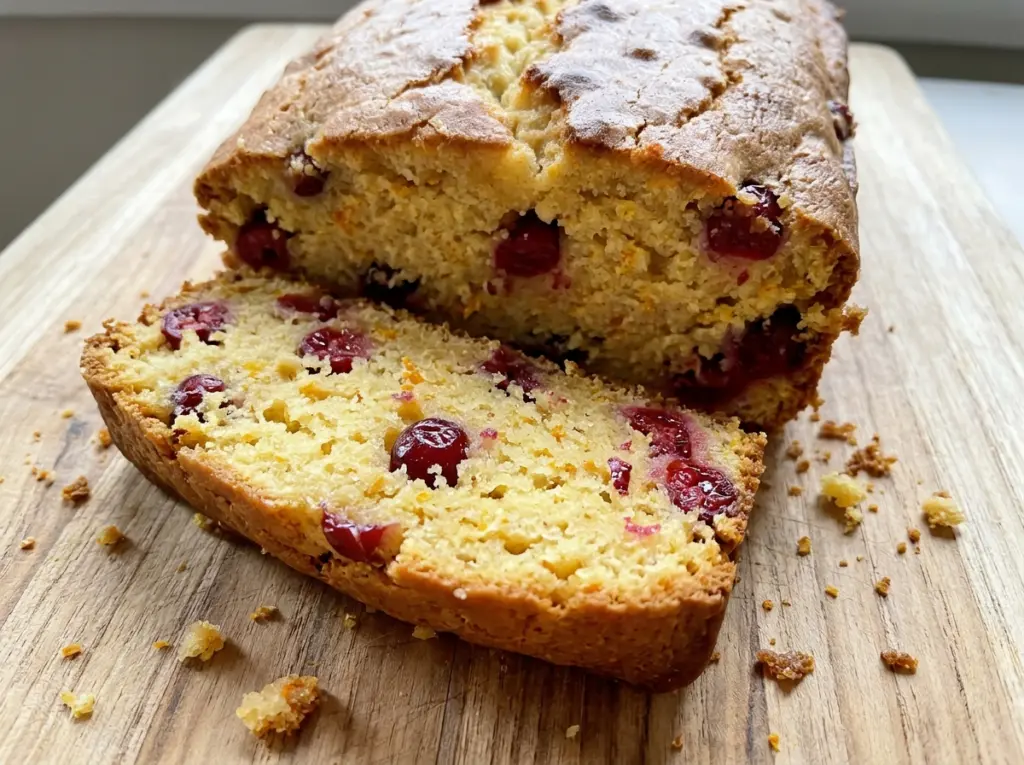
The cranberries pop against the spoon as I fold them through the thick batter, and a little orange zest perfumes the whole bowl. That’s the moment this cranberry orange breakfast cake starts to feel different from an ordinary coffee cake: the fruit is tart, the crumb is soft, and each bite has a bright citrus edge. I like it for breakfast or an afternoon slice, when a cake that isn’t overly sweet feels just right.
Sour cream gives the cake a moist, tender crumb, while the orange zest and juice make the flavor taste fresh rather than heavy. The batter is thick enough to hold the cranberries in place, but it still needs a gentle hand once the flour goes in. Mix just until combined, spread it into the pan, and bake until the top is golden and a toothpick comes out with a few moist crumbs. The result is a tender square cake with tart berries tucked through every slice.
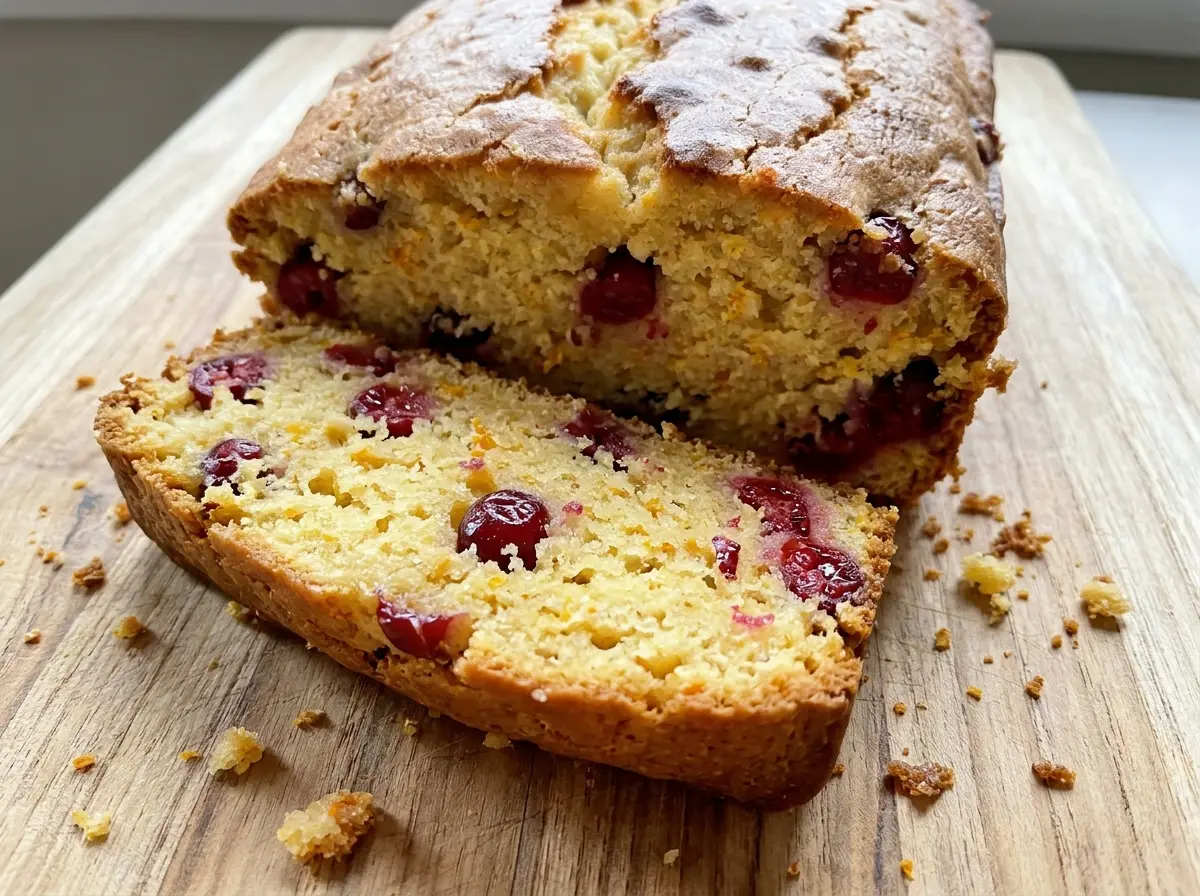
Kitchen Note
When I use frozen cranberries, I fold them into the batter straight from the freezer. Thawed berries release extra juice and can streak the batter before the cake even reaches the oven.
Save this cranberry orange breakfast cake for a slow morning: tender sour cream crumb, tart cranberries, and fresh orange in every slice.
Why the 9-Inch Square Pan Matters More Than It Looks
A square pan gives this batter a broad, even layer, which matters when the cake is studded with cranberries. The edges and center bake at a more similar pace than they would in a deeper pan, so you’re less likely to end up with dry edges while the middle is still underdone. It also gives the cake enough surface area for a golden top without spreading the batter into a thin, dry layer.
Changing the pan changes the depth of the batter, and depth changes how heat reaches the center. A smaller pan would make a thicker cake that needs a different bake, while a larger pan would make a thinner cake that could dry out sooner. For this version, stick with a greased 9-inch square pan. The even layer helps the cake bake through while keeping the cranberry pockets distributed from edge to edge.
What Sour Cream, Orange, and Cranberries Each Bring to the Crumb

- Sour cream — Its moisture and tang keep the cake tender and balance the fruit. Full-fat sour cream gives the richest crumb; plain full-fat Greek yogurt works in the same amount if that’s what you have, though the cake will be a little tangier and less rich.
- Orange zest and juice — Finely grated zest carries the fragrant orange oils, while the juice adds a gentle citrus note through the batter. Fresh zest makes the biggest difference here; grate only the colored outer peel, since the white pith underneath tastes bitter. Lemon zest and juice can stand in at the same amounts for a sharper citrus version.
- Cranberries — Fresh berries bring a firm, tart bite, and frozen berries work just as well in this batter. Choose berries that look plump and intact; very soft fresh berries can break apart as you fold them in.
- Butter and eggs — Softened butter creams with the sugar to give the cake its lift, so it should yield when pressed without looking greasy or melted. Room-temperature eggs blend more smoothly into the butter mixture than cold eggs straight from the refrigerator.
- Flour and leaveners — All-purpose flour gives the cake enough structure to support the fruit without making the crumb tough. Check that your baking powder and baking soda are fresh; old leaveners can leave a cake heavy even when the batter is mixed carefully.
Building the Batter for a Tender, Even Bake
Prepare the Pan and Dry Ingredients
Heat the oven to 350°F and grease a 9-inch square baking pan. Whisk the flour, baking powder, baking soda, and salt together in a medium bowl so the leaveners are evenly distributed. This takes only a few turns of the whisk, but it prevents a concentrated pocket of baking soda from landing in one part of the cake. Set the bowl aside while you cream the butter and sugar.
Cream the Butter and Sugar Until Fluffy
Beat the softened butter and granulated sugar in a large bowl with an electric mixer on medium speed for 2 to 3 minutes. The mixture should look lighter in color and fluffy rather than dense or greasy. If the butter is too firm, it won’t cream smoothly; if it’s melted, the mixture won’t trap air in the same way. Starting with properly softened butter gives the cake a lighter texture.
Add the Eggs and Citrus-Sour Cream Mixture
Beat in the eggs one at a time, letting each disappear into the mixture before adding the next. Mix in the sour cream, finely grated orange zest, and orange juice until the batter looks cohesive. If it seems slightly uneven at this stage, scrape down the sides of the bowl and mix briefly rather than beating it for a long stretch. The flour will bring the batter together.
Fold in the Cranberries and Bake
Add the dry ingredients and mix just until combined; stop when you no longer see dry flour. Gently fold in the cranberries, then spread the batter evenly in the prepared pan. Bake for 45 to 55 minutes, until the top is golden and a toothpick inserted into the cake portion comes out with a few moist crumbs. Don’t test directly through a cranberry, since its juice can make the toothpick look wetter than the cake crumb.
Give the Cake Time to Set
Leave the cake in the pan to cool for at least 15 minutes before cutting. The crumb is delicate while it’s hot, and slicing too early can make pieces crumble or smear rather than hold their shape. After that short rest, cut into squares and serve warm or at room temperature.
Three Simple Ways to Adapt the Citrus and Crumb
Make It Gluten-Free
Replace the all-purpose flour with the same amount of a 1-to-1 gluten-free baking flour blend that includes xanthan gum. The crumb may be a little more delicate, so fold gently and let the cake cool in the pan before cutting.
Trade the Orange for Lemon
Use lemon zest and lemon juice in place of the orange zest and juice, keeping the same amounts. The citrus will taste sharper and brighter beside the cranberries, with less of the round sweetness orange brings.
Use Greek Yogurt in Place of Sour Cream
Replace the sour cream with an equal amount of plain, full-fat Greek yogurt. It keeps the batter moist and adds a slightly more pronounced tang, though the cake won’t taste quite as rich.
Storage and Reheating
- Refrigerator: Store the cooled cake in an airtight container for up to 4 days. The crumb firms up when chilled, then softens as it comes to room temperature.
- Freezer: Freeze individual slices in a tightly wrapped layer, then place them in an airtight freezer container for up to 2 months. Thaw in the refrigerator or at room temperature.
- Reheating: Warm a slice in the microwave for about 10 seconds, then add a few seconds if needed. Long heating can dry the edges before the center warms through.
Questions That Come Up Before the First Slice
Cranberry Orange Breakfast Cake with Sour Cream
Ingredients
Equipment
Method
- Heat the oven to 350°F.
- Grease a 9-inch square baking pan.
- Whisk the flour, baking powder, baking soda, and salt together in a medium bowl.
- Beat the butter and sugar in a large bowl with an electric mixer on medium speed for 2 to 3 minutes, until light and fluffy.
- Beat in the eggs one at a time.
- Mix in the sour cream, orange zest, and orange juice.
- Mix the dry ingredients into the butter mixture just until combined.
- Gently fold in the cranberries.
- Spread the batter evenly in the prepared pan.
- Bake for 45 to 55 minutes, until golden and a toothpick inserted into the cake portion comes out with a few moist crumbs.
- Cool the cake in the pan for at least 15 minutes before cutting.