
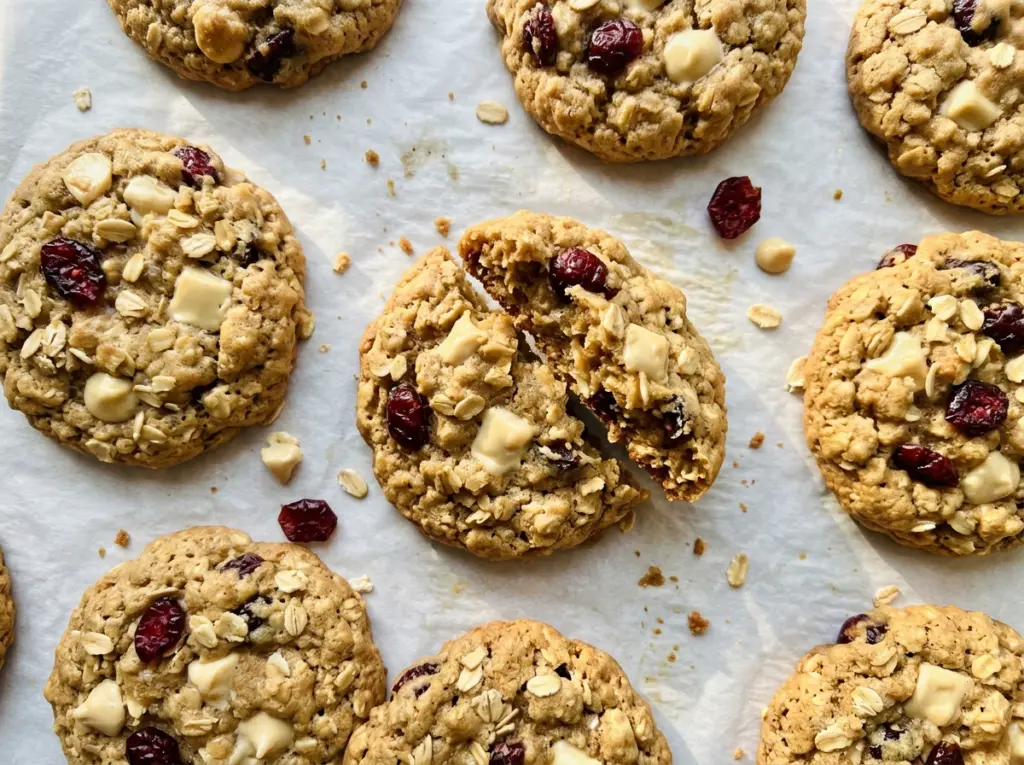
The edges start to turn golden while the centers still look a little soft, and that’s exactly when I want these cookies out of the oven. Cranberry Oatmeal White Chocolate Cookies have a chewy, oat-filled middle with little pockets of creamy sweetness and tart fruit. They’re substantial without feeling heavy, and each bite has a bit of contrast.
I like the way old-fashioned oats give the dough something to sink your teeth into, while the dried cranberries keep the white chocolate from making every bite taste sugary. The dough is easy to mix, but it does need a brief chill before baking; that pause makes it easier to portion and helps the cookies bake up with a soft middle.
This batch makes 36 cookies, so I bake them in rounds and keep the unbaked dough cold between trays. It’s a simple rhythm: mix, chill, scoop, and let the oven bring out those lightly golden edges.
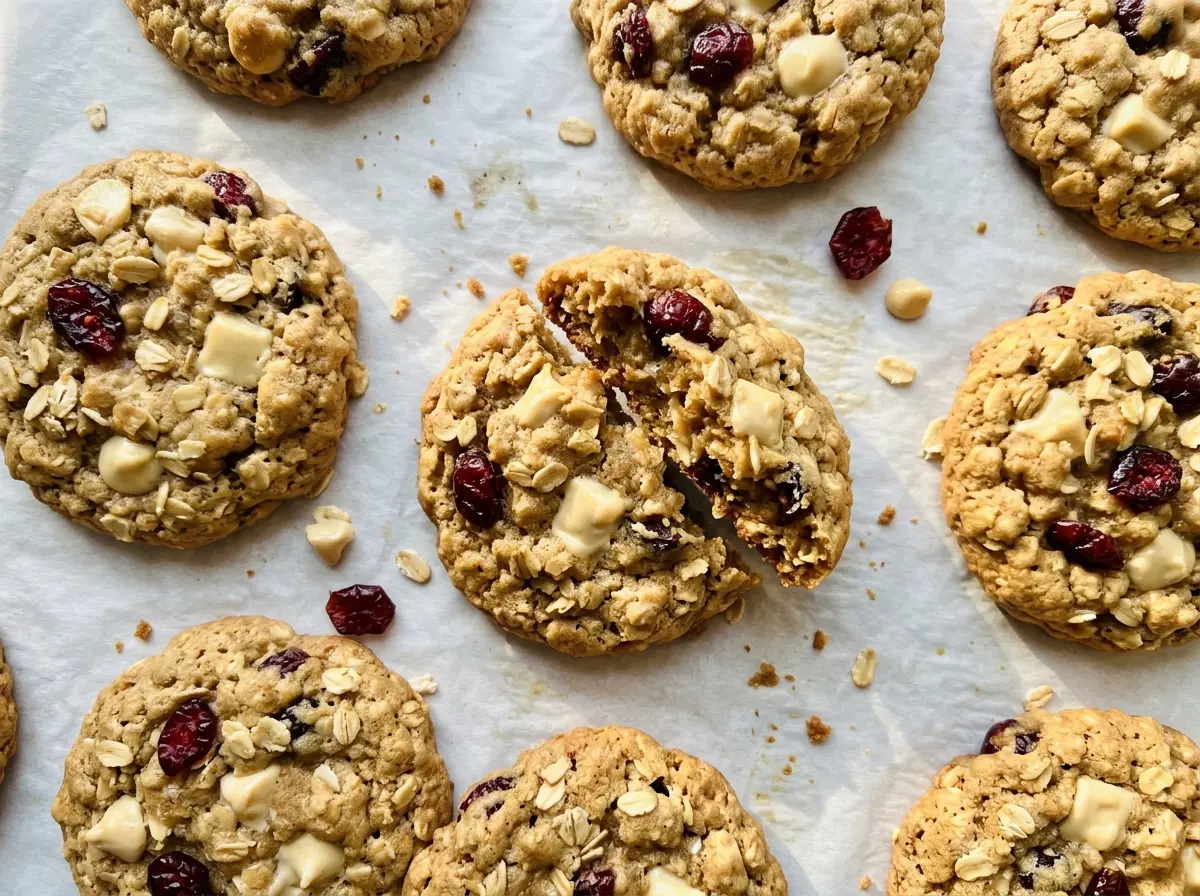
Kitchen Note
Let the baking sheet cool completely before you load the next round. A warm sheet starts softening the dough before it reaches the oven, and the cookies won’t bake as evenly.
Save these cranberry oatmeal white chocolate cookies for a bake when you want chewy oats, tart fruit, and creamy white chocolate in every bite.
Why These Cookies Need Both Brown Sugar and Granulated Sugar
Using two sugars here isn’t just a way to make the dough sweeter. Packed light brown sugar brings moisture and a soft, chewy quality to the centers. Granulated sugar helps balance that softness, so the cookies don’t bake up dense and damp all the way through. Together, they give the oats and mix-ins a tender cookie to hold onto, with edges that can turn lightly golden.
It’s also why I don’t add extra oats just because the dough looks soft after mixing. The oats continue to take up moisture as the dough rests, and the cookie’s texture depends on that balance between the flour, oats, and creamed butter and sugars. If you keep adding dry ingredients to make the dough feel firmer, the baked cookies can lose their tender chew. Let the chill do its job instead, and portion the dough once it’s had time to rest.
The balance matters with the mix-ins, too. Dried cranberries bring a tart note that cuts through the white chocolate, while the dough itself stays gently sweet rather than tasting like a candy cookie.
What the Oats, Cranberries, and White Chocolate Bring to the Dough

- Old-fashioned rolled oats — Their broad flakes give the cookies their hearty, chewy texture. Quick oats are a workable stand-in, but they absorb moisture differently and make a tighter, less distinct oat texture; use the same volume if that’s what you have.
- All-purpose flour and baking soda — Flour gives the dough enough structure to hold the fruit and chips, and baking soda helps the cookies spread and brown. Whisk the dry ingredients well before adding them so the baking soda doesn’t end up concentrated in one spot. A standard all-purpose flour works well here; a cup-for-cup gluten-free blend is the useful alternative described below.
- Butter and eggs — Softened butter creams smoothly with the sugars and gives the dough richness, while the eggs help bind the oats and flour. Regular grocery-store butter and eggs work; the butter should yield when pressed but shouldn’t look oily or melted. There isn’t a simple one-for-one egg swap that keeps this dough’s structure intact.
- Dried cranberries — Dried fruit gives you tart, concentrated bites without adding extra liquid to the dough. If you’re out, dried cherries work in the same volume and bring a rounder, less tangy fruit flavor.
- White chocolate chips — Chips hold their shape in the dough and leave creamy pockets after baking. Choose a brand you like eating on its own, since white chocolate is a noticeable part of each bite; semisweet chips make a less sweet, more bittersweet version.
- Vanilla extract — It rounds out the sweetness and keeps the butter-and-oat base from tasting flat. The extract you already keep in the pantry is fine; there’s no need to buy a special bottle for this batch.
Mixing and Baking the Dough Without Losing Its Chewy Centers
Cream the Butter and Sugars Until Smooth
Beat the softened butter with the brown sugar and granulated sugar using an electric mixer until the mixture looks creamy, about 2 minutes. Scrape down the bowl if you see a thick layer of butter clinging to the sides. Beat in the eggs one at a time, then mix in the vanilla. If the mixture looks a little uneven after an egg goes in, keep mixing until it comes together before adding the next one.
Bring the Dry Ingredients Together Gently
In a separate medium bowl, whisk the flour, oats, baking soda, and salt until evenly combined. Add the dry mixture to the butter mixture and mix just until no floury patches remain. Stop as soon as it comes together; beating for too long after the flour goes in can make the cookies less tender. Fold in the dried cranberries and white chocolate chips so they’re spread throughout the dough without crushing or smearing them.
Chill Before Scooping
Cover the bowl and refrigerate the dough for 30 minutes. While it chills, heat the oven to 350°F and line an 18×13-inch rimmed baking sheet with parchment paper. The rested dough should be easier to scoop than freshly mixed dough. Portion about 2 tablespoons per cookie, leaving about 2 inches between them so the cookies have room to spread.
Bake Until the Edges Turn Lightly Golden
Scoop 12 portions onto the prepared baking sheet and bake for 10–12 minutes. Watch the edges for a light golden color; the centers should still look slightly soft when you pull the tray out. Let the cookies sit on the sheet for 5 minutes, then move them to a wire rack to finish cooling. Keep the remaining dough refrigerated while you bake the next round.
Three Easy Ways to Change the Mix-Ins or Make a Gluten-Free Batch
Trade the Cranberries for Dried Cherries
Use the same volume of dried cherries in place of the cranberries. The cookies keep their chewy fruit bites, but the flavor is softer and less tart, which pairs especially well with the white chocolate.
Make the Chocolate Less Sweet
Swap the white chocolate chips for the same amount of semisweet chocolate chips. Their cocoa flavor gives the cookies a more bittersweet finish and makes the cranberries taste brighter; the dough and baking method stay the same.
Use a Gluten-Free Flour Blend
Replace the all-purpose flour with a cup-for-cup gluten-free flour blend and use certified gluten-free rolled oats. The cookies will still have their oat-and-fruit texture, though they may be a little more delicate after baking, so transfer them gently from the sheet.
Storage and Reheating
- Refrigerator: These cookies don’t need refrigeration. Keep them in an airtight container at room temperature for about 5 days; chilling them can make the oats and edges feel firmer.
- Freezer: Freeze fully cooled cookies in an airtight freezer-safe container, with parchment between layers, for up to 3 months. Let them thaw at room temperature before serving.
- Reheating: They’re best at room temperature, but you can briefly warm one in the microwave if you want a softer bite. Stop once it’s warm; heating too long can make the white chocolate overly soft and dry the edges.
Questions That Come Up While Baking These Oatmeal Cookies
Cranberry Oatmeal White Chocolate Cookies
Ingredients
Equipment
Method
- Heat the oven to 350°F and line an 18x13-inch rimmed baking sheet with parchment paper.
- In a large bowl, beat the butter, brown sugar, and granulated sugar with an electric mixer until creamy, about 2 minutes.
- Beat in the eggs one at a time.
- Mix in the vanilla extract.
- In a medium bowl, whisk together the flour, oats, baking soda, and salt.
- Mix the dry ingredients into the butter mixture just until combined.
- Fold in the dried cranberries and white chocolate chips.
- Cover and refrigerate the dough for 30 minutes.
- Scoop 12 portions, about 2 tablespoons each, onto the prepared baking sheet, spacing them about 2 inches apart.
- Bake for 10-12 minutes, until the edges are lightly golden and the centers still look slightly soft.
- Cool the cookies on the sheet for 5 minutes.
- Transfer the cookies to a wire rack.
- Let the sheet cool completely.
- Repeat with the remaining dough, keeping it refrigerated between batches; scoop 12 portions about 2 tablespoons each onto the prepared baking sheet, spacing them about 2 inches apart, and bake for 10-12 minutes, until the edges are lightly golden and the centers still look slightly soft.
- Cool the cookies on the sheet for 5 minutes, transfer them to a wire rack, and let the sheet cool completely before repeating with any remaining dough.