
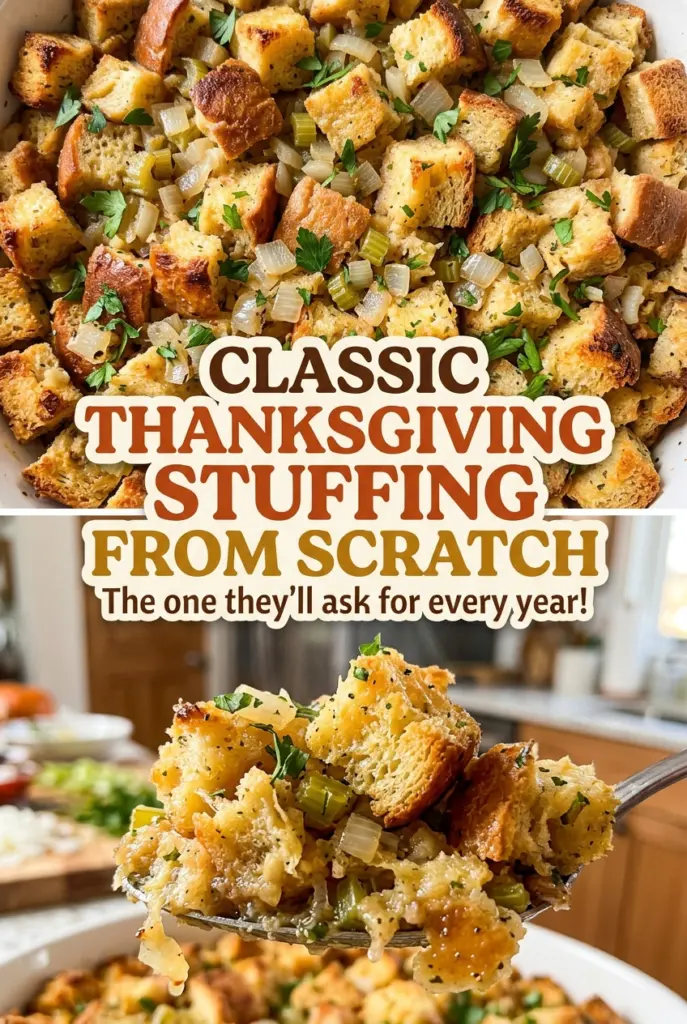
When bread cubes are still soft in the middle, they soak up broth unevenly and the stuffing can bake up heavy instead of tender. For this Classic Thanksgiving Stuffing from Scratch, I dry the bread first, then let the softened onion and celery bring flavor into every corner of the pan.
The broth and eggs get whisked together before they meet the bread, which makes it easier to moisten everything evenly without crushing the cubes. A covered bake gives the center time to set; uncovering the dish at the end lets the top turn golden. The result is savory stuffing with a soft middle and browned edges.
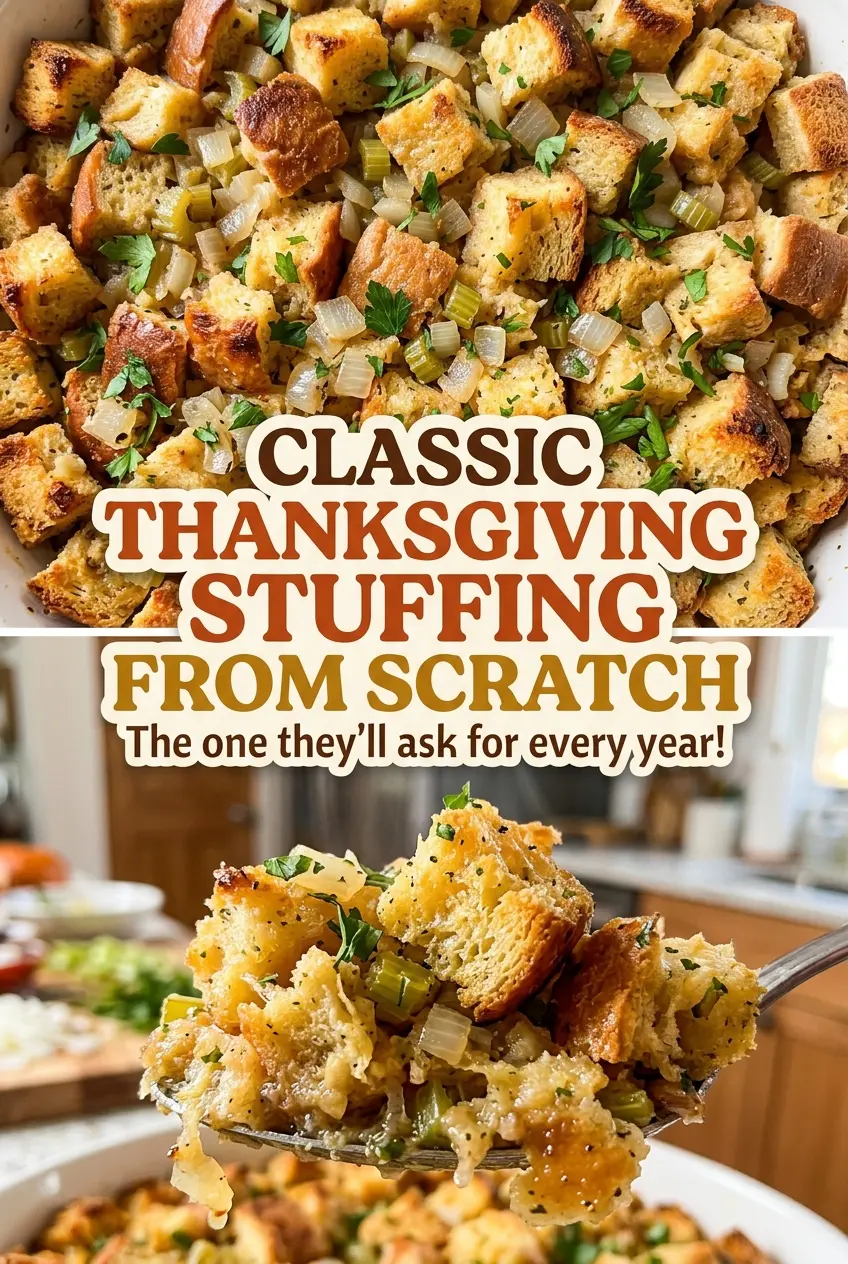
Kitchen Note
A browned top doesn’t tell you whether the center has set. I check the middle with an instant-read thermometer and look for 160°F before taking the dish out of the oven.
Save this classic Thanksgiving stuffing for its tender center, golden top, and straightforward from-scratch method.
Why the Bread Has to Be Dry Before It Meets the Broth
Stuffing can turn dense when the bread goes into the bowl soft and fresh. The cubes collapse as they absorb liquid, so the finished dish loses the distinct, tender pieces that make a good scoop. Drying the bread gives it a sturdier structure and leaves room for the broth mixture to soak in rather than pooling between soft cubes.
Dry doesn’t mean toasted brown or rock-hard. The cubes should feel dry through the center, but they shouldn’t have the deep color or crispness of croutons. That distinction matters because the stuffing still spends time baking with broth under foil. Starting with browned bread can make the exposed edges too firm before the middle has finished cooking, while bread that’s merely dry takes on the savory liquid and stays tender.
White Bread or Sourdough: The Choice That Changes Every Bite
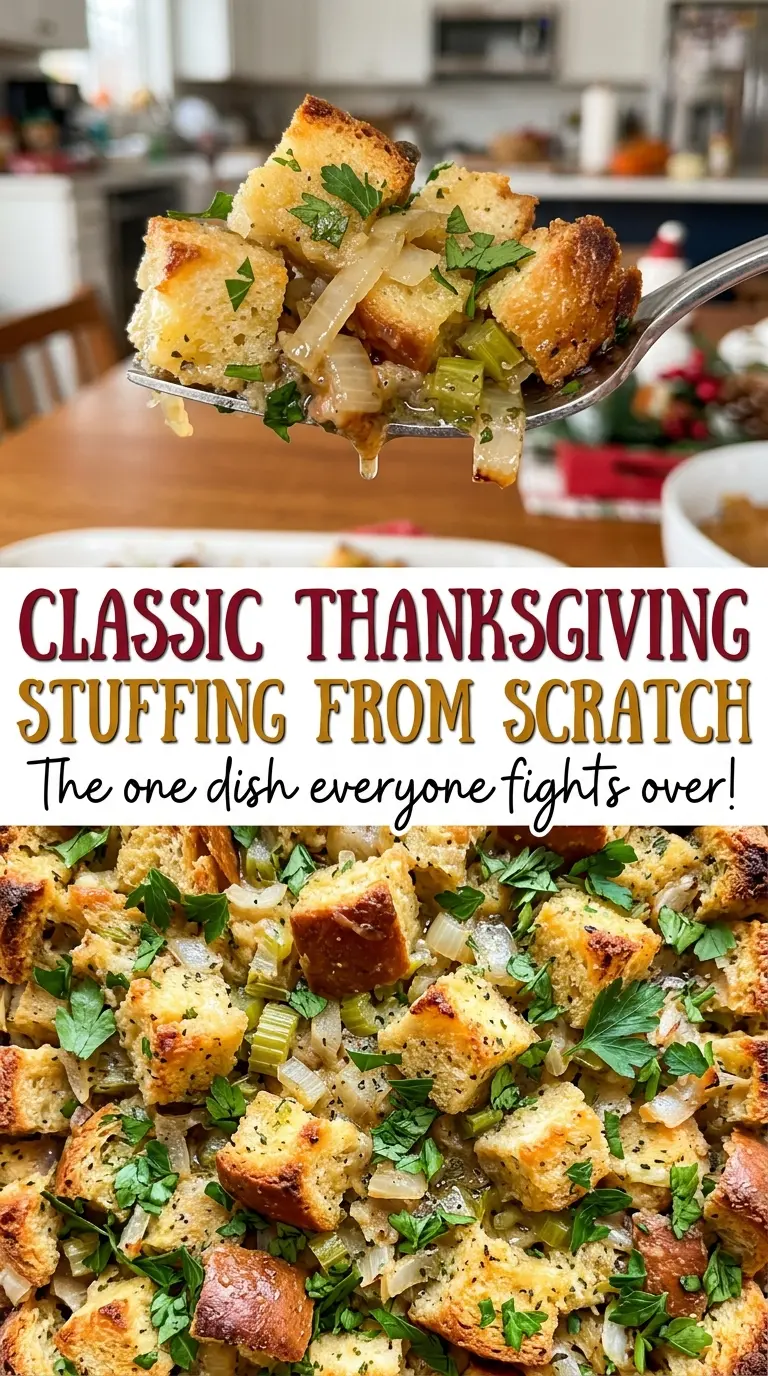
- Day-old white or sourdough bread — White bread gives you a familiar, mild base; sourdough brings a gentle tang that stands up to the sage. Use bread that’s a little stale if you have it, and cut the cubes evenly so they dry at a similar pace. There’s no need to buy an expensive loaf for this—the texture matters more than artisan styling.
- Unsalted butter — It carries the onion, celery, and dried herbs as they soften in the skillet, while keeping the seasoning predictable. A standard grocery-store butter works well here; there’s no need for a specialty brand.
- Yellow onion and celery — These soften into the base of the stuffing and add savory sweetness and a gentle, vegetal flavor. Dice both so the pieces are small enough to mix through the bread rather than gathering in a few bites.
- Dried sage and thyme — Dried herbs suit the skillet step because a brief minute in the warm butter wakes up their aroma. Check that your jars still smell fragrant; old, faded herbs won’t bring the same savory note.
- Low-sodium chicken broth — Its savory flavor supports the bread without making the finished dish overly salty. Low-sodium broth is especially useful here because the stuffing also gets kosher salt; an inexpensive carton is fine.
- Eggs and fresh parsley — The eggs help the moistened bread hold together after baking, while chopped parsley adds a fresh, green note against the dried herbs. Use parsley that looks crisp rather than wilted, and whisk it into the liquid mixture so it distributes throughout.
How to Build the Stuffing Without Crushing the Bread
Dry the Cubes Without Browning Them
Heat the oven to 300°F and spread the bread cubes across two rimmed baking sheets. Bake for 35 to 45 minutes, switching the sheets’ positions halfway through, until the cubes feel dry but haven’t browned. Keep an eye on them toward the end, since different loaves can dry at different rates. If the outside is coloring, take them out rather than pushing for a darker toast.
Soften the Aromatics in Butter
Grease a 9×13-inch baking dish with 1 tablespoon of butter. Melt the remaining 7 tablespoons in a large skillet over medium heat, then add the diced onion and celery. Cook for 8 to 10 minutes, stirring occasionally, until both have softened; they should be tender, not browned. Stir in the sage and thyme and cook for 1 minute, just until fragrant.
Moisten the Bread Evenly
Transfer the dried cubes to a large bowl and add the onion mixture, scraping in the buttery herbs. In a separate bowl, whisk together the chicken broth, eggs, kosher salt, black pepper, and chopped parsley. Pour the liquid over the bread and toss until the cubes are evenly moistened. If you see dry patches at the bottom of the bowl, keep tossing gently instead of pressing down on the bread.
Bake Covered, Then Uncover for Color
Transfer the mixture to the prepared dish and cover it tightly with foil. Bake at 350°F for 30 minutes, then remove the foil and bake for 20 to 25 minutes more, until the top is golden. The uncovered portion of baking gives the surface time to brown while the stuffing finishes in the center. Let it rest for 10 minutes before serving so the hot, moist mixture settles into easier-to-scoop portions.
Two Simple Ways to Shift the Flavor
Choose sourdough for a livelier, tangier stuffing
Use sourdough in place of white bread for a more pronounced, pleasantly tangy flavor. It gives the sage and thyme a slightly bolder backdrop while keeping the same cube-based texture.
Leave out the parsley for a more traditional herb note
Omit the fresh parsley if you want the dried sage and thyme to lead the flavor. The stuffing will lose that fresh, green lift, but the bread, aromatics, and buttery herbs still make a savory side.
Storage and Reheating
- Refrigerator: Refrigerate leftovers within 2 hours and keep them for 3 to 4 days. The top will soften as it sits.
- Freezer: Freeze cooled portions in an airtight container for up to 1 month for the best texture. Thaw overnight in the refrigerator.
- Reheating: Reheat covered in a 350°F oven until the center reaches 165°F. Keep it covered so the bread doesn’t dry out; uncover briefly at the end if you want to refresh the top.
Questions That Come Up While Making Thanksgiving Stuffing
Classic Thanksgiving Stuffing from Scratch
Ingredients
Equipment
Method
- Heat the oven to 300°F.
- Spread the bread cubes across two rimmed baking sheets and bake for 35 to 45 minutes, switching the sheets’ positions halfway through, until the cubes are dry but not browned.
- Grease a 9x13-inch baking dish with 1 tablespoon of the butter.
- Melt the remaining 7 tablespoons butter in a large skillet over medium heat.
- Add the onion and celery and cook for 8 to 10 minutes, stirring occasionally, until softened.
- Stir in the sage and thyme and cook for 1 minute.
- Transfer the dried bread cubes to a large bowl and add the onion mixture.
- In a separate bowl, whisk together the broth, eggs, salt, pepper, and parsley.
- Pour the broth mixture over the bread and toss until evenly moistened.
- Transfer the mixture to the prepared baking dish and cover tightly with foil.
- Bake at 350°F for 30 minutes.
- Uncover and bake for 20 to 25 minutes, until the top is golden and the center reaches 160°F on an instant-read thermometer.
- Let the stuffing rest for 10 minutes before serving.