
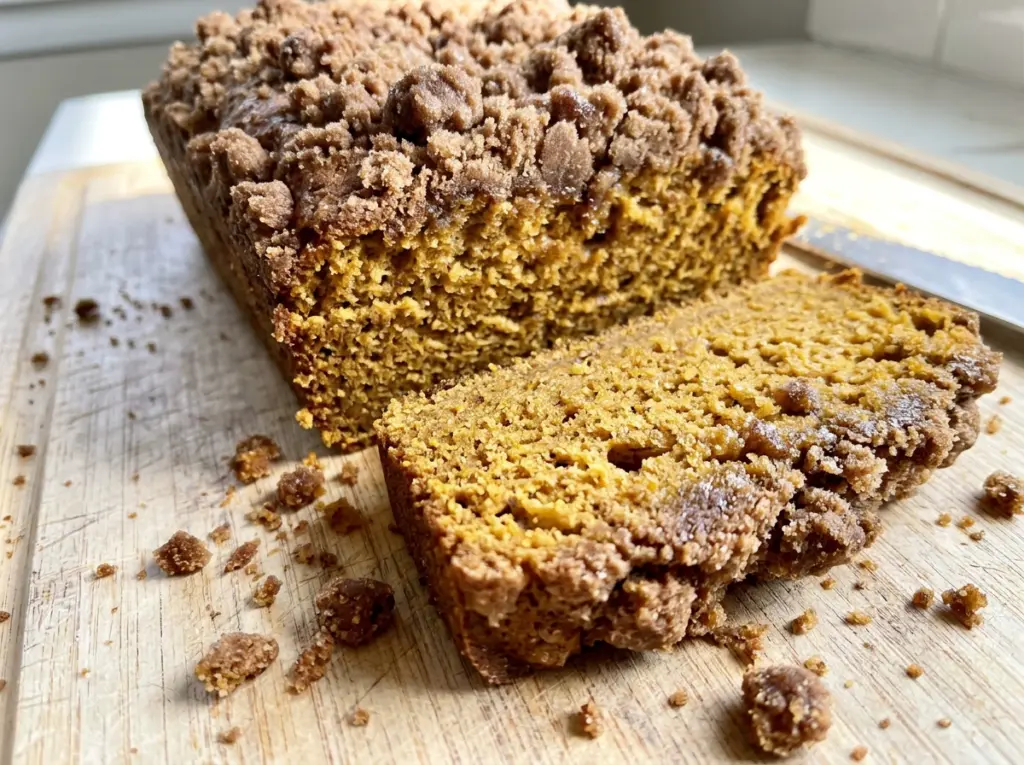
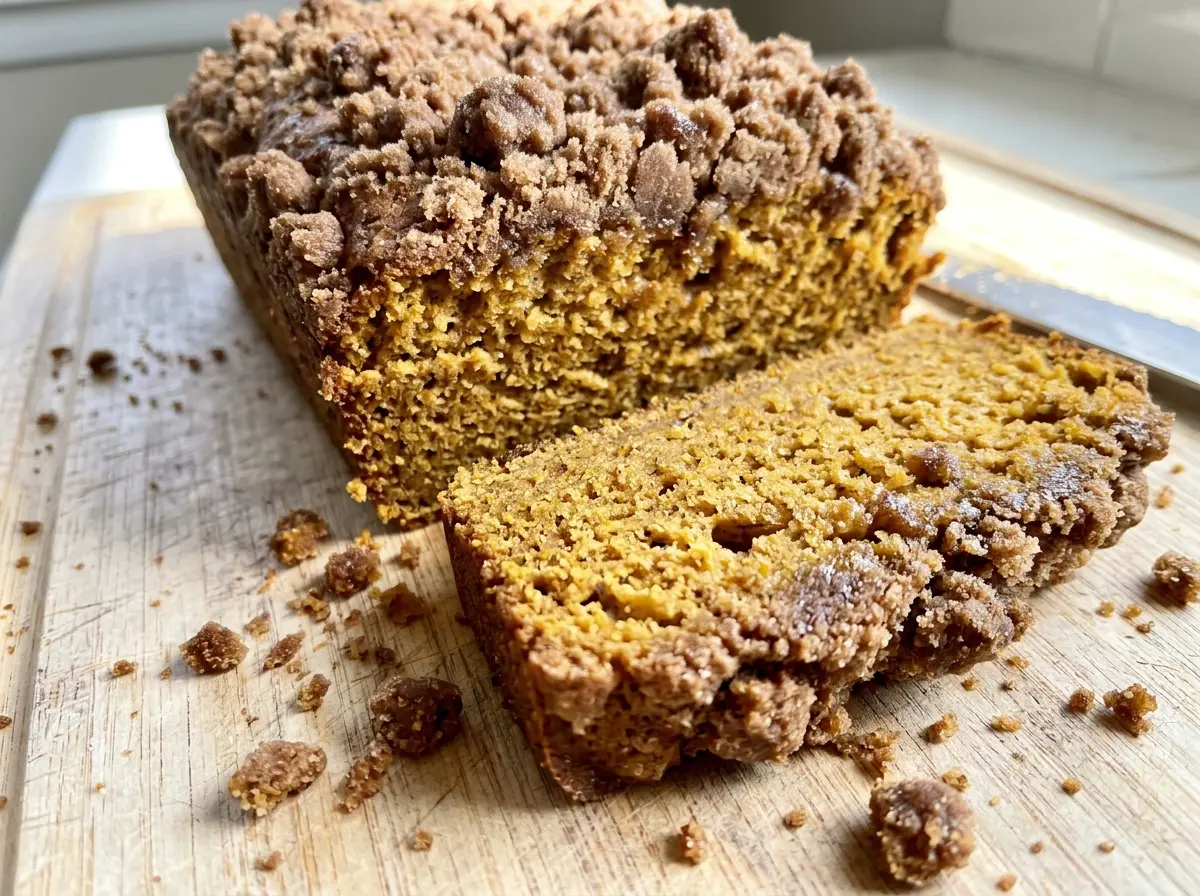
The streusel should come out of the oven in crisp, golden clumps, while the pumpkin bread underneath stays soft enough to leave a few moist crumbs on the knife. That contrast is what makes this loaf worth the extra bowl. I like how the oats toast at the edges and the cinnamon settles into the sweet pumpkin aroma without turning the topping into a thick, sugary crust.
This is a straightforward loaf to mix, but it rewards a gentle hand once the flour goes in. I fold only until the last dry streak disappears, then spread the batter evenly so the streusel has a level place to sit. Plain canned pumpkin puree keeps the pumpkin flavor clear, and vegetable oil gives the crumb a tender, moist texture. The finished slices are warmly spiced, tender, and capped with a crisp oat topping.
Kitchen Note
Give the loaf the full 15 minutes in its pan before turning it out; the sides are delicate while it’s hot. Then let it cool completely on the rack before slicing, so the soft crumb has time to settle and the slices hold their shape.
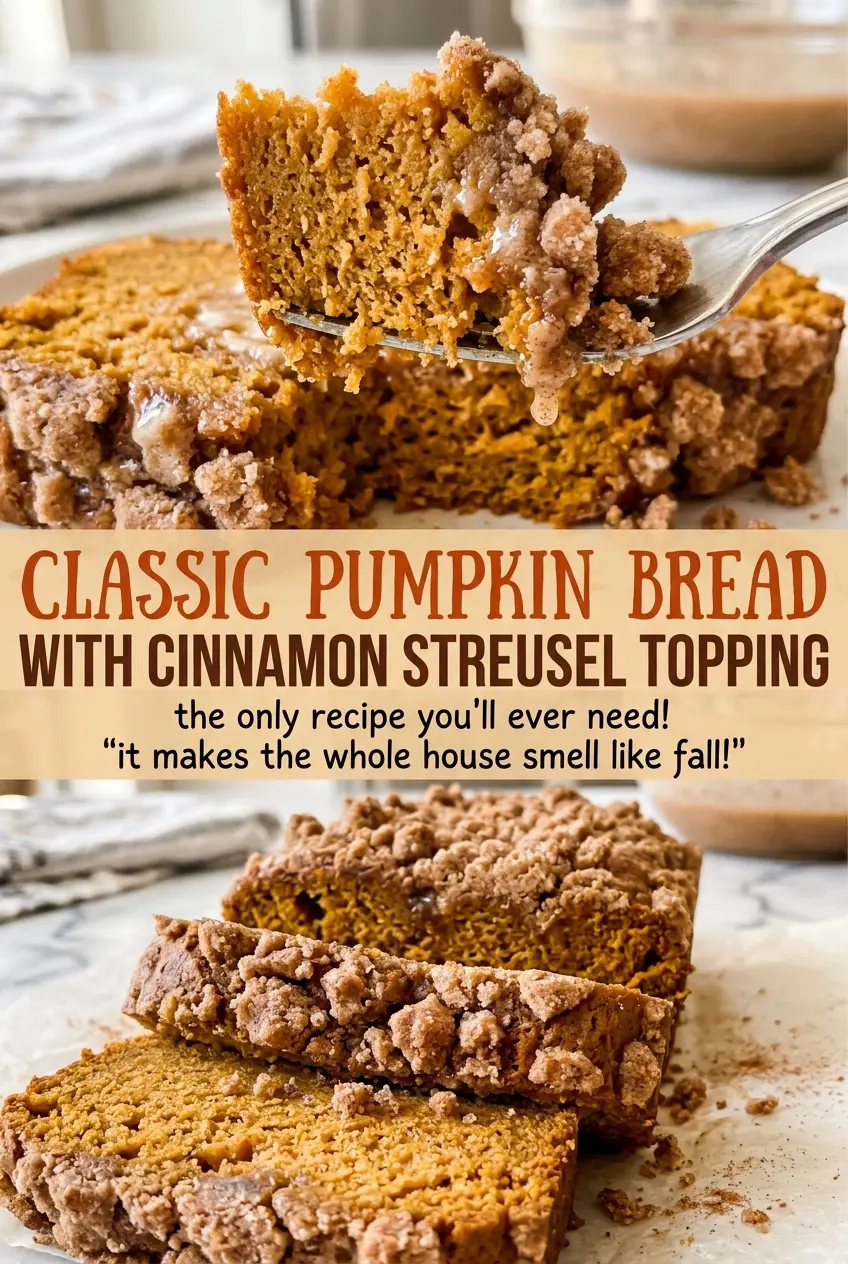
Save this classic pumpkin bread with its cinnamon-oat streusel for a cozy bake: tender pumpkin crumb under a crisp, buttery top.
Why One Extra Stir Can Make Pumpkin Bread Heavy
Pumpkin batter looks forgiving, but once the flour meets the wet ingredients, every extra turn starts developing gluten. That structure is useful in chewy bread; in this loaf, too much of it can make the crumb tight and heavy instead of tender. The goal isn’t to beat the batter smooth. It’s to bring the wet and dry mixtures together without working the flour any longer than necessary.
Whisking the dry ingredients separately helps distribute the baking soda, baking powder, salt, and spice before they reach the moist pumpkin mixture. When you fold them together, stop as soon as you can’t see dry flour. A few small lumps are far less concerning than a batter that’s been stirred until perfectly sleek. The batter will look thick, and that’s useful here: it holds the streusel on top rather than letting the topping disappear into the loaf.
- Whisk the dry ingredients thoroughly before adding them.
- Fold with a spatula, scraping along the bottom of the bowl.
- Stop when the flour streaks disappear; don’t keep stirring to chase every small lump.
What the Pumpkin, Oil, and Oat Topping Each Bring
- Canned pumpkin puree — Use plain puree, not pumpkin pie filling, which is already sweetened and spiced. A standard canned puree is the dependable choice for this loaf; homemade puree can vary in water content and may change the crumb.
- All-purpose flour — It gives the bread enough structure without making it chewy. Measure without packing it into the cup; excess flour can leave the loaf dry. A 1-to-1 gluten-free baking blend is the practical replacement for a gluten-free version, as described below.
- Vegetable oil — Oil keeps the crumb moist and tender after cooling. Neutral canola oil works in the same amount if that’s what you have; a strongly flavored oil would compete with the pumpkin spice.
- Eggs and granulated sugar — The eggs help bind the batter, while the sugar sweetens and supports a soft crumb. Whisk them well with the oil and pumpkin so the wet mixture is smooth before the flour goes in.
- Pumpkin pie spice and vanilla — The spice gives the loaf its familiar warm aroma, and vanilla rounds it out. Keep the pumpkin pie spice rather than replacing it with extra cinnamon; the blend brings more than one spice note.
- Old-fashioned oats and light brown sugar — Rolled oats make the streusel chunky and crisp, while brown sugar creates sweet, toasty clumps. Quick oats make a finer, less distinct topping, so old-fashioned oats are worth using here.
- Cold unsalted butter — Small cold pieces are easy to rub into the oats and sugar, forming coarse clumps that bake into the topping. If you need a dairy-free loaf, firm plant-based butter sticks can replace it in the same amount; soft tub spreads are harder to work into clumps.
Build the Streusel and Batter Without Losing Their Texture
Rub the Butter Into Coarse Streusel Clumps
Stir the oats, packed brown sugar, and cinnamon together in a small bowl. Add the cold butter pieces and work them in with your fingertips until the mixture forms coarse clumps, rather than a uniform sandy powder. If the butter starts to soften against your hands, pause and chill the bowl briefly. Refrigerate the streusel while you mix the bread batter.
Whisk the Dry and Wet Mixtures Separately
Heat the oven to 350°F and coat a 9×5-inch loaf pan with nonstick cooking spray. Whisk the flour, baking soda, baking powder, salt, and pumpkin pie spice in a medium bowl so the leaveners are evenly dispersed. In a large bowl, whisk the granulated sugar, oil, eggs, pumpkin puree, and vanilla until smooth. A smooth wet mixture makes it easier to fold in the flour without overworking the batter.
Fold, Fill, and Add the Topping
Add the flour mixture to the pumpkin mixture and fold just until no dry streaks remain. Scrape the batter into the prepared pan, then spread it evenly into the corners. Sprinkle the chilled streusel over the surface rather than pressing it into the batter. An even layer gives the topping a chance to brown across the loaf.
Bake Until the Center Has Moist Crumbs
Bake for 55 to 65 minutes, checking the center with a toothpick. It’s ready when the toothpick comes out with a few moist crumbs, not wet batter; waiting for a completely clean pick can leave the loaf dry. If the streusel gets dark before the center is baked, tent the pan loosely with foil. Cool the bread in the pan for 15 minutes, then turn it onto a wire rack to cool completely.
Three Practical Ways to Adapt This Pumpkin Loaf
Make It Gluten-Free
Replace the all-purpose flour with the same amount of a 1-to-1 gluten-free baking flour blend that includes xanthan gum, and use certified gluten-free oats. The loaf may have a slightly more delicate crumb, so let it cool completely before cutting.
Use a Dairy-Free Streusel
Swap the unsalted butter for an equal amount of firm plant-based butter sticks. The topping will still form clumps, though its flavor may be a little less buttery than the original.
Bake It Without Streusel
Leave off the oat topping for a simpler pumpkin loaf. The bread will have a softer, plain top instead of the crisp, sweet contrast, and you can follow the same doneness cue for the center.
Storage and Reheating
- Refrigerator: Store cooled bread in an airtight container for up to 5 days. The crumb may feel firmer when chilled.
- Freezer: Freeze the whole cooled loaf or individual slices, tightly wrapped, for up to 3 months. Thaw wrapped at room temperature so condensation stays on the wrapping rather than the bread.
- Reheating: Warm an individual slice in the microwave for about 10 to 15 seconds. Longer heating can dry the crumb, so use short bursts if it needs more warmth.
Questions That Come Up While Baking Pumpkin Bread
Classic Pumpkin Bread with Cinnamon Streusel Topping
Ingredients
Equipment
Method
- Stir the oats, brown sugar, and cinnamon in a small bowl.
- Work in the cold butter with your fingertips until coarse clumps form.
- Refrigerate the streusel while you prepare the bread.
- Heat the oven to 350°F.
- Coat a 9x5-inch loaf pan with nonstick cooking spray.
- Whisk the flour, baking soda, baking powder, salt, and pumpkin pie spice in a medium bowl.
- In a large bowl, whisk the granulated sugar, oil, eggs, pumpkin puree, and vanilla until smooth.
- Add the flour mixture to the pumpkin mixture and fold just until no dry streaks remain.
- Scrape the batter into the prepared pan and spread it evenly.
- Sprinkle the streusel over the top.
- Bake for 55 to 65 minutes, until a toothpick inserted in the center comes out with a few moist crumbs; if the topping gets dark before the loaf is done, tent the pan loosely with foil.
- Cool the bread in the pan for 15 minutes.
- Turn it out onto a wire rack.
- Cool completely before slicing.