

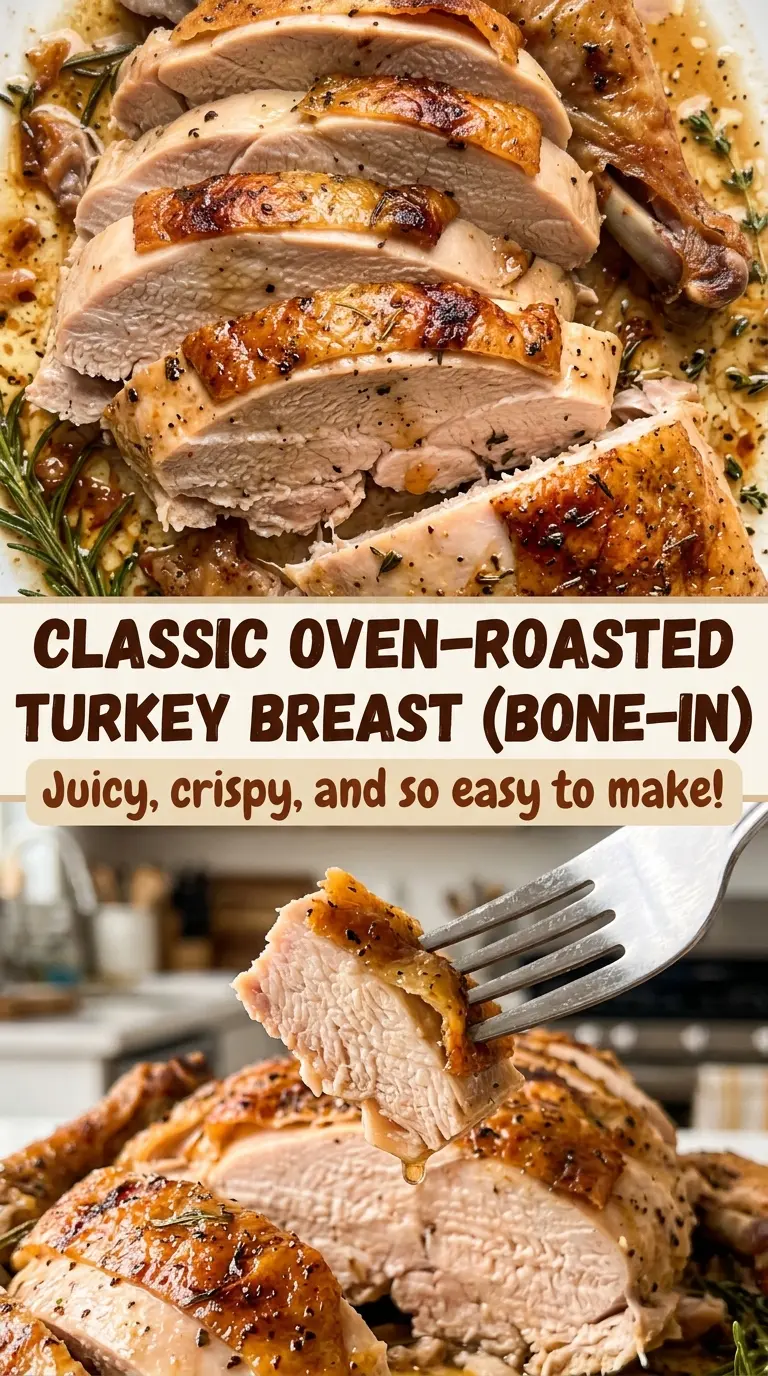
The skin is the first place I look when I’m working the butter over a turkey breast. If it tears while you loosen it, there’s less room to tuck the seasoning where it can reach the meat. I ease it back slowly, then work the butter mixture underneath and across the outside. That simple split is what gives this classic oven-roasted turkey breast its seasoned meat and savory skin.
A bone-in breast is a practical roast when you want turkey without cooking a whole bird, but its shape makes timing a little less predictable than the clock suggests. I use the roasting time as a window and rely on a thermometer in the thickest part of the breast. Once it’s rested, the meat is moist and easy to carve, with thyme and garlic woven through each slice.

Kitchen Note
Let the butter soften until it spreads easily, but don’t melt it. Soft butter stays in place under the skin instead of running off before the turkey goes into the oven.
Save this classic oven-roasted turkey breast for a smaller holiday table or Sunday dinner, with garlic-thyme butter tucked under the skin.
Why the Butter Goes Under the Skin as Well as Over It
Butter on the outside seasons the skin, but it can’t do the same job as butter spread directly against the breast meat. The skin forms a layer between the two, so dividing the seasoned butter gives you coverage on both sides of that barrier. As the turkey roasts, the outside gets the butter and seasoning while the layer under the skin sits right against the meat.
This matters on a breast because there’s less surrounding meat than on a whole turkey, and the breast is the part you’re carving for serving. Keeping the skin intact gives you a natural pocket for the butter; tearing it makes that placement harder and leaves a gap. The mixture also needs to be evenly combined before you start, so one area doesn’t get all the garlic or thyme while another gets mostly butter. Take a moment to spread it across the breast instead of leaving one thick patch. You’ll get more consistent seasoning from the first slice to the last.
What the Turkey, Butter, and Seasonings Each Bring
- Bone-in, skin-on turkey breast — The bone stays with the breast during roasting, and the skin gives the butter a surface to coat as well as a pocket for seasoning. Choose a fully thawed breast and pat it dry before seasoning; a dry surface is easier to coat evenly. The specified size is what the roasting window is built around.
- Softened unsalted butter — Unsalted butter lets the measured kosher salt provide the seasoning without adding an unknown amount from the butter. A fresh, good-quality butter is nice, but a standard grocery-store unsalted butter works well here. I don’t recommend swapping in salted butter because its salt level varies by brand and would change the seasoning balance.
- Garlic powder, black pepper, and dried thyme — These dry seasonings mix smoothly into softened butter and spread evenly under the skin. Dried thyme is convenient and gives the roast an earthy, savory note without needing fresh herbs. Use seasonings that smell fragrant when you open them; old, flat spices won’t contribute as much.
From Seasoning the Breast to Carving It Cleanly
Set Up the Pan and Oven
Heat the oven to 325°F and set a rack in a 12×16-inch roasting pan. The rack holds the turkey above the bottom of the pan so the breast roasts uncovered rather than sitting directly in its drippings. Check that the turkey is thawed and patted dry before you begin seasoning. Having the pan ready makes it easier to transfer the breast without disturbing the butter once it’s coated.
Loosen the Skin and Mix the Butter
Gently work the skin loose over the breast, taking care not to tear it. In a small bowl, mix the softened butter with the kosher salt, black pepper, garlic powder, and dried thyme until the seasonings are distributed throughout. Spread some of the mixture under the skin, then coat the outside of the breast with the rest. If the butter clumps in one spot, smooth it out before roasting so the coverage is even.
Roast Until the Thickest Part Reaches Temperature
Set the breast skin-side up on the rack and roast it uncovered for 1 3/4 to 2 1/2 hours. The wide range reflects that a 5- to 6-pound breast and individual ovens won’t all take exactly the same time. Insert a thermometer into the thickest part of the breast, keeping the tip away from the bone; a reading of 165°F tells you it has reached the target. If the thermometer touches bone, reposition it in the meat for a dependable reading.
Rest Before Slicing
Move the turkey to a cutting board and tent it loosely with foil. Leave it to rest for 20 minutes before carving; a loose tent keeps it warm without pressing against the skin. Don’t skip the rest and cut straight into the breast, since the pause gives the juices time to settle rather than running across the board. Carve when the rest is complete and serve the slices while warm.
Small Seasoning Changes That Keep the Roast Familiar
A More Thyme-Forward Roast
Shift the balance of the existing dried thyme and garlic powder toward thyme for a more woodsy, herbal taste. Keep the butter, salt, and pepper in the seasoning mix; the result stays savory, with less emphasis on garlic.
A Pepper-Led Seasoning
Lean into the black pepper already in the butter mixture and let it stand out against the mild turkey. This changes the seasoning’s warmth without bringing in a new ingredient or changing the roasting method.
Storage and Reheating
- Refrigerator: Store carved turkey in a covered container for 3 to 4 days at 40°F or below, and refrigerate it within 2 hours. The skin softens once chilled.
- Freezer: Freeze sliced or carved turkey in an airtight freezer-safe container for 2 to 6 months for best quality. Thaw it in the refrigerator before reheating.
- Reheating: Reheat covered portions in the oven with a little of the turkey’s own drippings if you have them, until the meat reaches 165°F. Avoid prolonged uncovered reheating, which dries the lean breast meat.
Questions That Come Up With a Bone-In Turkey Breast
Classic Oven-Roasted Turkey Breast (Bone-In)
Ingredients
Equipment
Method
- Preheat the oven to 325°F.
- Set a rack in a 12x16-inch roasting pan.
- Gently loosen the skin over the turkey breast without tearing it.
- Mix the butter, salt, pepper, garlic powder, and thyme.
- Spread the mixture under the skin and over the outside of the breast.
- Set the turkey skin-side up on the rack.
- Roast uncovered for 1 3/4 to 2 1/2 hours, until a thermometer inserted into the thickest part of the breast without touching bone reads 165°F.
- Transfer the turkey to a cutting board.
- Tent loosely with foil and rest for 20 minutes before carving.