
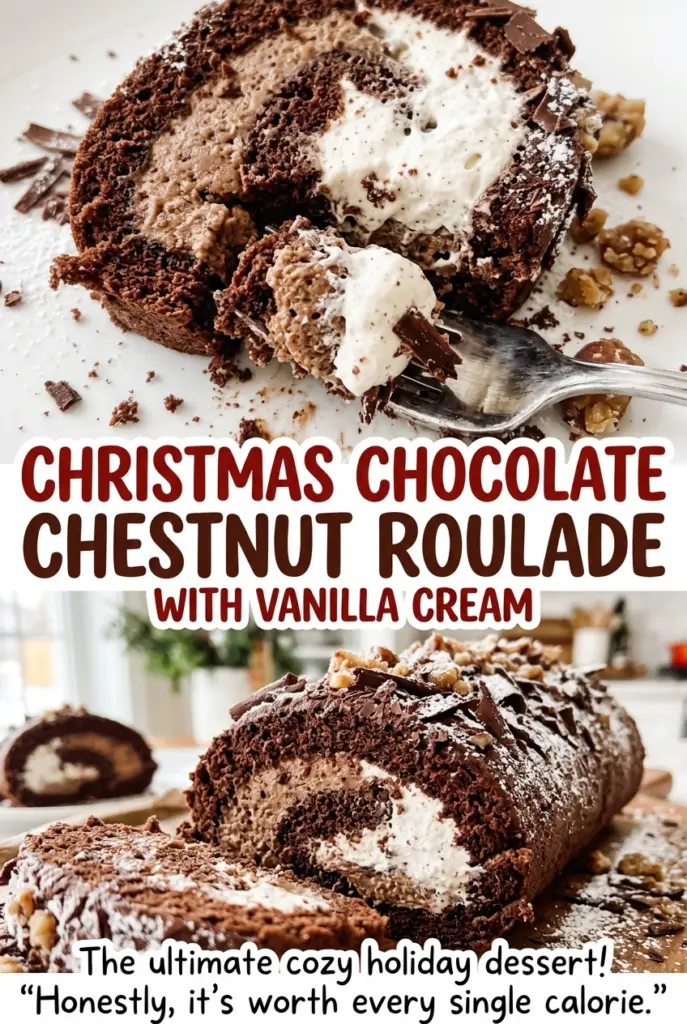
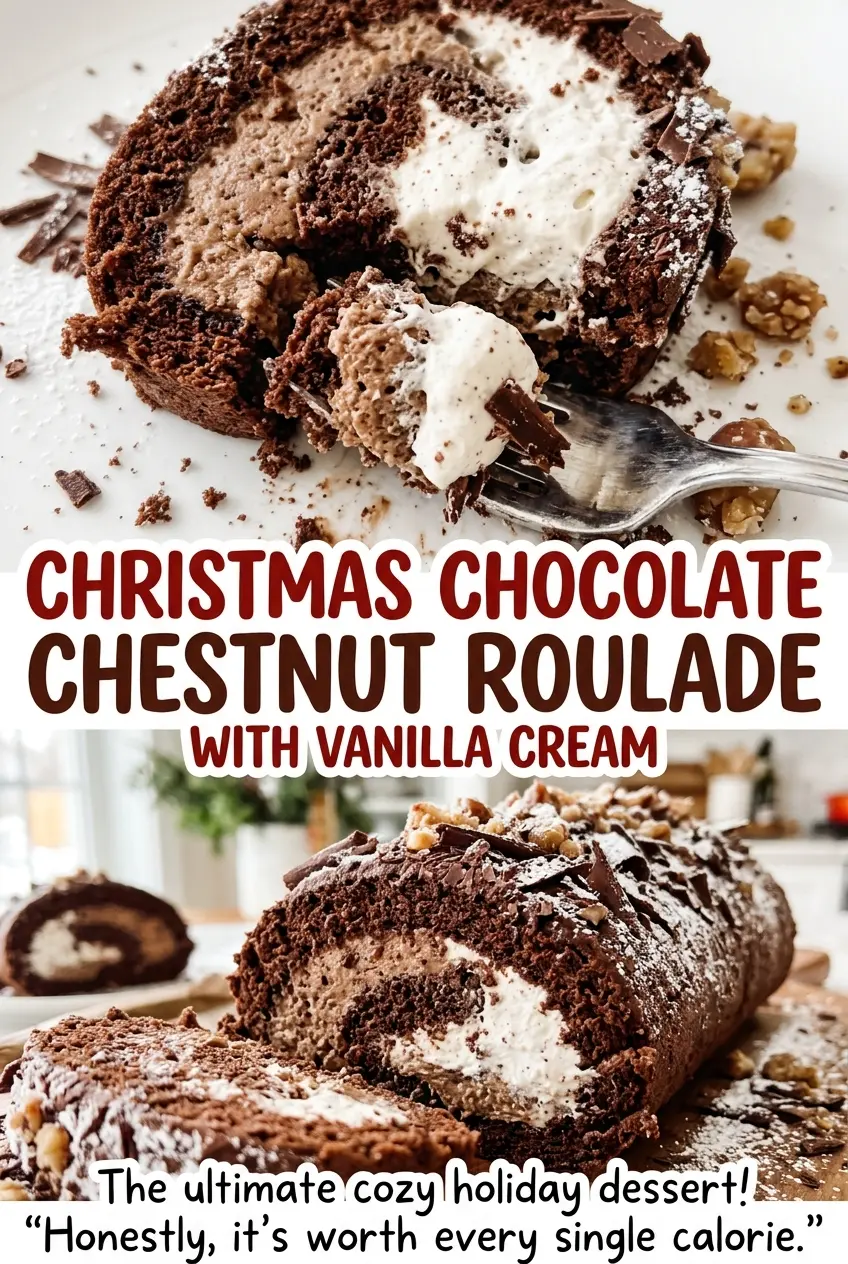
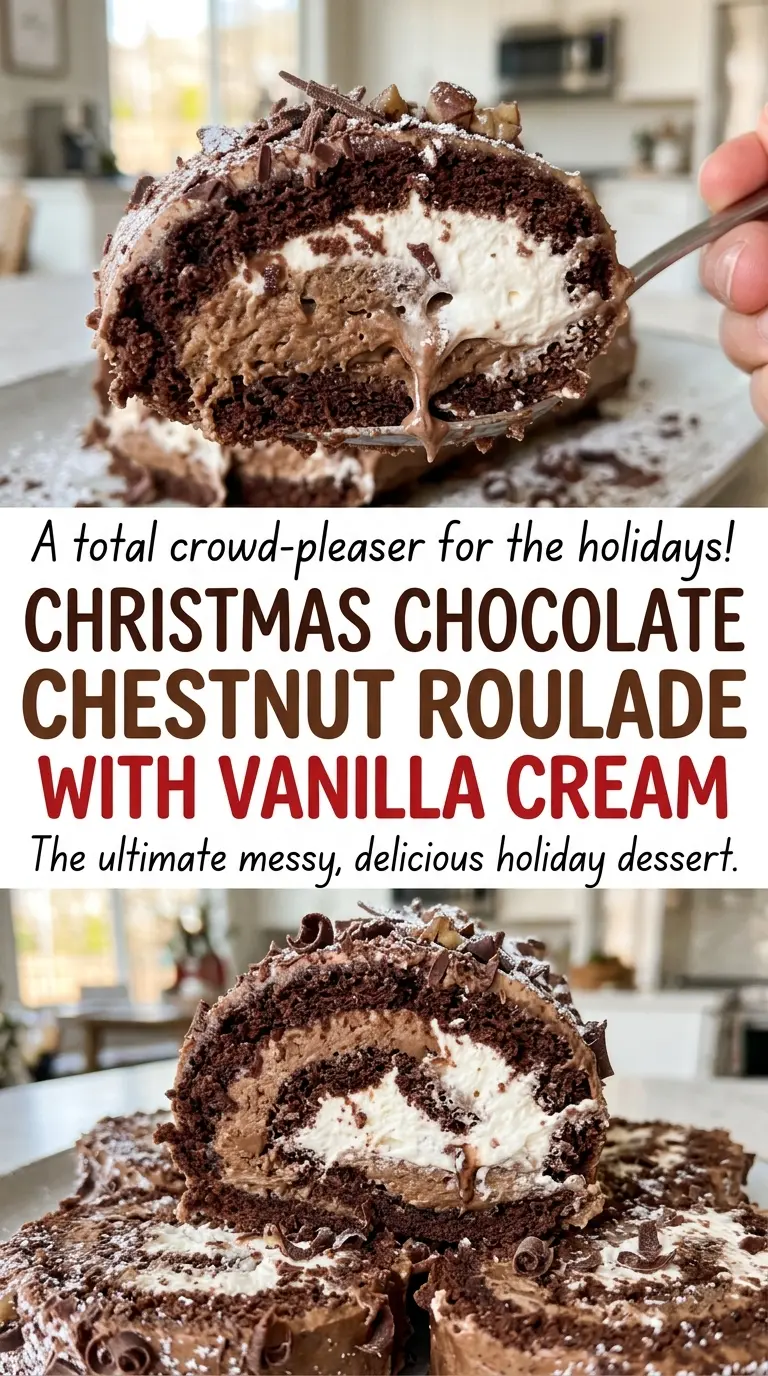
At the first cut, the pale vanilla cream gives way to a dark chocolate sponge and a smooth chestnut center. This Christmas Chocolate Chestnut Roulade with Vanilla Cream is a festive-looking dessert, but the appeal is in that simple contrast: tender cake, mellow chestnut, and cool cream. The spiral makes every slice feel special without needing a fussy decoration.
I like that the chestnut filling is rich but not heavy, while the vanilla cream softens the cocoa’s deeper flavor. The thin sponge rolls into a neat log, and the finished roulade is easy to slice and share. It’s the kind of dessert where the layers do the decorating, with a creamy finish that looks lovely on the serving plate.
Kitchen Note
Roll the sponge while it’s still warm, with the clean parchment inside. A warm cake bends into its spiral more willingly; wait until it cools flat and it’s much more likely to crack.
Save this chocolate chestnut roulade for a holiday table that calls for soft sponge, a chestnut spiral, and a generous vanilla cream finish.
Why This Roulade Starts With a Ribbon, Not a Stiff Batter
A roulade sponge needs to bend, and that flexibility begins with the eggs. Beating the eggs and sugar until the mixture is thick and pale builds the airy structure that gives this thin cake its lift. Baking powder helps, but it can’t make up for eggs that haven’t been whipped enough. The ribbon cue matters: when the beaters lift, the mixture should fall back onto itself and leave a trail for a moment.
Once the dry ingredients go in, that air is easy to lose. Sifting the flour, cocoa, baking powder, and salt helps them fold in evenly, so you don’t have to work the batter over and over to chase dry pockets. Add the dry mixture in two portions and fold gently until the streaks disappear. A few careful turns are better than vigorous stirring; the goal is a smooth batter that still looks light, not a dense paste.
What Gives the Filling Its Chestnut Flavor and Creamy Body
- Sweetened chestnut spread — This is the source of the filling’s distinct chestnut taste and its smooth, spreadable texture. Look for chestnut cream or sweetened chestnut spread rather than plain chestnut purée; the unsweetened version won’t give the same sweetness or consistency. A familiar grocery-store brand is fine as long as it’s smooth.
- Mascarpone — Softened mascarpone blends into the chestnut spread and makes the filling creamy without hiding its flavor. Let it soften before mixing so it combines evenly. If you can’t find mascarpone, softened cream cheese works in the same quantity, though it gives the filling a tangier, firmer finish.
- Eggs — Room-temperature eggs whip more readily into the thick foam that supports the sponge. Use large eggs and bring them to room temperature before starting; cold eggs take longer to build volume.
- Unsweetened cocoa powder — Cocoa gives the sponge its chocolate character without adding sweetness. Sifting it with the flour prevents little bitter cocoa pockets, so there’s no need to buy a specialty cocoa for this cake.
- Heavy cream — Cold heavy cream whips into a stable topping with the powdered sugar and vanilla. Keep it refrigerated until you’re ready to beat it; warm cream won’t build the same volume as reliably.
How to Bake, Roll, and Finish a Flexible Chocolate Sponge
Build the egg foam
Heat the oven to 350°F and prepare a 10×15-inch jelly-roll pan by buttering it, lining the bottom with parchment, and lightly buttering the parchment. Beat the room-temperature eggs and granulated sugar with an electric mixer on high speed for 5–7 minutes. Look for a very thick, pale mixture that leaves a ribbon on its surface. If it still looks loose and yellow, keep beating before moving on.
Fold and bake the thin sponge
Sift the flour, cocoa, baking powder, and salt together, then fold them into the egg mixture in two additions. Stop when no dry streaks remain; extra mixing can knock air out of the batter. Spread it evenly into the prepared pan so the cake bakes to a consistent thickness. Bake for 10–12 minutes, until it springs back when you gently press it.
Roll the cake before it cools
Lay a clean sheet of parchment over the baked cake and invert it onto a rack. Peel away the parchment that lined the pan, then roll the warm cake from a 10-inch edge with the clean parchment inside. Set it seam-side down and let it cool completely, about 1 hour. Don’t rush the cooling: the filling goes onto a cool sponge, not a warm one.
Spread the chestnut filling and chill
Beat the chestnut spread and softened mascarpone until the filling looks smooth and evenly blended. Carefully unroll the cooled cake on its parchment and spread the filling across the surface, leaving a 1/2-inch border. Reroll from the same 10-inch edge and set the roulade seam-side down. Refrigerate it for 30 minutes so the roll firms before you add the topping.
Whip and coat with vanilla cream
Beat the cold heavy cream with the powdered sugar and vanilla on medium-high speed for 2–3 minutes, until stiff peaks form. Spread the cream over the top and sides of the chilled roulade. Refrigerate the finished cake for at least 30 minutes before slicing. Stop beating as soon as the peaks stand up; pushing past that point can leave the cream grainy.
Two Ways to Adapt This Chocolate Chestnut Roulade
Make the sponge gluten-free
Replace the all-purpose flour with an equal volume of a cup-for-cup gluten-free baking blend that includes a binder such as xanthan gum. The sponge may be a little more delicate, so fold gently and handle the rolled cake carefully as you unroll and fill it.
Let the chestnut spiral stand on its own
For a less-rich finish, leave off the vanilla cream coating and serve the filled roulade after it has chilled. The chocolate and chestnut flavors come through more clearly, though the outside won’t have the soft, creamy finish of the full version.
Chilling and Serving
- Refrigerator: Keep the covered roulade refrigerated for up to 3 days. The sponge softens slightly as it sits.
- Freezer: I don’t recommend freezing the finished roulade; the whipped cream can lose its smooth texture as it thaws.
- Serving: Keep it chilled until you’re ready to serve. The vanilla cream holds its shape best when the roulade is cold.
Questions That Come Up When Making a Chocolate Roulade
Christmas Chocolate Chestnut Roulade with Vanilla Cream
Ingredients
Equipment
Method
- Heat the oven to 350°F. Lightly butter a 10x15-inch jelly-roll pan with the tablespoon of butter, line the bottom with parchment paper, and lightly butter the parchment.
- Beat the eggs and granulated sugar in a large bowl with an electric mixer on high speed for 5–7 minutes, until very thick, pale, and able to leave a ribbon on the surface.
- Sift the flour, cocoa powder, baking powder, and salt together, then gently fold into the egg mixture in 2 additions until no dry streaks remain.
- Spread the batter evenly in the pan and bake for 10–12 minutes, until the cake springs back when gently pressed.
- Lay a clean sheet of parchment over the cake and invert it onto a rack, then peel off the original parchment.
- Roll the warm cake from a 10-inch edge with the clean parchment inside and cool completely, seam-side down, for about 1 hour.
- Beat the chestnut spread and mascarpone in a medium bowl until smooth and evenly combined.
- Carefully unroll the cooled cake on the parchment and spread the chestnut filling evenly over it, leaving a 1/2-inch border.
- Reroll the cake from the same 10-inch edge, place it seam-side down, and refrigerate for 30 minutes to firm.
- Beat the heavy cream, powdered sugar, and vanilla in a large bowl with an electric mixer on medium-high speed for 2–3 minutes, until stiff peaks form.
- Spread the vanilla cream over the top and sides of the chilled roulade. Refrigerate for at least 30 minutes before slicing.