
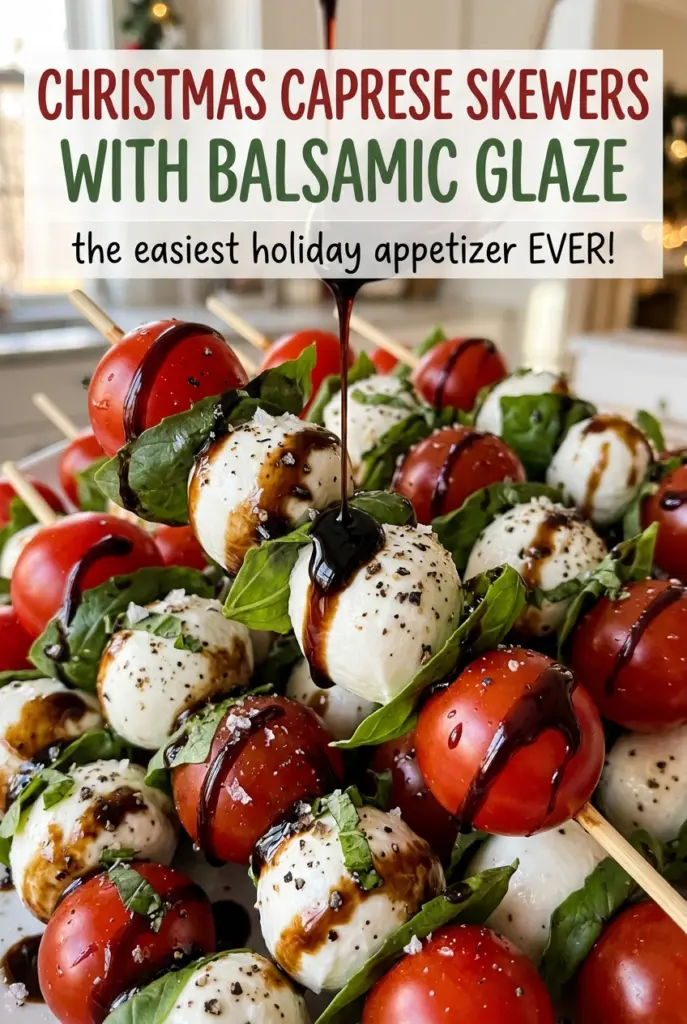
The balsamic vinegar bubbles down from sharp and watery to dark, glossy, and just thick enough to cling to a spoon. I keep an eye on it near the end, because a minute or two can change a drizzle into something sticky. Once it cools, that sweet-tart glaze gives these Christmas Caprese Skewers their finishing touch without hiding the fresh tomato, mozzarella, and basil underneath.
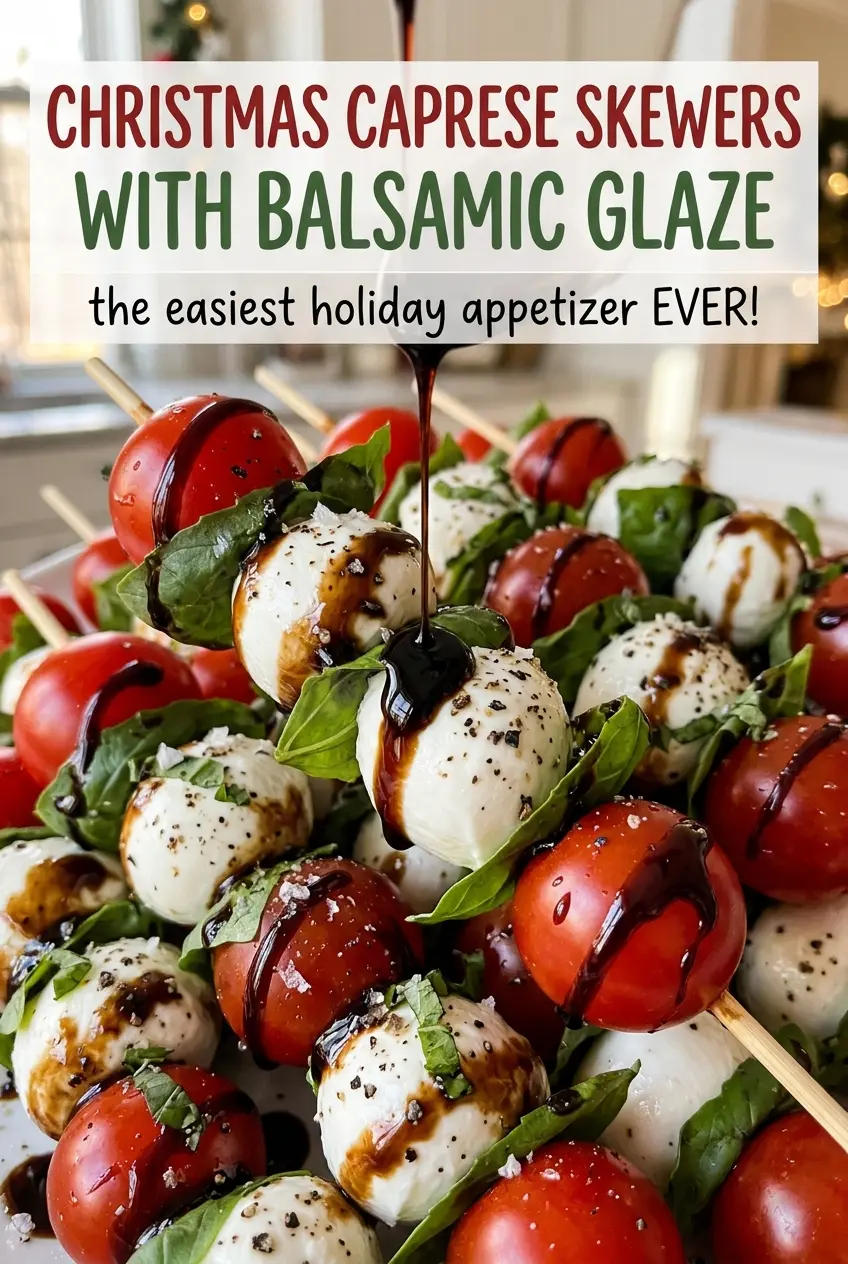
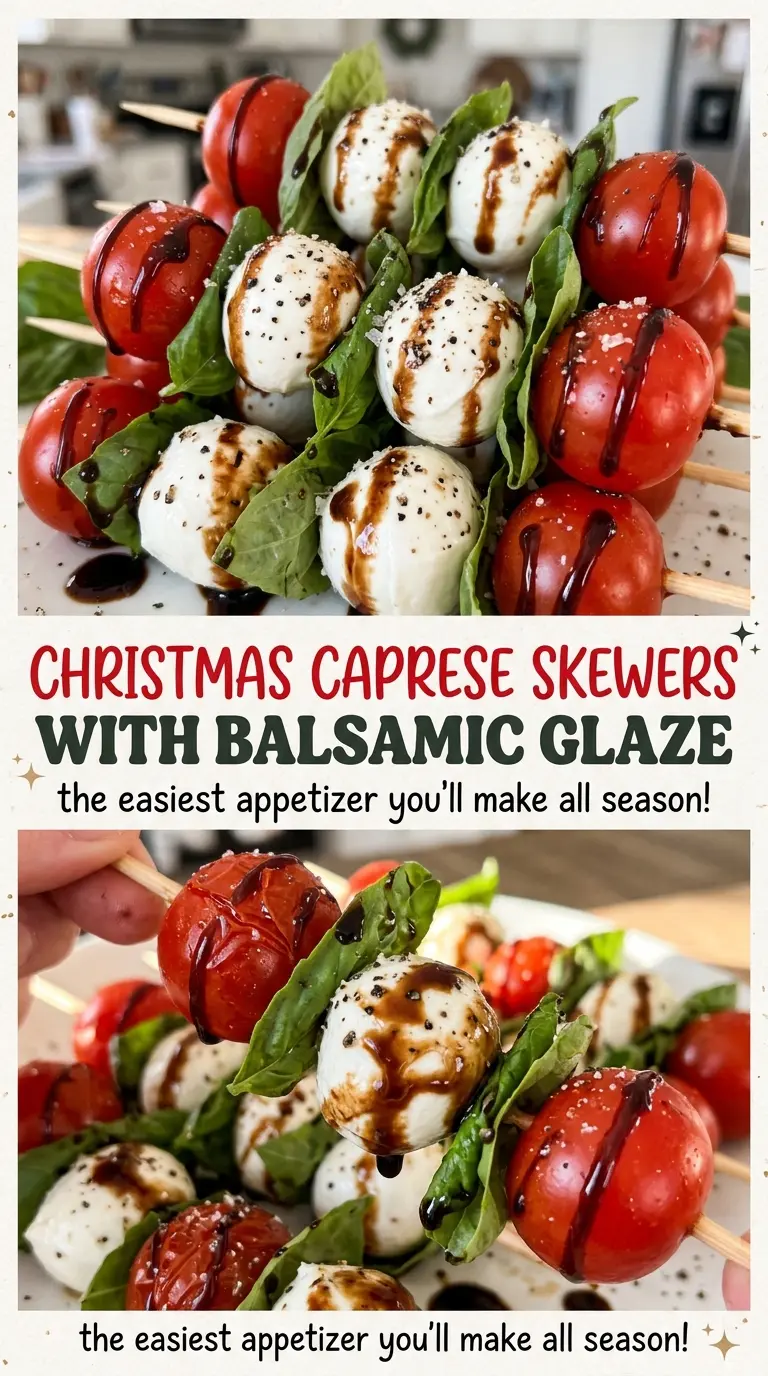
For this version, each 4-inch pick holds one cherry tomato, a folded basil leaf, and a mozzarella ciliegine. The ingredients are simple, so small details matter: dry the tomatoes and mozzarella well, and let the glaze cool before it reaches the platter. The result is a tidy, two-bite appetizer with bright red tomatoes, creamy white cheese, green basil, and a little balsamic shine.
Kitchen Note
Dry the tomatoes and mozzarella before threading them. A damp surface makes the basil harder to handle and can leave moisture on the platter before the glaze goes on.
Save these Christmas Caprese Skewers with Balsamic Glaze for a colorful appetizer with juicy tomatoes, fresh basil, and a homemade sweet-tart drizzle.
Why This Balsamic Glaze Needs to Cool Before It Hits the Skewers
The glaze changes twice: first in the saucepan, then as it cools. While it simmers, water evaporates and the vinegar-honey mixture reduces to about one-third cup. The spoon test is more useful than watching the clock alone: dip a spoon into the glaze, and look for a thin coating that clings to its back instead of running off like vinegar.
It will still look looser in the pan than it does after cooling. Give it at least 10 minutes in a small bowl before you judge the consistency or drizzle it over the platter. If you keep cooking until it looks as thick as finished glaze, it can become overly sticky once cool. That contrast matters on a fresh appetizer: a restrained drizzle adds tang and sweetness, while a heavy coating can cover the delicate mozzarella and basil.
Keep the glaze separate until serving time, too. The tomatoes release juice as they sit, and the mozzarella brings its own moisture; putting the glaze on at the last moment helps the platter stay neat and keeps the balsamic flavor concentrated on each bite.
What the Tomato, Basil, and Mozzarella Each Bring to the Pick
- Cherry tomatoes — Their small size makes them easy to thread whole, and their juicy sweetness balances the sharp balsamic. Choose firm tomatoes without splits or soft spots. Small grape tomatoes work in the same one-per-pick format, though their shape is more oblong.
- Fresh mozzarella ciliegine — These small, mild mozzarella balls make each pick easy to eat and give the tomato a creamy partner. Drain and pat them dry before assembly. If you can’t find ciliegine, cut a larger ball of fresh mozzarella into bite-size pieces close to the size of the tomatoes; very soft or wet pieces are harder to thread neatly.
- Fresh basil — The fresh leaves bring a fragrant, slightly peppery note that dried basil can’t provide here, and a whole leaf folds neatly around the other ingredients. Pick intact leaves that are large enough to fold without tearing. There isn’t a good dried-basil substitute for this skewer; it won’t give the same fresh aroma or shape.
- Balsamic vinegar and honey — Regular balsamic vinegar works well; an expensive aged bottle isn’t necessary because simmering concentrates its flavor. Honey rounds off the vinegar’s acidity and helps the cooled glaze coat a spoon. Maple syrup can replace the honey in the glaze, though the finished sweetness will taste a little different.
Building the Glaze and Assembling the Skewers
Reduce the Vinegar and Honey
Combine the balsamic vinegar and honey in a small saucepan, then bring the mixture to a gentle simmer over medium heat. Lower the heat to medium-low and simmer for 12 to 18 minutes, stirring occasionally. As it reduces, the bubbles become slower and the liquid darkens; use the spoon test and aim for about one-third cup. A hard boil can make the reduction happen too quickly at the edges, so keep it at a gentle simmer.
Let the Glaze Thicken in the Bowl
Transfer the reduced glaze to a small bowl and leave it to cool for at least 10 minutes. It thickens as it cools, so don’t try to force the final texture by simmering it until it looks heavy in the saucepan. If it seems thin just after transfer, give it time before deciding whether it needs more cooking. Once cool, it should coat a spoon and fall in a controlled drizzle.
Fold, Thread, and Finish
Thread one cherry tomato, one folded basil leaf, and one mozzarella ball onto each 4-inch cocktail pick. Fold the leaf gently rather than pushing the pick through its center, which helps keep it intact and visible between the red tomato and white cheese. Arrange the finished skewers on a serving platter. Drizzle with the cooled glaze just before serving so the fresh ingredients stay distinct and the platter doesn’t sit under a pool of balsamic.
Simple Ways to Change the Shape or Make These Skewers Dairy-Free
Use Larger Fresh Mozzarella Pieces
When ciliegine aren’t available, cut a larger ball of fresh mozzarella into pieces that are easy to eat in one bite. Keep them close in size to the tomatoes so the skewers feel balanced; the pieces may be less uniform, but the same tomato-basil-mozzarella combination still works.
Arrange the Caprese as a No-Pick Platter
For a platter that’s easier to assemble in a hurry, arrange the tomatoes, folded basil leaves, and mozzarella together without threading them onto cocktail picks. Keep the same components and add the cooled glaze just before serving. Guests lose the grab-and-go skewer, but the flavors and color remain the same.
Make a Dairy-Free, Vegan-Friendly Version
Replace the mozzarella with dairy-free mozzarella pearls, and use maple syrup instead of honey in the glaze for a fully plant-based version. The tomato and basil still give each bite its fresh, bright character, while the cheese alternative may be firmer and less creamy than fresh mozzarella.
Storage and Reheating
- Refrigerator: Store leftover assembled skewers covered and refrigerated; they’re best within 1 day. The tomatoes may release juice and the basil can darken as they sit. Keep leftover glaze in a separate covered container in the refrigerator and use it within 1 week.
- Freezer: Don’t freeze assembled skewers. The tomatoes and fresh mozzarella lose their pleasant texture after thawing, and the basil won’t stay fresh-looking.
- Reheating: These are served without heating, so don’t microwave them. If the skewers have been chilled, take out only what you plan to serve and add the glaze just before they go to the table.
Questions That Come Up When Making Caprese Skewers
Christmas Caprese Skewers with Balsamic Glaze
Ingredients
Method
- Combine the balsamic vinegar and honey in a small saucepan and bring to a gentle simmer over medium heat.
- Reduce the heat to medium-low and simmer for 12 to 18 minutes, stirring occasionally, until the glaze is reduced to about 1/3 cup and coats the back of a spoon.
- Transfer the glaze to a small bowl.
- Cool for at least 10 minutes; it will thicken as it cools.
- Thread one tomato, one folded basil leaf, and one mozzarella ball onto each cocktail pick.
- Arrange the skewers on a serving platter.
- Drizzle with the cooled balsamic glaze just before serving.