
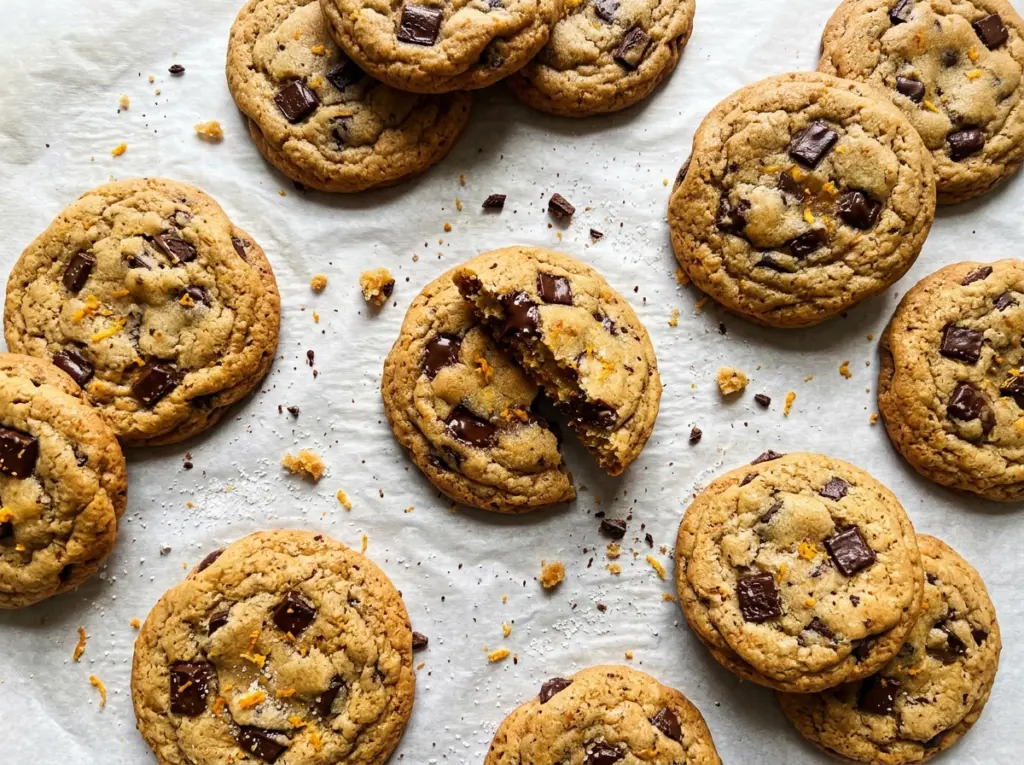
When the first tray comes out, the tops look dry and lightly cracked, but the centers still feel soft. That’s exactly what I want from these chocolate orange sugar cookies. Cocoa makes it harder to judge doneness by color, so those little cracks and set edges are more useful clues than a deep brown surface.
The orange comes through in two ways: finely grated zest brings a fresh, fragrant note, while orange extract carries it through the rich cocoa dough. I cream the butter and sugar until light before adding the egg and flavorings, then chill the dough until it’s firm enough to roll without a sticky mess. Each ball gets a coating of granulated sugar, which gives the finished cookies their familiar sugar-cookie sparkle around the cocoa cracks. The result is a soft-centered cookie with chocolate first and a clear orange finish.
Kitchen Note
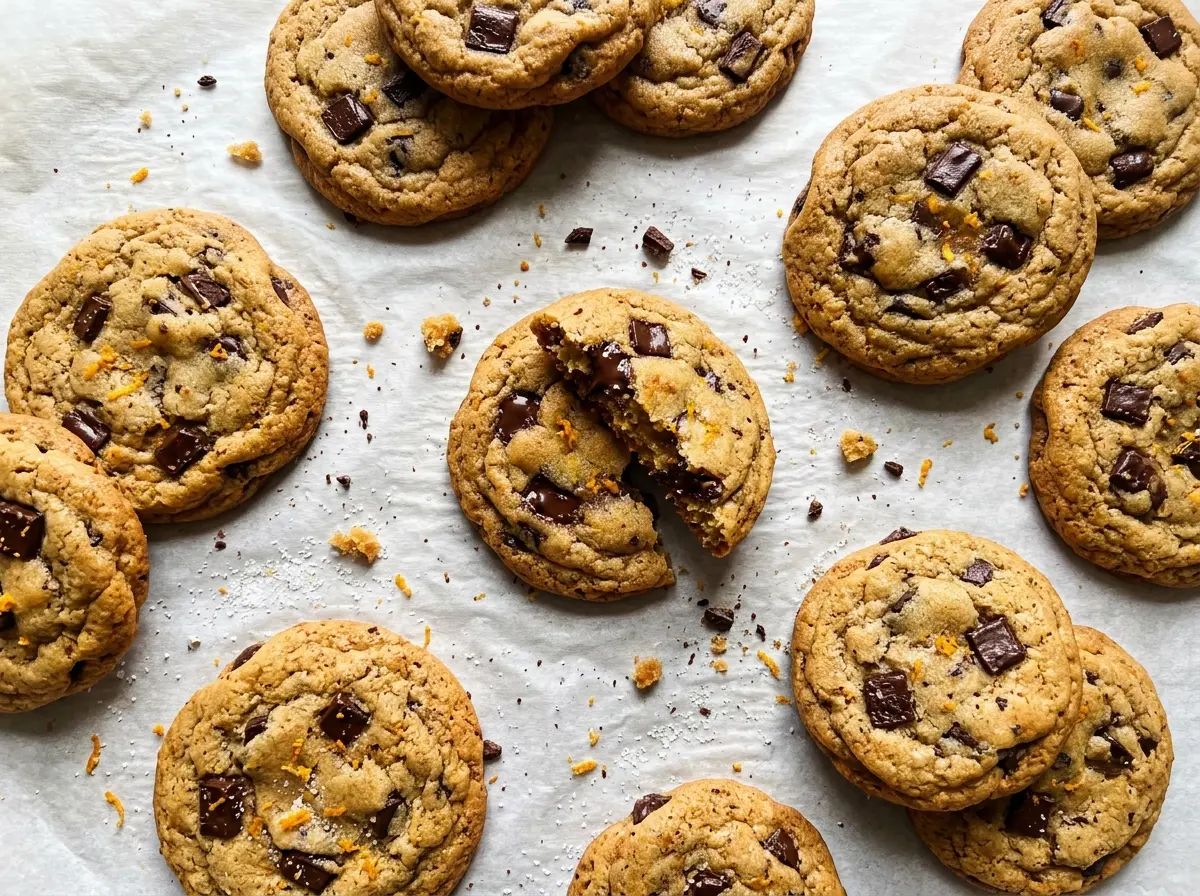
Coat each dough ball all the way around, not just across the top. That even sugar layer gives every cookie a pretty, lightly crisp outside as the tops crack.
Save these chocolate orange sugar cookies for a cocoa-rich cookie with a bright citrus finish and crackly sugar tops.
Why This Cocoa Dough Needs a Chill Before You Roll It
Chocolate cookie dough can seem firm in the bowl and still turn sticky the moment you try to shape it. Butter softens quickly from the warmth of your hands, and cocoa dough can cling to your scoop before you’ve rolled enough cookies to fill the pan. Chilling the covered dough until firm gives the butter time to firm back up, so the portions hold their shape while you roll them in sugar.
That short wait also helps keep the cookies from spreading too quickly in the oven. You’re looking for dough that feels firm when scooped, not hard or crumbly. If it’s still soft after chilling, give it a little longer rather than dusting your hands or the dough with extra flour; extra flour changes the balance of the cookie. Keep the portioned dough you haven’t rolled yet chilled while the first batch bakes, and shaping stays much easier from start to finish.
What the Orange and Cocoa Each Bring to These Cookies

- Unsweetened cocoa powder — This gives the dough its deep chocolate character and dark color. Use cocoa labeled unsweetened rather than hot cocoa mix, which contains sugar and other ingredients that would change the dough. A familiar grocery-store cocoa works well here; there’s no need for a premium specialty powder.
- Orange zest and orange extract — Zest contributes fragrant citrus oils, while extract gives the orange note enough presence alongside cocoa. A fresh, unblemished orange is worth choosing because its zest does a lot of the aromatic work. For a softer orange flavor, leave out the extract and keep the zest; the cookies will taste more gently citrusy.
- Unsalted butter — Butter makes the dough rich and helps it cream with the sugar. Softened butter should give slightly when pressed but shouldn’t look melted or greasy. For a dairy-free adaptation, use plant-based butter sticks in place of the butter; the dough may need a little extra chilling before it’s easy to shape.
- Granulated sugar — The sugar creamed into the dough supports the cookie’s texture, and the sugar on the outside gives it a crisp, sparkling finish. Stick with granulated sugar for both jobs; brown sugar adds moisture and changes the texture. The same everyday sugar works in the dough and for rolling.
- All-purpose flour — Flour gives the cookies structure, so measuring it carefully matters more than choosing an expensive brand. Spoon it into the measuring cup and level the top instead of packing it down. Too much flour can leave the baked cookies dry and dense.
- Egg, vanilla, and baking powder — The room-temperature egg blends into the creamed butter more smoothly, while vanilla rounds out the chocolate and orange. Baking powder gives the cookies a little lift. Regular grocery-store vanilla is fine; keep the baking powder fresh so it can do its job.
From Creamed Butter to Crackled Cookie Tops
Whisk the cocoa and flour evenly
Heat the oven to 350°F and line an 18×13-inch baking sheet with parchment paper. In a medium bowl, whisk together the flour, cocoa powder, baking powder, and salt until the mixture looks evenly colored, with no visible cocoa pockets. This even blend helps avoid pale flour streaks in the finished dough. Set the bowl aside while you cream the butter.
Cream the butter, then build the orange flavor
Beat the softened butter with 1 cup of the granulated sugar in a large bowl until it looks light and creamy, about 2 minutes. Add the room-temperature egg, orange zest, vanilla, and orange extract, then beat until everything is combined. Scrape the bowl if butter is clinging to the sides so the flavorings are incorporated throughout. Add the flour mixture and mix on low just until no dry streaks remain; stopping there keeps you from overworking the dough.
Chill, scoop, and coat
Cover the dough and chill it until firm, about 30 minutes. Put the remaining 1/4 cup of sugar in a shallow bowl, then scoop the dough into 1 1/2-tablespoon portions and roll each portion into a ball. Turn each ball in the sugar to coat it, then arrange the cookies about 2 inches apart on the prepared sheet. Keep the remaining dough chilled while this batch bakes, rather than leaving the bowl on the counter.
Bake for set edges and dry-looking tops
Bake one batch at a time at 350°F for 10–12 minutes. The edges should look set, and the tops should look dry with slight cracks; don’t wait for the cookies to look uniformly firm. Let them cool on the baking sheet for 5 minutes, then transfer them to a wire rack to cool completely. They’re delicate while hot, so use a thin spatula and give them that short rest before moving them.
Easy Ways to Change the Orange, Sweetness, or Butter
A gentler orange note
Leave out the orange extract and keep the orange zest for a more subtle citrus finish. The cookies will still have the fresh aroma of zest, but the cocoa will take the lead more clearly.
A less-sweet, uncoated outside
Skip rolling the dough balls in the reserved sugar if you prefer a less sweet finish. The cookies will lose the sparkling sugar crust and have a plainer, softer-looking surface, but the chocolate-orange dough stays the same.
Dairy-free with plant-based butter
Replace the unsalted butter with the same amount of plant-based butter sticks, choosing sticks rather than soft tub spread. The dough may be softer, so chill it until firm before scooping; the flavor and spread can vary a little by brand.
Storage and Reheating
- Room temperature: Keep the completely cooled cookies in an airtight container for up to 4 days. The sugar coating softens gradually as they sit.
- Freezer: Freeze baked, completely cooled cookies in an airtight freezer container for up to 2 months. Thaw them at room temperature before serving.
- Reheating: These cookies are good at room temperature, so reheating isn’t needed. If you want one warm, microwave it briefly; heating too long can make the edges tough.
Questions That Come Up While Baking These Cookies
Chocolate Orange Sugar Cookies
Ingredients
Equipment
Method
- Heat the oven to 350°F.
- Line an 18x13-inch baking sheet with parchment paper.
- Whisk the flour, cocoa powder, baking powder, and salt in a medium bowl.
- Beat the butter and 1 cup of the sugar in a large bowl until light and creamy, about 2 minutes.
- Beat in the egg, orange zest, vanilla extract, and orange extract until combined.
- Add the flour mixture and mix on low just until no dry streaks remain.
- Cover the dough and chill until firm, about 30 minutes.
- Put the remaining 1/4 cup sugar in a shallow bowl.
- Scoop the dough into 1 1/2-tablespoon portions.
- Roll the portions into balls.
- Coat the balls in sugar.
- Arrange the balls about 2 inches apart on the prepared sheet, keeping the remaining dough chilled.
- Bake one batch at a time at 350°F for 10–12 minutes, until the edges are set and the tops look dry with slight cracks.
- Let the cookies cool on the baking sheet for 5 minutes.
- Transfer the cookies to a wire rack to cool completely.