
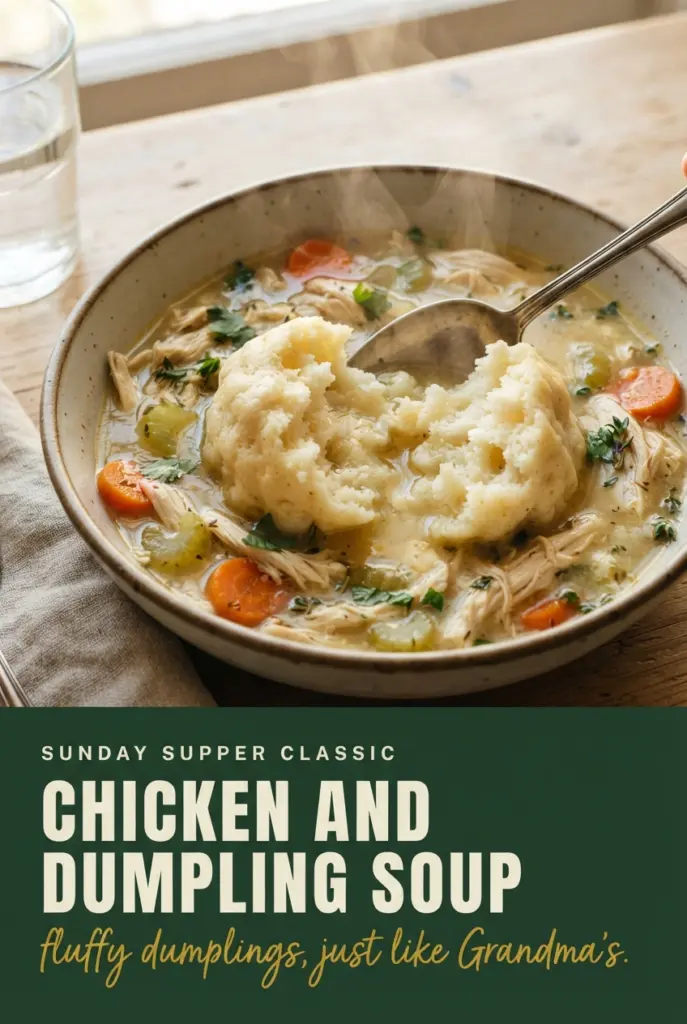
Chicken and dumpling soup lands in the bowl with the kind of comfort that feels immediate. The broth turns rich and creamy, the chicken stays tender, and the dumplings rise into soft, pillowy little caps that soak up just enough soup without falling apart. It’s the sort of one-pot dinner that tastes like it took all afternoon, even though the method stays straightforward and calm from start to finish.
What makes this version work is the balance: the vegetables soften first so they melt into the broth instead of staying crunchy, the flour cooks briefly before the broth goes in so the soup thickens without tasting raw, and the dumpling dough stays shaggy on purpose. Overmixing makes dumplings dense. A light hand keeps them fluffy, especially once the pot stays covered and the steam does the rest of the work.
Below you’ll find the small details that keep the soup creamy instead of gluey, plus the cue that tells you the dumplings are done even if they still look a little soft on top. That’s the part worth getting right.
The dumplings came out light and fluffy instead of gummy, and the soup thickened up just enough without turning pasty. I loved that the chicken stayed juicy even after simmering, and my husband went back for a second bowl.
Save this chicken and dumpling soup for the nights when you want soft dumplings, creamy broth, and one pot that does the whole job.
The Reason This Soup Stays Creamy Without Turning Heavy
The biggest mistake with chicken and dumpling soup is rushing the thickening step. If the flour goes in and the broth hits too fast, you get little lumps that never fully dissolve. If the soup boils hard after the cream goes in, the texture can break and start to look grainy. A gentle simmer is what keeps everything smooth.
The other trap is overcooking the chicken in a rolling boil. Thighs forgive a little more than breasts, but they still stay juicier when the pot bubbles lazily instead of roaring. The dumplings have the same rule: the lid stays on so the steam can inflate them, and lifting it early steals that heat before the centers set.
- Cook the flour briefly in the vegetables. That short minute removes the raw taste and gives the soup a head start on thickening.
- Keep the heat moderate after adding cream. You want a soft simmer, not a boil, so the dairy stays velvety.
- Cover the pot and leave it alone once the dumplings go in. Steam is what cooks the tops and keeps the dumplings light.
What Each Ingredient Is Actually Doing in This Dish

- Chicken thighs bring the best texture for a soup like this. They stay tender through the simmer and shred into juicy pieces instead of drying out. Breasts will work in a pinch, but they need a shorter simmer and give you a leaner result.
- Heavy cream finishes the broth with body. Half-and-half can stand in if that’s what you have, but the soup will be a little lighter and less plush. Add it at the end so it warms through without curdling.
- Baking powder is what gives the dumplings their lift. It’s not optional if you want that cloudlike texture. Old baking powder can make dense dumplings, so use a fresh can if yours has been open for a long time.
- Fresh parsley in both the soup and dumplings keeps the whole pot tasting bright. Dried parsley won’t do the same job, though you can swap in chives or skip it entirely if needed.
- All-purpose flour does double duty here: first to thicken the soup, then to build the dumplings. There’s no clean substitute for the dumpling structure, but a 1:1 gluten-free baking blend can work if it already contains xanthan gum.
Building the Soup and Steaming the Dumplings
Softening the vegetables first
Melt the butter with the olive oil and cook the onion, carrots, and celery until they lose their raw edge and start to look glossy. The onion should turn translucent, and the carrots should just begin to soften. If the vegetables brown, the broth will taste deeper but less classic, so keep the heat at medium and stir often.
Thickening the broth without lumps
Sprinkle the flour over the vegetables and stir it for a full minute before adding broth. That step coats the vegetables and keeps the flour from clumping the second liquid hits the pan. Whisk the broth in slowly at first. If you dump it all in at once, the flour can seize into paste instead of smoothing out.
Cooking the chicken until it shreds cleanly
Add the chicken, thyme, bay leaf, salt, and pepper, then simmer gently until the meat pulls apart without resistance. The broth should barely bubble. A hard boil tightens the chicken and makes it stringy. Once it’s cooked through, shred it into bite-size pieces and return it to the pot before the cream goes in.
Dropping and steaming the dumplings
Stir the dumpling dough just until the flour disappears and the mixture looks shaggy. That loose texture is what you want. Drop heaping spoonfuls onto the surface of the simmering soup, then cover the pot and keep the lid closed for 15 minutes. If you lift the lid, the dumplings lose steam and can come out gummy in the middle.
How to Adapt This for the Way You Cook
Dairy-Free Version That Still Feels Rich
Swap the butter for a plant-based butter and use unsweetened oat milk in the dumplings. Replace the heavy cream with full-fat coconut milk or an unsweetened dairy-free cream alternative. Coconut milk adds a faint sweetness, so the soup tastes a little less classic but still creamy and satisfying.
Gluten-Free Adjustment for the Broth and Dumplings
Use a gluten-free 1:1 flour blend in both places, but choose one that’s meant for baking, not just thickening. The soup may thicken a little differently, and the dumplings can be slightly more delicate, but they’ll still steam up tender if you don’t overmix them.
What to Do If You Only Have Chicken Breast
Chicken breast works, but it needs less simmer time than thighs. Start checking early and pull it as soon as it reaches 165°F so it stays tender. The soup will taste a little leaner, so the cream and butter matter more for keeping the broth rounded.
Storage and Reheating
- Refrigerator: Store the soup in an airtight container for up to 3 days. The dumplings will soften more as they sit, but the flavor holds well.
- Freezer: The soup base freezes well, but the dumplings get mushy after thawing. For best results, freeze the soup without dumplings and make a fresh batch when you reheat it.
- Reheating: Warm gently on the stove over low heat until hot throughout. Stir carefully so the dumplings don’t break apart, and avoid a hard boil because it can split the cream and turn the dumplings heavy.
Answers to the Questions Worth Asking
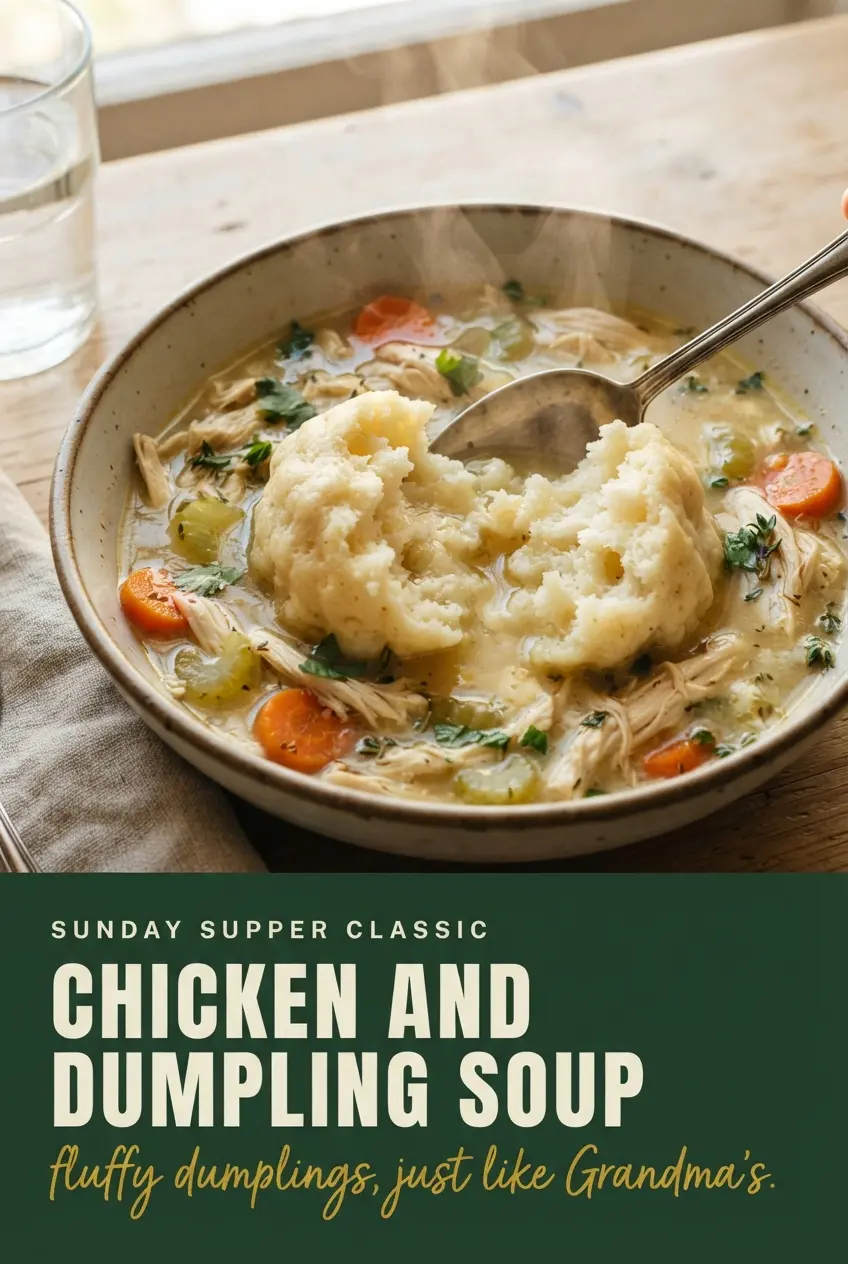
Chicken and Dumpling Soup
Ingredients
Equipment
Method
- Heat the butter and olive oil in a large Dutch oven over medium heat until the butter melts and looks glossy.
- Add the onion, carrots, and celery and cook for 6–8 minutes, stirring often, until softened.
- Stir in the garlic and cook for 1 minute until fragrant.
- Sprinkle the flour over the vegetables and stir constantly for 1 minute.
- Slowly whisk in the chicken broth until smooth, scraping up any browned bits.
- Add the chicken thighs, dried thyme, bay leaf, kosher salt, and ground black pepper, then bring the mixture to a boil.
- Reduce the heat to medium-low, cover, and simmer for 20 minutes until the chicken is tender and cooked through to 165°F (74°C).
- Transfer the chicken to a cutting board, shred it with two forks, and return it to the pot.
- Stir in the heavy cream and keep the soup at a gentle simmer.
- Whisk together the all-purpose flour, baking powder, granulated sugar, kosher salt, and chopped fresh parsley in a bowl.
- Pour in the whole milk and melted butter and stir with a fork until just combined into a soft, shaggy dough—do not overmix.
- Drop heaping tablespoons of dough onto the surface of the simmering soup, spacing them slightly apart.
- Cover and simmer for 15 minutes without lifting the lid, until the dumplings are puffed and cooked through in the center.
- Remove the bay leaf, sprinkle with fresh parsley, and ladle soup and dumplings into bowls to serve hot.