
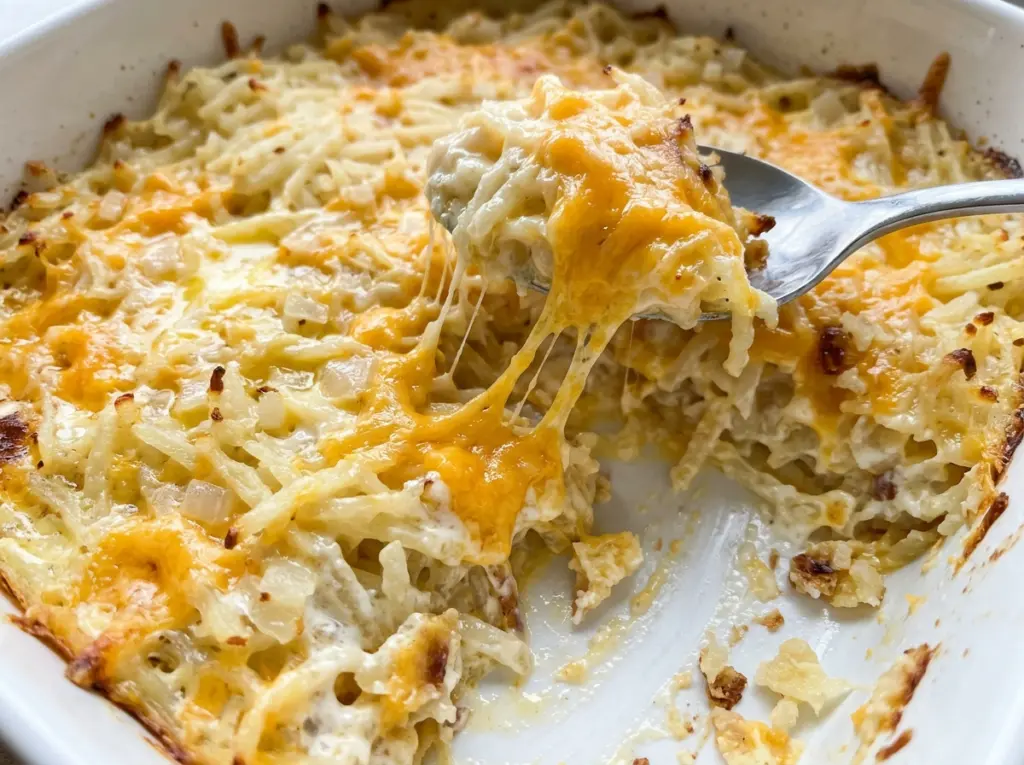
The edges start bubbling first, and the cornflakes turn a deep golden color while the middle settles into a creamy, tender casserole. I give this cheesy hash brown potato casserole with sour cream a full 10 minutes to rest after baking; it’s much easier to serve when the filling has had a moment to settle.
Thawed shredded hash browns are what make the filling easy to stir together and spread evenly. They mingle with sour cream, cheddar, onion, and condensed soup without leaving icy pockets in the dish. The buttered cornflake topping brings the crisp contrast that keeps each bite from feeling too soft. It’s a straightforward casserole, but the creamy middle and crunchy top make it worth bringing to the table.
Kitchen Note
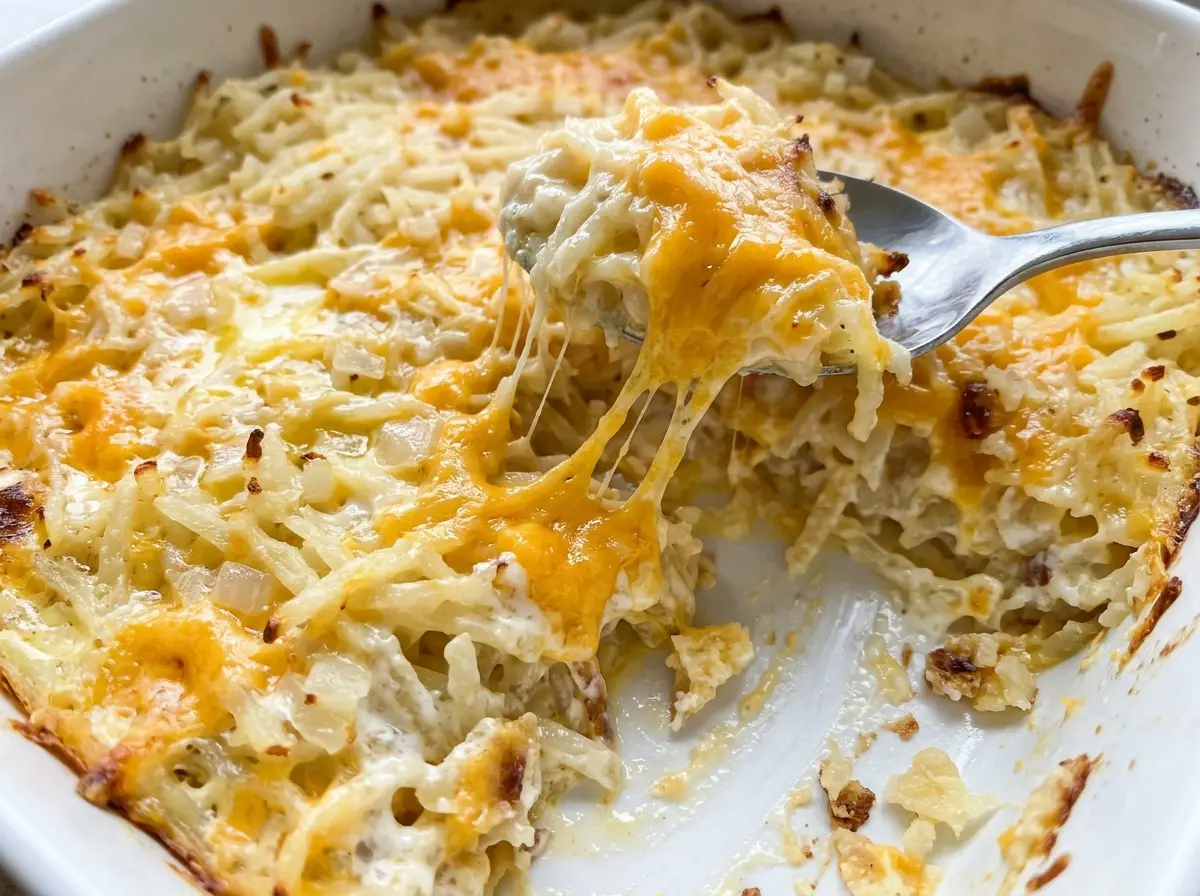
Don’t rush the 10-minute rest after baking. The filling is bubbling hot when it comes out, and those few minutes help it settle so you can serve neat, creamy portions beneath the crisp topping.
Save this cheesy hash brown potato casserole for its creamy sour cream filling and buttery, golden cornflake top.
Why thawed hash browns make a creamier casserole
Frozen shredded potatoes can be convenient, but putting them in the dish while they’re still frozen changes how the filling bakes. Ice crystals melt in the oven, adding moisture right where you want the potatoes to hold a creamy mixture. The hash browns also chill the sour cream and soup, so the casserole takes longer to heat through evenly.
Let the potatoes thaw before you stir everything together. Once thawed, the shreds are easier to separate and coat with the soup, sour cream, and cheddar. That even coating matters: you want potatoes throughout the dish, not a few dry patches next to pockets of concentrated sauce. The mixture should spread across the pan without needing extra liquid, and the cornflakes can crisp on top as the filling bakes.
The topping gives the casserole its other defining texture. Butter helps the crushed flakes brown as they bake, while an even layer means you get crunch across the surface instead of a few scattered crisp spots. Keep the potatoes thawed and the topping spread edge to edge, and the casserole has a good balance of creamy filling and crisp top.
What the sour cream, soup, and cheddar each bring

- Sour cream — It adds tang and moisture to balance the savory soup and cheddar. Plain full-fat Greek yogurt is the closest easy swap; use the same amount, knowing the casserole will taste a little tangier and less rich.
- Condensed cream of chicken soup — This is the concentrated savory base that binds the potato mixture. Use it straight from the can rather than thinning it; adding liquid makes the filling looser.
- Cheddar — Cheddar brings a familiar sharp, salty note and melts into the potatoes. A block you shred yourself tends to melt smoothly, while pre-shredded cheddar is a practical choice if convenience matters.
- Frozen shredded hash browns — The fine shreds mix through the creamy base and make each serving cohesive. Check that they’re thawed before mixing; that’s more important here than choosing a premium brand.
- Cornflakes and butter — Crushed cornflakes bake into a light, crisp topping, and melted butter helps them brown. Crush the flakes into small pieces rather than powder so the finished surface keeps some crunch.
- Yellow onion — Finely chopping the onion helps it disperse through the filling instead of leaving big, sharp bites. A white onion can stand in at the same amount, with a slightly more pungent flavor.
Mixing and baking for a creamy center with a golden top
Coat the thawed potatoes evenly
Heat the oven to 350°F and grease a 9×13-inch baking dish. In a large bowl, stir together the thawed hash browns, condensed cream of chicken soup, sour cream, shredded cheddar, finely chopped onion, salt, and pepper. Keep stirring until the ingredients are distributed throughout, rather than stopping when the sauce first looks combined. If you spot an uncoated clump of potatoes, fold it back through the creamy mixture before moving on.
Spread the filling in the baking dish
Transfer the mixture to the prepared dish and spread it into an even layer. This gives the casserole a consistent depth from edge to edge, so the potatoes bake together rather than leaving a thin, overbrowned corner beside a thick section. Use the back of a spoon or spatula to smooth the surface without packing it down tightly. The mixture should reach the corners of the dish.
Scatter on the buttered cornflakes
Stir the crushed cornflakes with the melted unsalted butter until the flakes are lightly coated. Scatter them evenly over the filling instead of leaving all the crumbs in the middle. If the flakes are crushed to dust, they’ll lose the larger crisp pieces that make the topping pleasant; aim for small pieces, not a fine crumb. Spread any bare patches before the dish goes into the oven.
Bake until the edges bubble and the flakes turn golden
Bake for 45–55 minutes, watching for bubbling around the edges and a golden-brown topping. The flakes should look toasted rather than pale, and the filling should be hot and bubbling at the perimeter. If the topping is still pale, give it more time within the baking window instead of pulling the dish early. Let the casserole rest for 10 minutes before serving.
Three sensible ways to adapt the casserole
Make the casserole gluten-free
Use gluten-free condensed cream of chicken soup and gluten-free cornflakes in place of the regular versions, keeping the same amounts. The filling stays creamy and the topping stays crisp, though brands may give the soup a slightly different savory taste.
Trade the chicken soup for cream of mushroom
Replace the condensed cream of chicken soup with the same amount of condensed cream of mushroom soup. It keeps the creamy base intact but shifts the casserole toward a deeper, earthier flavor.
Give the cheese a little heat
Swap the cheddar for the same amount of pepper jack. It melts into the filling as cheddar does, but brings a gentle chile kick and a less classic flavor.
Storage and Reheating
- Refrigerator: Refrigerate leftovers in a covered container for 3–4 days. The cornflake topping softens as it sits.
- Freezer: Freeze cooled portions in airtight containers for up to 2–3 months. The filling freezes well, but the topping won’t be as crisp after thawing.
- Reheating: Reheat in the oven until the center reaches 165°F; uncover toward the end if you want to bring back some crunch. A microwave is quick but leaves the topping soft.
Questions that come up when making hash brown casserole
Cheesy Hash Brown Potato Casserole with Sour Cream
Ingredients
Equipment
Method
- Heat the oven to 350°F.
- Grease a 9x13-inch baking dish.
- In a large bowl, stir together the thawed hash browns, condensed cream of chicken soup, sour cream, shredded cheddar cheese, finely chopped yellow onion, kosher salt, and black pepper until evenly combined.
- Spread the mixture in the prepared baking dish.
- Stir the crushed cornflakes and melted unsalted butter together.
- Scatter the topping mixture evenly over the casserole.
- Bake for 45–55 minutes, until the casserole is bubbling around the edges and the topping is golden brown.
- Let the casserole rest for 10 minutes before serving.