
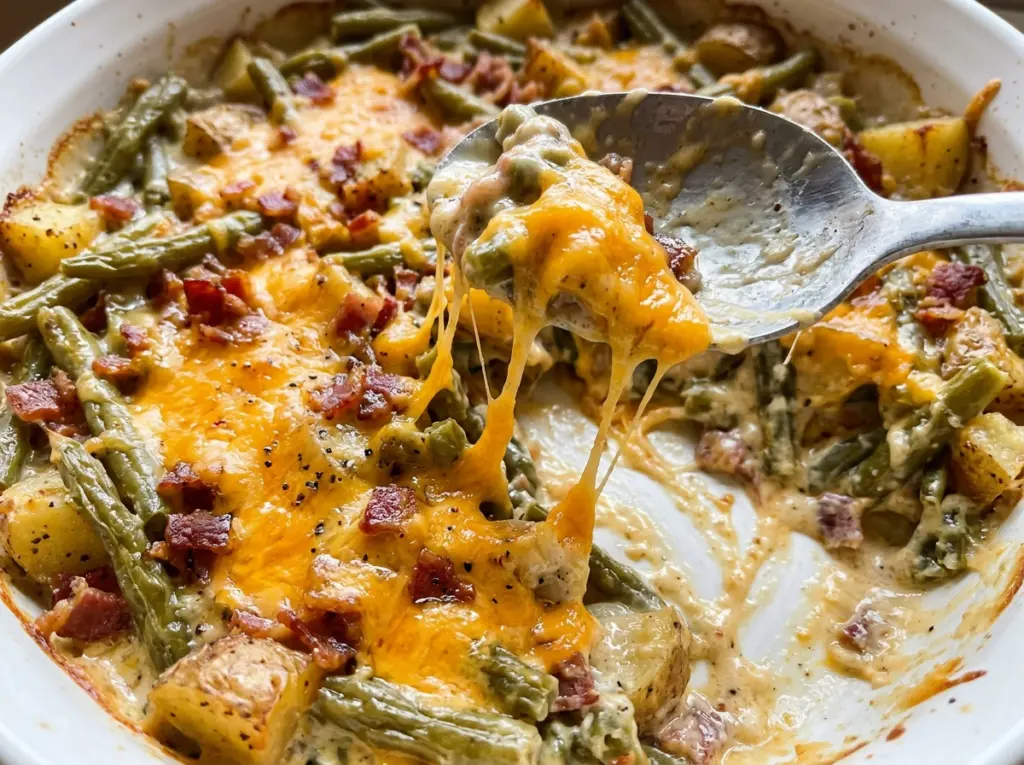
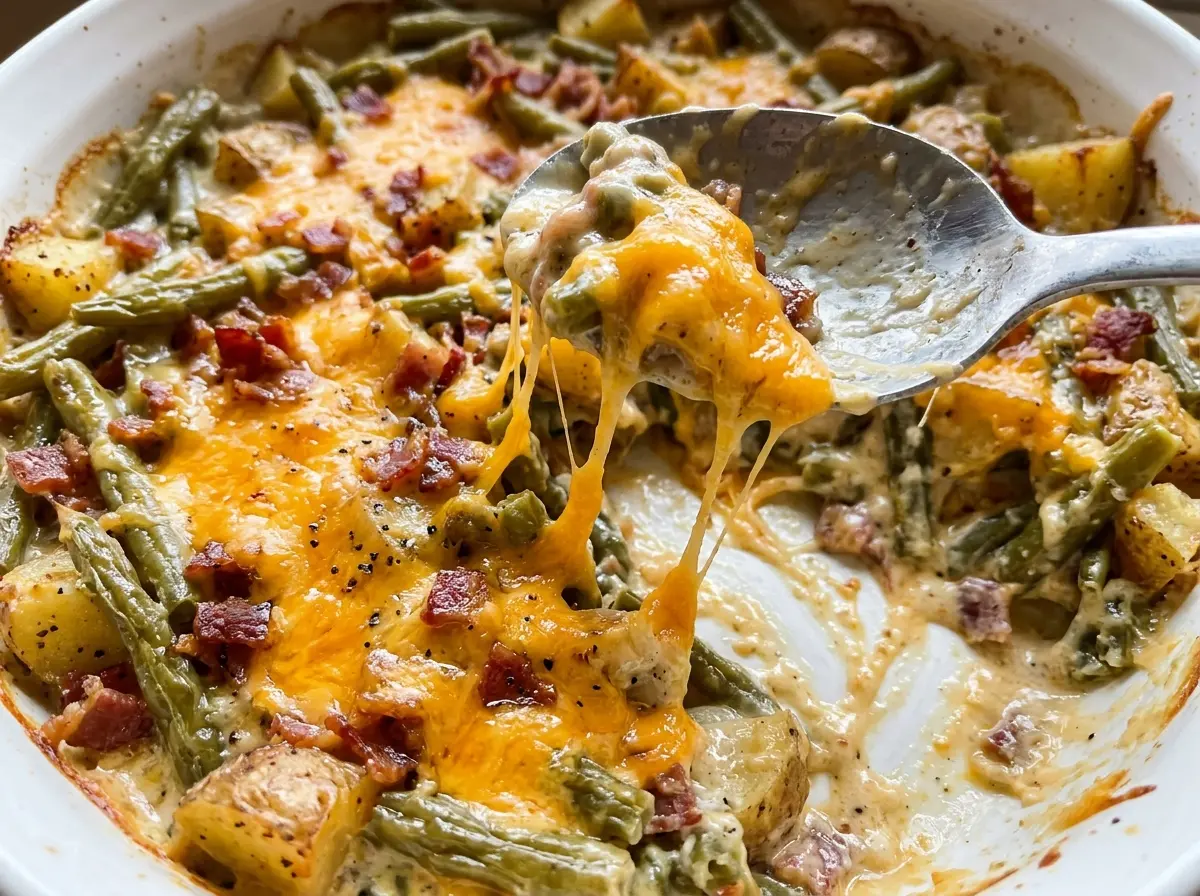
When the green beans come out of the pot still bright and a little snappy, I know they won’t disappear into the cheese sauce while the casserole bakes. That timing is what makes this cheesy green bean and potato casserole with bacon feel like a proper casserole instead of a dish of soft vegetables. The potatoes turn tender, the beans keep their shape, and the crisp bacon brings a salty edge to every scoop.
I cook the potatoes and green beans in the same pot, but I don’t give them the same cooking time. Potatoes need a few extra minutes; the beans go in only after the potatoes are lifted out. Then the vegetables get folded gently with the bacon, onion, and cheddar sauce so the potato cubes stay intact. Baked in a 9×13-inch dish, it comes out bubbling at the edges with a lightly golden top and a creamy sauce that clings to each bite.
Kitchen Note
Let the cooked bacon cool before crumbling it. Warm bacon tends to bend and smear, while cooled strips break into pieces that fold neatly through the casserole.
Save this cheesy green bean and potato casserole with bacon for its crisp bacon, tender vegetables, and bubbling cheddar sauce.
Why the Potatoes and Green Beans Need Separate Timers, Not Separate Pots
These vegetables can share their cooking water, but they won’t be ready at the same time. Potatoes need to simmer until a fork goes in easily; green beans need only a brief boil to reach crisp-tender. Adding both at once would leave you choosing between beans that have softened too much and potatoes that still need more time. Lifting out the potatoes first lets each vegetable reach the right texture without dirtying another pot.
That small bit of staging matters again in the oven. The potatoes and beans will bake beneath a thick cheese sauce, so they’re not starting from raw. The oven’s job is to heat the assembled casserole until it’s bubbling around the edges and lightly golden on top, not to cook the vegetables from scratch. Keep the potato cubes whole when you fold everything together, and the finished dish will have distinct bites instead of a mashed, blended texture.
How Yukon Golds, Fresh Beans, and Sharp Cheddar Shape Every Bite

- Yukon Gold potatoes — Their creamy texture holds up well as cubes, with enough structure to survive simmering and a gentle fold into the sauce. Red potatoes are a workable substitute and tend to hold their shape, though their texture is waxier. Russets break down more easily, so they’re less suited to a casserole where you want distinct cubes.
- Fresh green beans — Fresh beans give the casserole its crisp-tender bite. Choose firm beans without limp or shriveled spots; trimming them is the only prep they need before cutting into pieces. Frozen beans are less reliable here because they can soften and release extra moisture.
- Bacon — Regular sliced bacon supplies both crisp pieces and the drippings used to soften the onion. A standard grocery-store package works well; there’s no need to seek out thick-cut bacon, which takes longer to crisp and can leave larger, chewier pieces. For a meat-free adaptation, see the variation below.
- Sharp cheddar — Sharp cheddar gives the sauce enough tang to stand up to the potatoes and bacon. Mild cheddar melts into a gentler, less assertive sauce if that’s what you have. Shredding the cheese yourself helps it melt smoothly; pre-shredded cheese is convenient but can leave the sauce less silky.
- Whole milk, butter, and flour — Together, these make the sauce rich and spoon-coating, with the butter and flour forming the base that thickens the milk. Two-percent milk works if that’s what’s in your refrigerator, though the sauce will be less rich. All-purpose flour is the reliable choice for the roux; a measure-for-measure gluten-free flour blend is a useful alternative.
Building the Casserole in Four Stages
Simmer the Potatoes, Then Blanch the Beans
Heat the oven to 375°F and grease a 9×13-inch baking dish. Bring the potatoes and 3 quarts of water to a boil in a 6-quart pot, add 1 teaspoon of the salt, and simmer for 8–10 minutes, until just fork-tender. Lift them into a bowl with a slotted spoon, leaving the water boiling, then cook the green beans for 3–4 minutes until crisp-tender. Drain the beans well; water clinging to them can thin the sauce in the baking dish.
Crisp the Bacon and Soften the Onion
Cook the bacon in a 12-inch skillet over medium heat for 8–10 minutes, until crisp, then transfer it to a paper towel-lined plate. Leave 1 tablespoon of drippings in the skillet before adding the finely chopped onion. Cook the onion for 4–5 minutes, stirring as needed, until softened rather than browned. Once the bacon has cooled, crumble it into pieces.
Whisk a Smooth Cheddar Sauce
Melt the butter in a 3-quart saucepan over medium heat, whisk in the flour, and keep whisking as it cooks for 1 minute. Gradually whisk in the milk so the roux stays smooth, then cook for 4–6 minutes, whisking often, until the sauce thickens enough to coat a spoon. If you see lumps forming, whisk steadily before the sauce thickens further. Remove the pan from the heat before stirring in the remaining salt, black pepper, garlic powder, and cheddar; the cheese melts into a smoother sauce off the burner.
Fold Gently and Bake Until Bubbling
Combine the potatoes, green beans, crumbled bacon, and softened onion in the prepared dish. Pour the cheese sauce over them and fold gently, turning the vegetables just enough to coat without crushing the potatoes. Bake for 20–25 minutes, until the edges bubble and the top is lightly golden. Rest the casserole for 10 minutes before serving so the sauce settles around the vegetables instead of running straight across the plate.
Easy Changes for a Different Table
Make It Meat-Free
Leave out the bacon and soften the onion in the butter in the saucepan, then whisk in the flour and continue with the milk to make the sauce. Use cheddar made with vegetarian rennet if you need the dish to be strictly vegetarian. You’ll lose the smoky bacon flavor, but the onion and sharp cheddar still give the casserole plenty of savory character.
Make the Sauce Gluten-Free
Replace the all-purpose flour with the same amount of a measure-for-measure gluten-free flour blend intended for baking. Whisk it into the melted butter just as you would the flour, then add the milk gradually. The sauce may thicken a little differently, so use the spoon-coating texture as your cue before stirring in the cheddar.
Keep Some Bacon Crisp on Top
Set aside some of the crumbled bacon instead of folding every piece into the casserole. Sprinkle it over the top after baking, just before serving. The bacon mixed inside seasons the sauce, while the finishing pieces keep a crisp edge.
Storage and Reheating
- Refrigerator: Refrigerate leftovers in a covered container within 2 hours and use them within 3–4 days. The potatoes soften a little as they sit.
- Freezer: Freeze portions in airtight containers for up to 2 months. Thaw overnight in the refrigerator; the sauce may be less smooth and the potatoes softer after freezing.
- Reheating: Microwave individual portions in short intervals, stirring gently when possible, until the center reaches 165°F. Avoid heating for one long stretch, which can make the edges dry before the middle is hot.
Questions That Come Up With This Cheesy Casserole
Cheesy Green Bean and Potato Casserole with Bacon
Ingredients
Equipment
Method
- Heat the oven to 375°F.
- Grease a 9x13-inch baking dish.
- Bring the potatoes and water to a boil in a 6-quart pot, add 1 teaspoon salt, and simmer for 8–10 minutes, until just fork-tender.
- Lift the potatoes into a bowl with a slotted spoon, keeping the water boiling.
- Add the green beans to the boiling water and cook for 3–4 minutes, until crisp-tender.
- Drain the beans.
- Cook the bacon in a 12-inch skillet over medium heat for 8–10 minutes, until crisp.
- Transfer the bacon to a paper towel-lined plate and leave 1 tablespoon of drippings in the skillet.
- Add the onion and cook for 4–5 minutes, until softened.
- Crumble the cooled bacon.
- Melt the butter in a 3-quart saucepan over medium heat.
- Whisk in the flour and cook for 1 minute, whisking constantly.
- Gradually whisk in the milk and cook for 4–6 minutes, whisking often, until the sauce thickens enough to coat a spoon.
- Remove the saucepan from the heat.
- Stir in the remaining 1/2 teaspoon salt, the pepper, garlic powder, and cheddar until the cheese melts.
- Combine the potatoes, green beans, bacon, and onion in the prepared baking dish.
- Pour the cheese sauce over the casserole components.
- Fold gently to coat.
- Bake for 20–25 minutes, until bubbling around the edges and lightly golden on top.
- Let the casserole rest for 10 minutes before serving.