
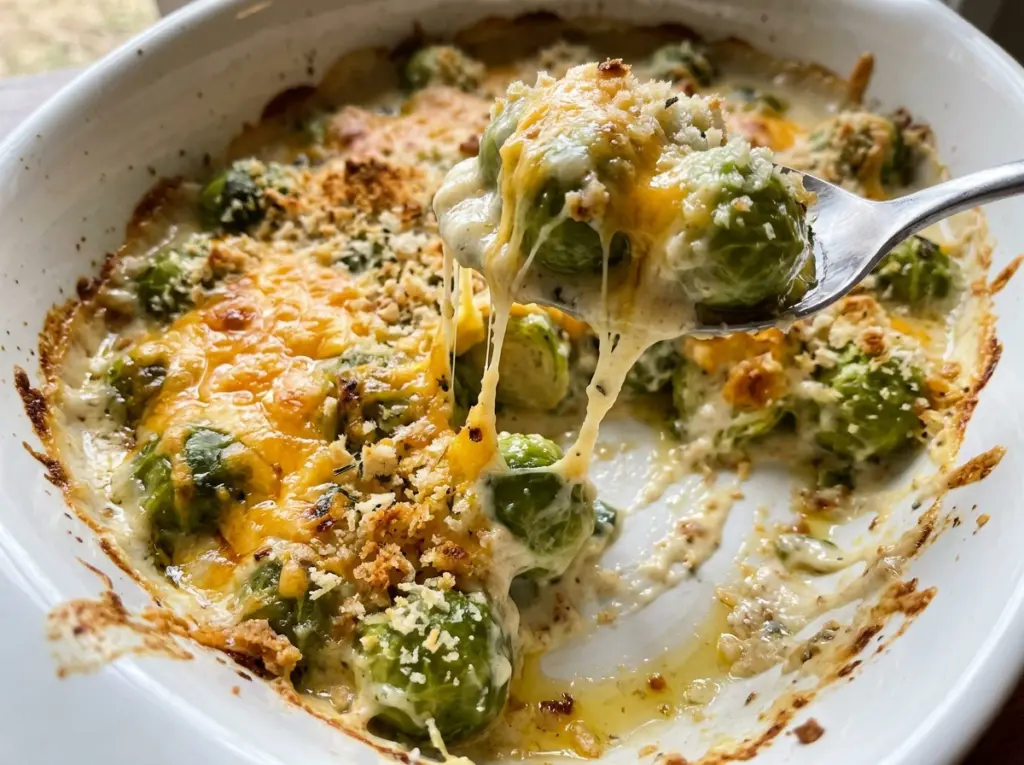
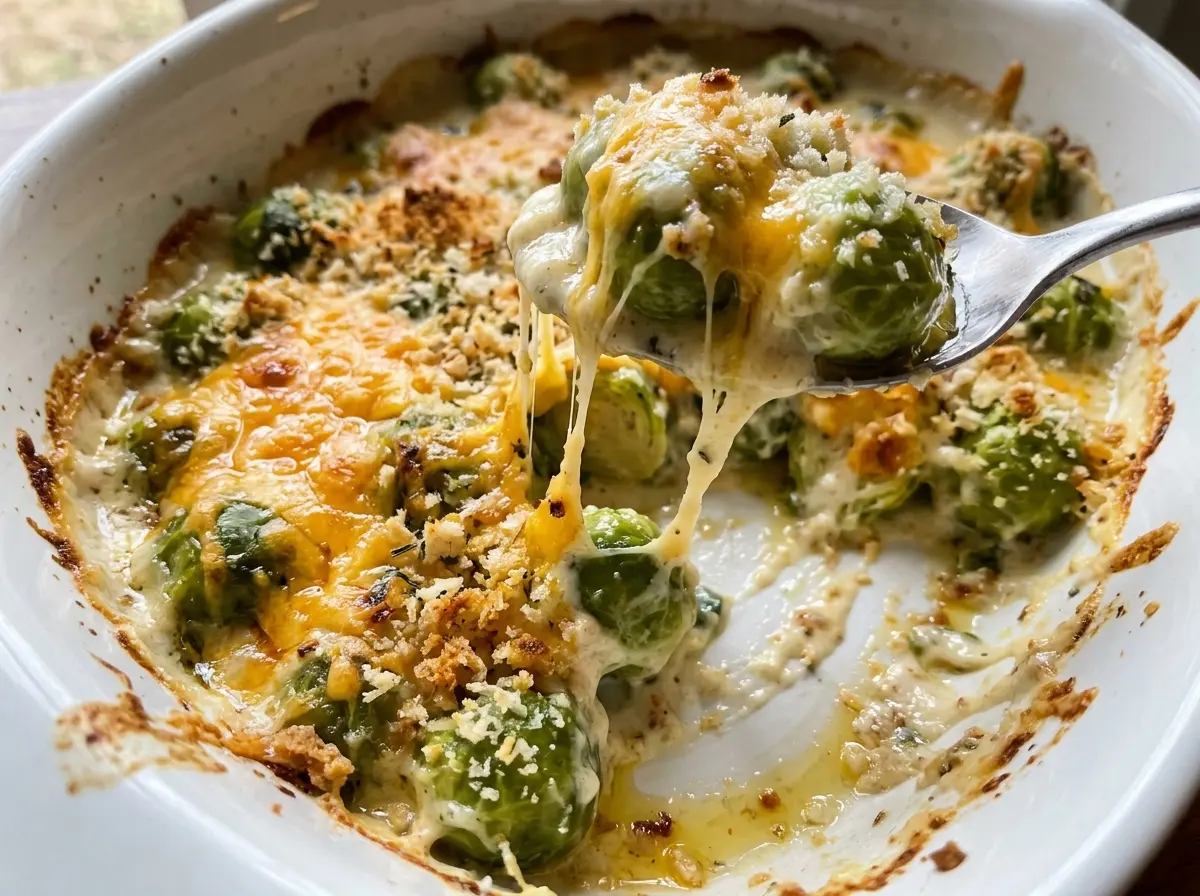
The first thing I look for when this casserole comes out of the oven is a golden panko top and a little cheddar sauce bubbling around the edges. Brussels sprouts can go from pleasantly tender to soft and overcooked in a hurry, especially when they spend time in the oven after boiling. I like this version because the sprouts keep their shape beneath the creamy sauce, while the crisp topping gives each serving a bit of crunch. It’s a hearty vegetable side that serves eight from a 9×13-inch dish.
The sharp cheddar gives the sauce plenty of flavor, and Dijon adds a small tang that keeps the creaminess from feeling too heavy. Panko and Parmesan make a topping that browns beautifully without covering up the sprouts. After baking, a short rest lets the sauce settle around them, so the casserole is easier to serve while it’s still warm.
Kitchen Note
Drain the sprouts well after boiling. Any water clinging to the cut sides can thin the cheese sauce in the dish, so I give them a moment to let the excess drip away before assembling.
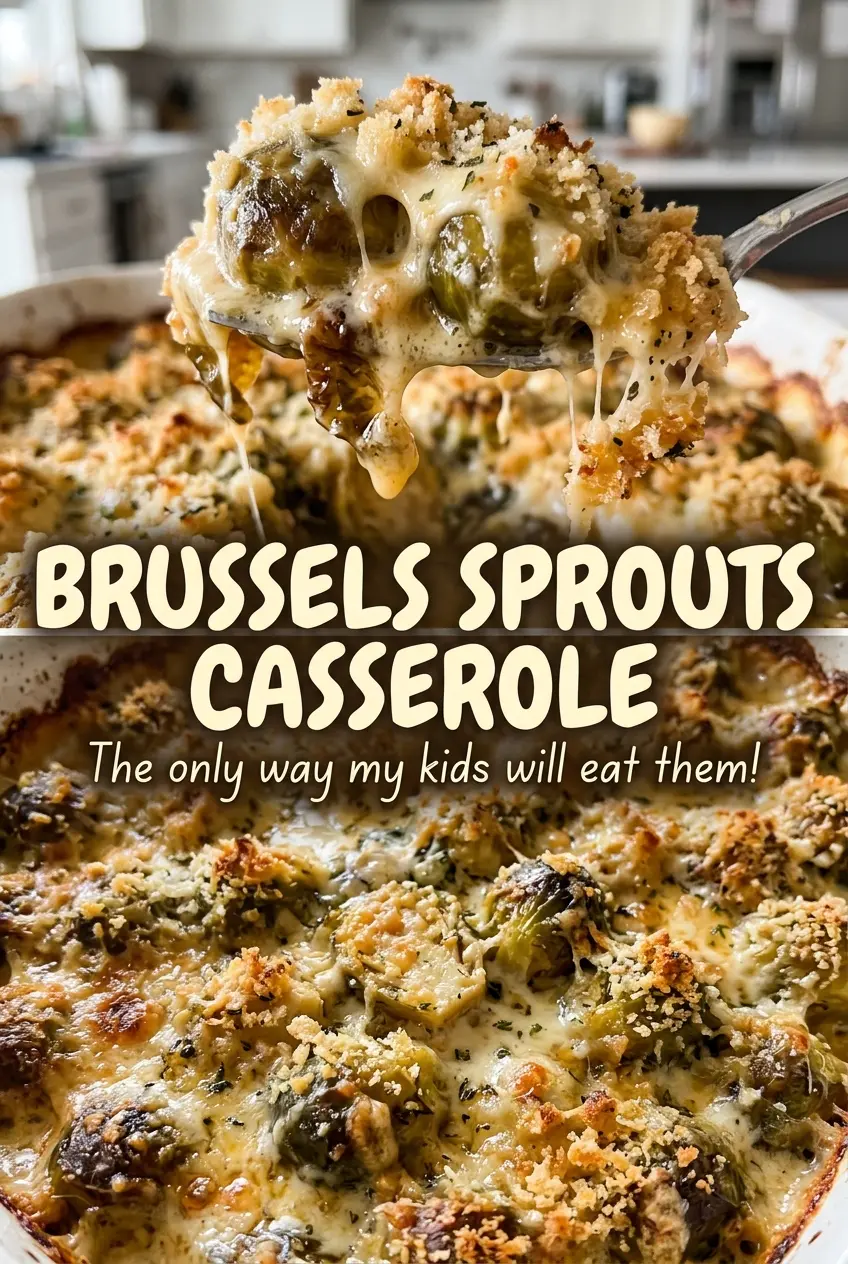
Save this Brussels sprouts casserole for a crisp panko-Parmesan topping, tender sprouts, and a sharp cheddar sauce that bubbles around the edges.
Why These Brussels Sprouts Need a Head Start Before the Cheese Sauce
Brussels sprouts take longer to become tender than the cheese sauce needs to bake. Giving them a short boil before they go into the casserole means the oven can focus on bringing everything together and browning the topping, rather than trying to cook firm sprouts from scratch. The two cooking stages have different jobs, and that’s what helps the finished casserole feel cohesive instead of uneven.
There’s a narrow window between tender and too soft. The sprouts should yield when pierced with a knife but still feel like they can hold up to being moved into the baking dish. If they’re already collapsing before the sauce goes on, the extra time in the oven will leave them overly soft. Halving them after trimming also gives the sauce plenty of surface area to cling to, while keeping the pieces substantial enough to serve neatly.
This balance matters more than adding extra sauce or baking longer. The sprouts, sauce, and topping each have a job: tender vegetables underneath, a spoon-coating cheddar sauce between them, and a browned, crisp finish over the top. When those textures stay distinct, each forkful tastes like casserole rather than a soft pile of vegetables.
What Makes the Cheddar Sauce and Panko Topping Work
- Brussels sprouts — Choose firm sprouts with compact leaves, then trim and halve them so they cook evenly. Very large sprouts may need a little longer to reach the same knife-tender texture as smaller ones.
- Flour, whole milk, and heavy cream — The flour thickens the liquid into a sauce that can coat the vegetables, while milk keeps it pourable and cream brings richness. Whisking the liquid in gradually helps prevent lumps; cooking the flour in butter first takes away its raw taste.
- Sharp cheddar and Dijon — Sharp cheddar gives the sauce a more pronounced cheese flavor than a mild cheddar. Dijon adds a little tang alongside the richness. Shredding cheddar yourself is worthwhile here because it melts more smoothly than many pre-shredded cheeses.
- Panko and Parmesan — Panko’s larger, airy crumbs make a lighter, crispier topping than fine breadcrumbs. Finely grated Parmesan adds a savory, salty edge and mixes easily through the crumbs.
- Unsalted butter — Butter builds the roux and coats the topping so it can brown in the oven. Using unsalted butter also lets the kosher salt in the sauce season the dish without relying on the saltiness of the butter.
From Just-Tender Sprouts to a Golden Panko Top
Boil the sprouts until a knife meets slight resistance
Bring the water to a boil in a large pot, then add the trimmed, halved Brussels sprouts. Cook them for 5–7 minutes, checking with a knife toward the end of that window. You want the knife to enter without a hard crunch, but the sprouts shouldn’t feel mushy. Drain them well before moving on so excess water doesn’t collect in the casserole.
Whisk a smooth sauce that coats a spoon
In a 2-quart saucepan over medium heat, melt 3 tablespoons of butter and whisk in the flour. Cook the mixture for 1 minute, then gradually whisk in the milk and heavy cream so the roux blends evenly. Bring it to a gentle simmer and keep whisking for 3–5 minutes, until the sauce coats a spoon. Take the pan off the heat before stirring in the cheddar, Dijon, salt, and pepper; the cheese should melt into the hot sauce without being cooked over direct heat.
Bake until the edges bubble and the crumbs turn golden
Heat the oven to 375°F and grease a 9×13-inch baking dish. Spread the drained sprouts in the dish, pour the cheese sauce evenly over them, and stir the melted remaining butter with the panko and Parmesan. Scatter the topping over the casserole rather than packing it down, so the crumbs can brown. Bake for 20–25 minutes, until the sauce bubbles at the edges and the topping is golden brown. Rest the casserole for 10 minutes before serving so the sauce has time to settle.
Two Smart Swaps for Brussels Sprouts Casserole
Make the casserole gluten-free
Use a cup-for-cup gluten-free flour blend in place of the all-purpose flour, and choose gluten-free panko for the topping. The sauce may have a slightly different texture depending on the blend, but the roux method still gives it body, and the panko keeps the top crisp.
Trade cheddar for Gruyère
Use the same amount of shredded Gruyère in place of the sharp cheddar. It melts into a smooth sauce and brings a nuttier, more mellow cheese flavor; the Dijon and Parmesan keep the casserole from tasting flat.
Storage and Reheating
- Refrigerator: Store covered for 3–4 days. The sprouts soften a little and the panko loses some of its crunch.
- Freezer: Freeze cooled portions in an airtight container for up to 2 months. The sauce may separate slightly and the topping won’t be as crisp after thawing.
- Reheating: Reheat portions in a 350°F oven, loosely covered, until the center reaches 165°F; uncover near the end if you’d like to crisp the topping. Avoid overheating, which can make the sprouts too soft and the sauce oily.
Questions That Come Up When Making Brussels Sprouts Casserole
Brussels Sprouts Casserole
Ingredients
Equipment
Method
- Bring the water to a boil in a large pot.
- Add the Brussels sprouts and cook for 5–7 minutes, until just tender when pierced with a knife.
- Drain the Brussels sprouts well.
- In a 2-quart saucepan over medium heat, melt 3 tablespoons of the butter.
- Whisk in the flour and cook for 1 minute.
- Gradually whisk in the milk and heavy cream, then bring to a gentle simmer.
- Cook for 3–5 minutes, whisking, until the sauce thickens enough to coat a spoon.
- Remove the saucepan from the heat and stir in the cheddar, Dijon mustard, salt, and pepper until the cheese is melted.
- Heat the oven to 375°F.
- Grease a 9x13-inch baking dish.
- Spread the drained Brussels sprouts in the dish.
- Pour the cheese sauce evenly over the Brussels sprouts.
- Melt the remaining 2 tablespoons of butter.
- Stir the melted butter with the panko and Parmesan.
- Scatter the topping over the casserole.
- Bake for 20–25 minutes, until the sauce bubbles at the edges and the topping is golden brown.
- Let the casserole rest for 10 minutes before serving.