
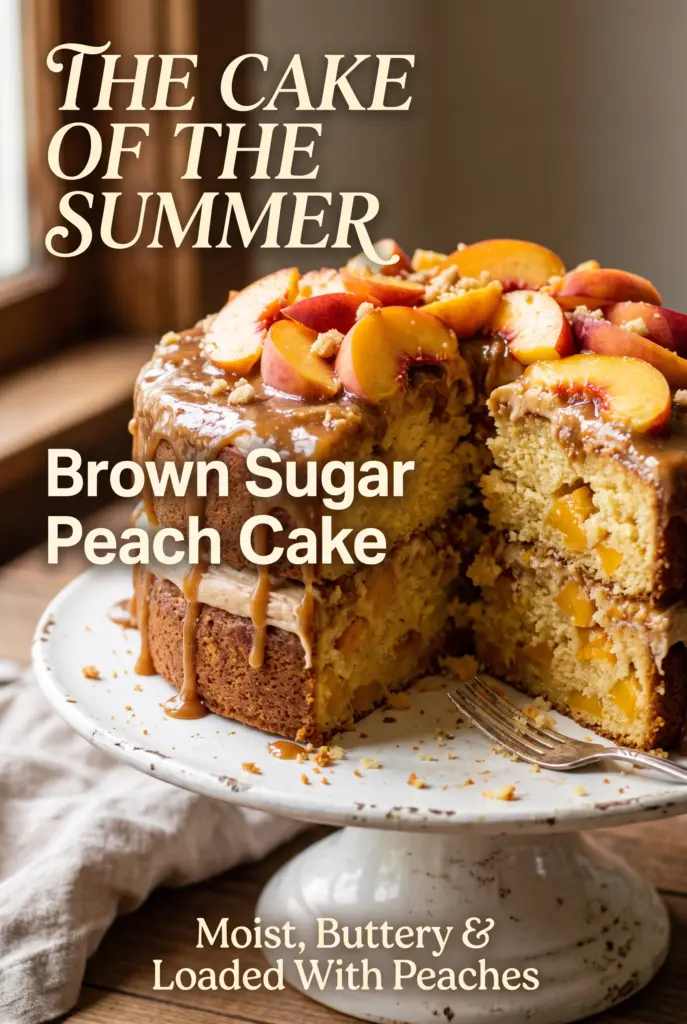
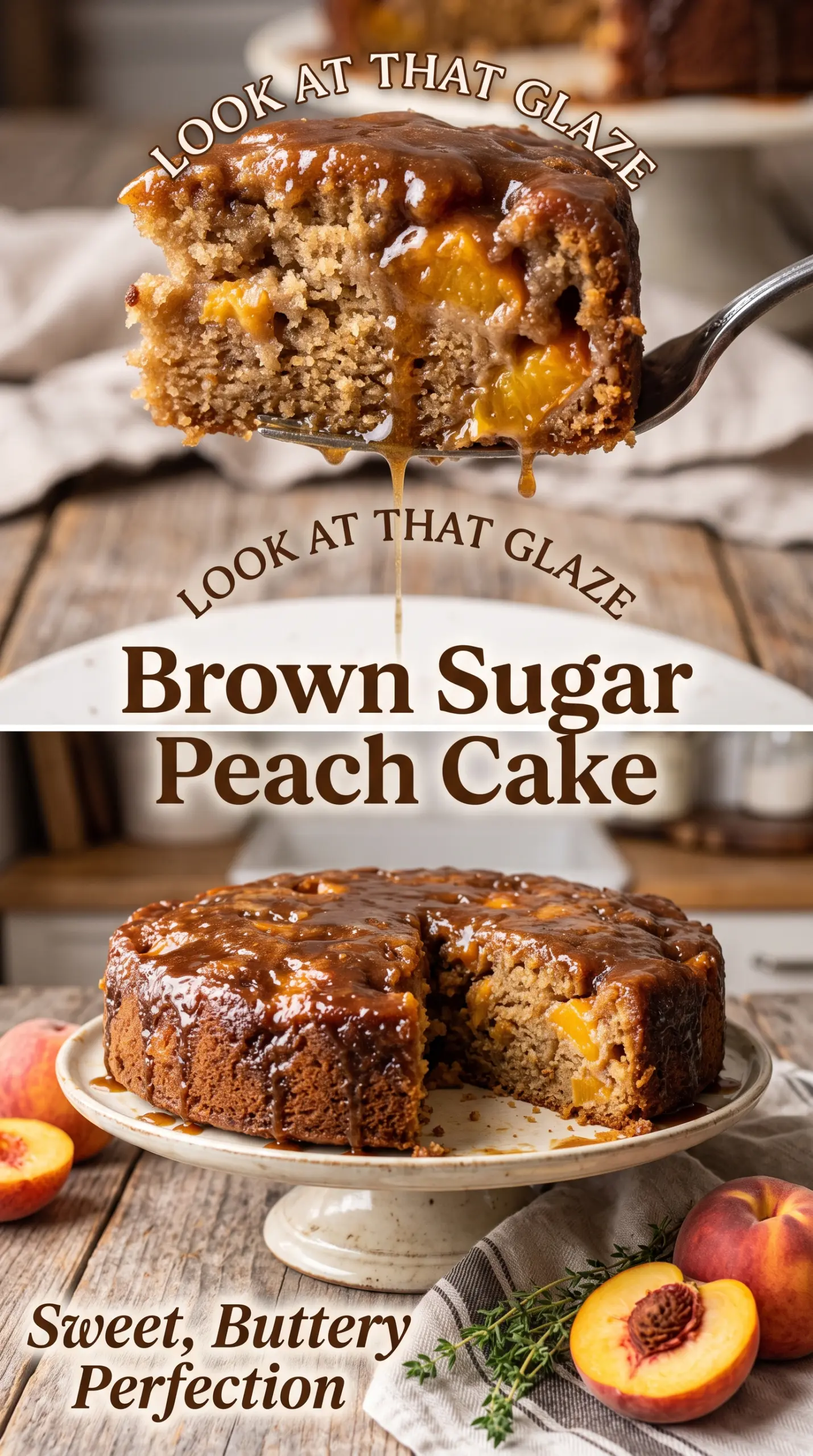
Soft crumb, juicy peach pockets, and a warm brown sugar glaze make this the kind of cake people reach for twice. It’s tender without turning flimsy, sweet without tasting heavy, and the peaches stay bright enough to taste like actual fruit instead of jammy filler. The glaze sinks into the top just enough to give every slice a glossy finish and a little extra richness.
The key here is balance. Sour cream keeps the crumb plush and gives the batter enough acidity to work with the baking soda, while the mix of brown sugar and granulated sugar keeps the cake from baking up muddy or dense. Tossing the peaches with a spoonful of flour matters more than it sounds like it should — it helps keep the fruit suspended through the batter instead of sinking into one soggy layer at the bottom.
Below, I walk through the parts that matter most: how to keep the peaches from watering down the batter, when to glaze the cake so it still soaks in a little, and a few smart swaps if you need to work with what’s in your kitchen.
The peaches stayed in the cake instead of sinking, and the brown sugar glaze soaked into the top without making it wet. I served it warm and the center was soft but still held its shape perfectly.
Brown Sugar Peach Cake with that soft crumb and glossy glaze is the one to pin for peach season baking.
The Reason This Cake Stays Tender Instead of Turning Dense
Peach cakes go wrong in two common ways: the fruit sinks, or the crumb turns tight from too much stirring. This version avoids both by using a batter that’s rich enough to hold the peaches and soft enough to bake up plush. Sour cream brings moisture without thinning the batter, and the brown sugar adds a deeper note that plays well with the fruit instead of fighting it.
The other detail that matters is the way the peaches are handled. Fresh peaches release juice as they bake, and that juice can wreck the structure if you don’t give it somewhere to go. A light flour coating helps, but just as important is folding them in at the end with a gentle hand so the batter doesn’t get overworked before it goes into the oven.
What Each Ingredient Is Doing in This Cake
- All-purpose flour — This gives the cake its structure. Too little and the peaches will weigh it down; too much and you lose that soft, bakery-style crumb.
- Brown sugar — This does more than sweeten. It adds moisture and a hint of molasses, which makes the cake taste warmer and deeper than a plain vanilla peach cake.
- Sour cream — This is one of the biggest reasons the texture stays tender. Full-fat sour cream gives the best result, but plain whole-milk Greek yogurt works in a pinch and keeps the same tangy softness.
- Fresh peaches — Use ripe peaches that still hold their shape when you cut them. If yours are very juicy, pat them dry after dicing so the batter doesn’t get watery.
- Butter — Butter gives the cake its rich flavor and helps the glaze set with a silky finish. For the glaze, don’t swap in margarine; the flavor and texture both suffer.
- Cinnamon — Just enough to round out the peaches without making the cake taste like spice cake. If you want the peaches to stay front and center, keep the cinnamon measured.
How to Build the Batter and Glaze Without Ruining the Texture
Start With the Dry Ingredients
Whisk the flour, leaveners, salt, and cinnamon together before anything touches the bowl. That keeps the baking powder and baking soda evenly distributed, which matters in a cake this tender because a pocket of unmixed soda can leave a bitter bite. If you skip the whisking, you’re more likely to get uneven rise and little dense patches around the edges.
Cream the Butter and Sugars Until the Mixture Looks Light
Beat the butter with both sugars until the mixture lightens in color and looks fluffy, not grainy. That step traps air, and the air gives you lift before the leaveners even start working. If the butter is too cold, the mixture will stay clumpy; if it’s greasy and soft enough to smear, the cake can bake up flatter, so room temperature should still hold its shape.
Fold in the Peaches at the Very End
Toss the diced peaches with flour first, then fold them in by hand. The batter should look thick and scoopable before the fruit goes in, and once the peaches are added, stop mixing as soon as they’re distributed. Overmixing at this stage breaks down the batter and pushes the fruit downward, which is how you end up with a heavy bottom layer and not much peach in the middle.
Glaze the Cake While It’s Still Warm
Warm the glaze until the brown sugar dissolves and it looks smooth and glossy. Let the cake cool for about 15 minutes, then drizzle the glaze over the top while the cake is still warm enough to absorb some of it. If the cake is piping hot, the glaze disappears into the crumb; if it’s fully cool, it sits on top and firms up like candy instead of soaking in.
How to Adapt This Cake for What You Have on Hand
Make It Gluten-Free
Use a 1:1 gluten-free baking flour that includes xanthan gum. The cake will still be tender, but the crumb may be a little more delicate, so let it cool fully before slicing. Without the structure from regular flour, cutting it too soon can make it break apart.
Swap in Frozen Peaches
Frozen peaches work when fresh ones aren’t in season. Thaw them first and drain off excess liquid, then pat them dry before tossing with flour. If you add them straight from frozen, they can water down the batter and stretch the bake time.
Use Greek Yogurt Instead of Sour Cream
Plain whole-milk Greek yogurt gives nearly the same tang and moisture as sour cream. The cake may bake up a touch lighter, but the texture stays soft. Stick with full-fat yogurt, because low-fat versions can make the batter thinner and less rich.
Storage and Reheating
- Refrigerator: Store covered for up to 4 days. The crumb stays moist, but the glaze will firm up in the fridge.
- Freezer: The cake freezes well without the glaze. Wrap individual slices tightly and freeze for up to 2 months, then glaze after thawing if you want the freshest finish.
- Reheating: Warm slices in the microwave for 10 to 15 seconds or in a low oven until just warmed through. Too much heat dries out the crumb and makes the peaches taste flat.
Answers to the Questions Worth Asking
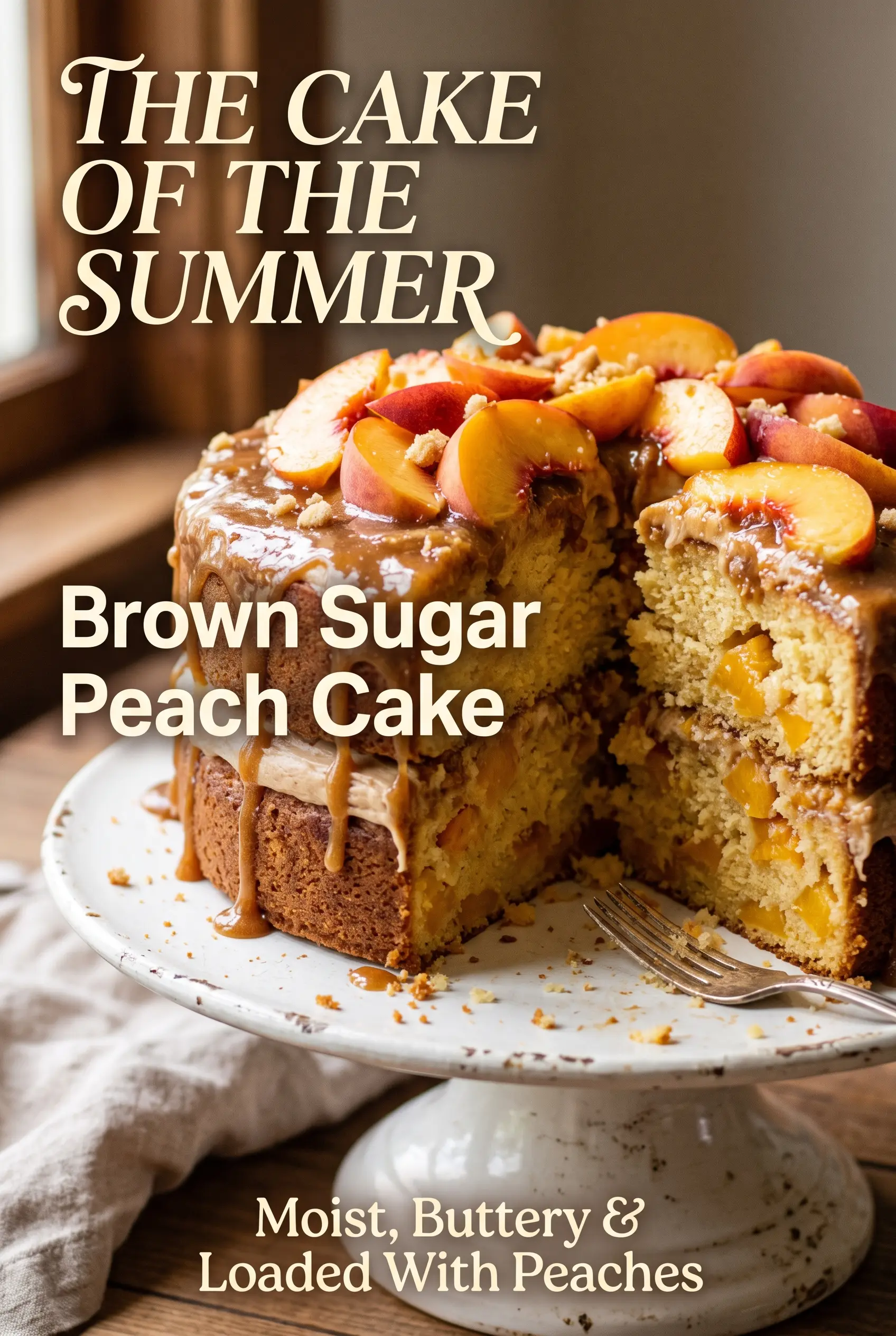
Brown Sugar Peach Cake
Ingredients
Equipment
Method
- Preheat the oven to 350°F (175°C).
- Grease and flour a 9-inch round cake pan, leaving no bare spots so the cake releases cleanly.
- Whisk together the all-purpose flour, baking powder, baking soda, salt, and ground cinnamon until evenly mixed.
- Beat the unsalted butter, brown sugar, and granulated sugar until light and fluffy, scraping the bowl as needed for a uniform texture.
- Mix in the eggs one at a time until the batter looks smooth and glossy.
- Add the vanilla extract and sour cream, mixing just until combined.
- Gradually mix in the dry ingredients to form a thick batter with no visible dry pockets.
- Toss the diced fresh peaches with 1 tablespoon flour, then gently fold them into the batter so the fruit stays evenly distributed.
- Pour the batter into the prepared cake pan and spread it level on top.
- Bake at 350°F (175°C) for 40–45 minutes, until a toothpick inserted in the center comes out clean.
- Melt the butter for the glaze, then stir in brown sugar, heavy cream, vanilla extract, and salt until smooth and pourable.
- Let the cake cool for 15 minutes before drizzling with the warm brown sugar glaze so it sets with a glossy finish.