
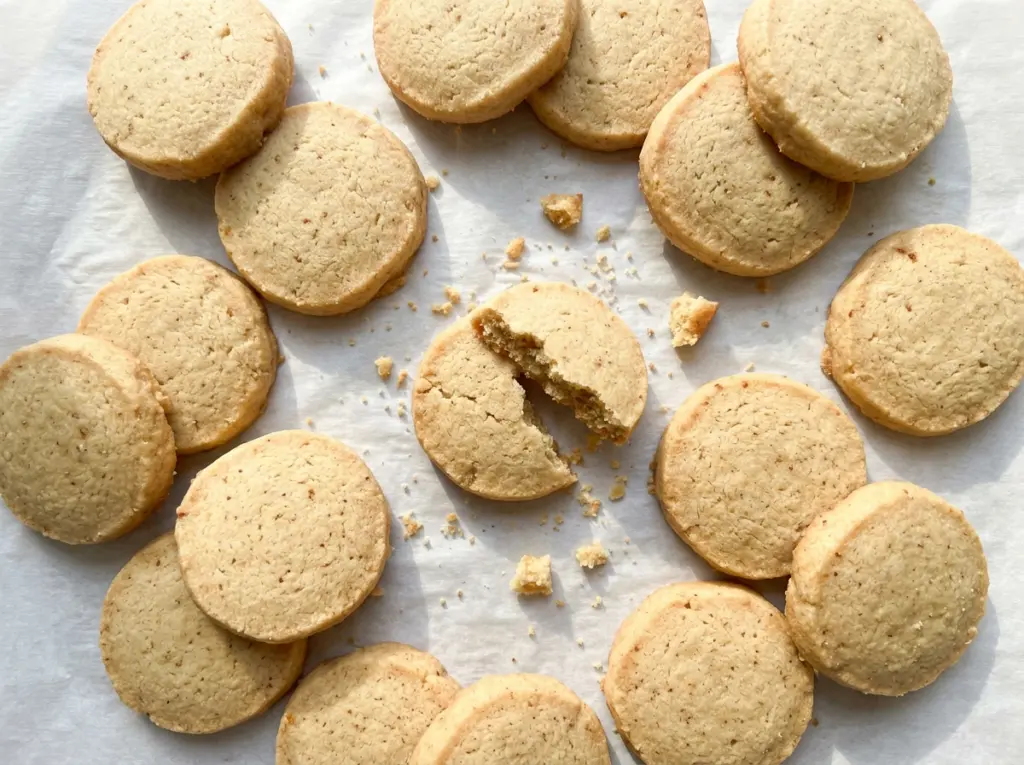
The dough for shortbread should feel soft and workable, not sticky or greasy. When the butter gets too warm, rolling turns messy and the rounds lose their clean edges, so this dough gets a full chill before it ever meets the rolling pin. These brown sugar maple shortbread cookies bake up with lightly golden edges and a tender, buttery bite, with maple in both the dough and the aroma.
Light brown sugar gives the cookies a softer, less sandy texture than a classic white-sugar shortbread, while maple syrup adds moisture along with flavor. Maple extract fills in the flavor without needing a heavy pour of syrup, which could change the dough. I keep the mixing gentle once the flour goes in, then let the chilled dough do the work: it rolls neatly, cuts into tidy rounds, and holds its shape as it bakes.
They’re a lovely choice when you want a small, neat cookie that doesn’t need frosting or a finishing drizzle. Each round stays simple and buttery, with a mellow maple note and just enough brown sugar warmth.
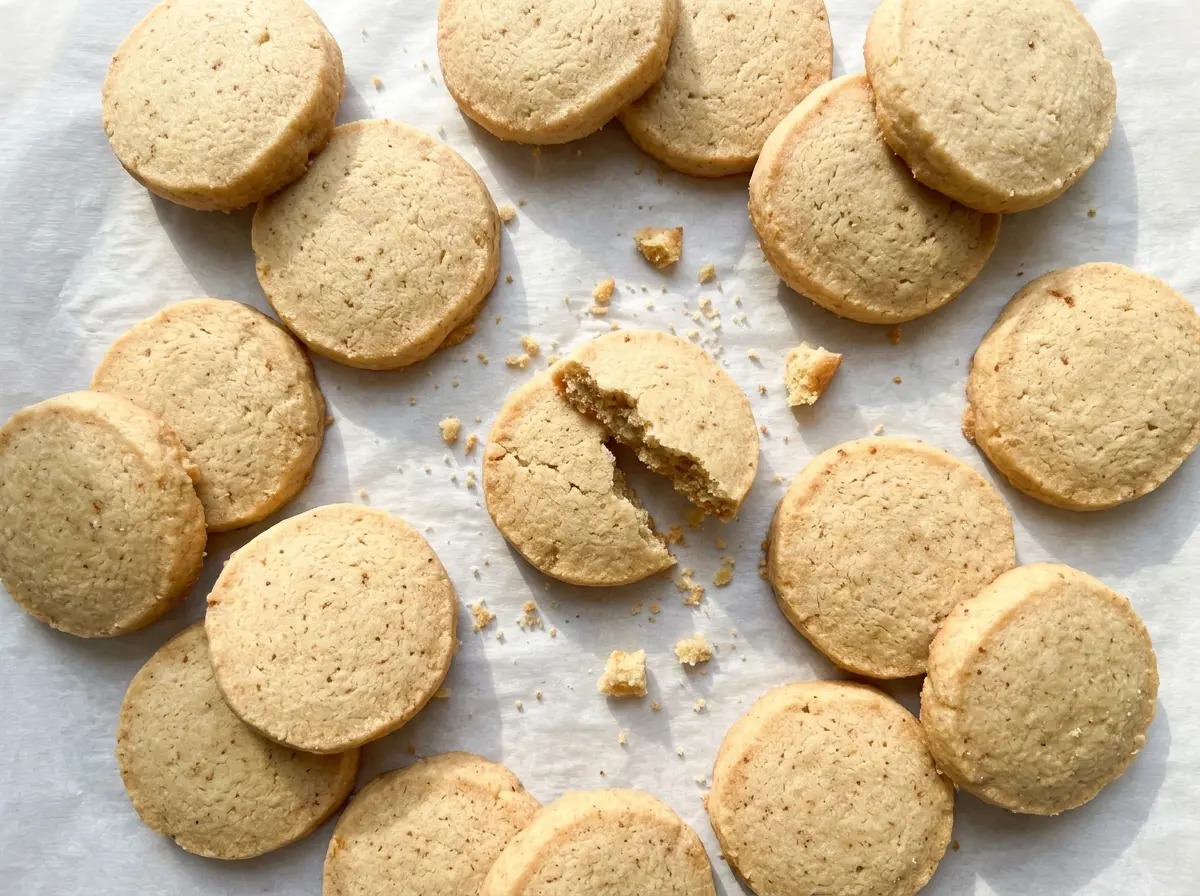
Kitchen Note
Give the wrapped dough the full hour in the refrigerator. That firm disk is much easier to roll evenly, and the butter is less likely to soften while you cut the rounds.
Save these brown sugar maple shortbread cookies for a bake-ahead treat with a tender, buttery bite and gentle maple flavor.
Why Brown Sugar Makes These Shortbread Rounds More Tender
Shortbread is built around butter, sugar, and flour, and changing the sugar changes more than the sweetness. Light brown sugar brings a little molasses and moisture into the dough. That gives these rounds a tender, cohesive crumb rather than the drier, more sandy snap you might expect from shortbread made with granulated sugar.
That softer texture is part of what makes the maple flavor feel at home here. The brown sugar adds a gentle caramel note, so the maple doesn’t have to carry the whole cookie by itself. It also means the dough should be mixed only until it comes together; beating it for a long time after adding the flour works against the delicate texture.
Keep the rounds at the stated thickness when you roll them. Thin shortbread can dry out before it develops the lightly golden edges that signal these cookies are ready. At a half-inch thick, the centers have time to set while the edges take on color, leaving each cookie sturdy enough to lift but tender when you bite into it.
What Gives These Cookies Their Maple Flavor and Shortbread Texture

- Unsalted butter — Butter gives shortbread its rich, tender structure, so use butter you enjoy the taste of; there’s no need for a specialty brand. Softened butter should give slightly when pressed but shouldn’t look oily or melted. Unsalted butter also lets the kosher salt stay in balance; if you use salted butter, leave out the added salt.
- Light brown sugar — Its mild molasses flavor supports the maple without making the cookies taste dark or heavy. Pack it into the measuring cup so the amount is consistent. Dark brown sugar can stand in, but it brings a deeper molasses note that will compete more with the maple.
- Pure maple syrup and maple extract — Syrup contributes real maple flavor and a touch of moisture, while extract makes that flavor easier to notice in a buttery dough. Pure maple syrup is worth choosing here; pancake syrup has a different sweetness and won’t give the same maple character. The extract is concentrated, so keep to the small amount in the recipe rather than adding extra syrup for a stronger taste.
- All-purpose flour — This gives the rounds enough structure to hold their shape after cutting. Spoon flour into the measuring cup and level it rather than packing it down; too much flour can leave the dough dry and difficult to bring together. A standard all-purpose flour is the right choice.
- Kosher salt — Salt keeps the buttery sweetness from tasting flat. Kosher salt crystals vary by brand, so measure the stated amount rather than substituting by eye.
Chill, Cut, and Bake Without Softening the Dough
Cream the butter and brown sugar until smooth
Beat the softened butter and packed brown sugar in a large bowl until smooth and creamy, about 2 minutes. Scrape the mixture from the sides of the bowl if it’s collecting there, then beat in the maple syrup and maple extract. The mixture should look evenly combined rather than streaky. If the butter looks melted or greasy, pause before adding the flour and let it firm up slightly.
Bring the dough together, then give it a proper chill
Add the flour and kosher salt, mixing on low just until a soft dough forms. Stop when there are no dry pockets of flour; extended mixing after that point can make shortbread tougher. Shape the dough into a disk, wrap it, and refrigerate it for 1 hour. A disk chills more evenly than a thick ball and is easier to roll once firm.
Roll to an even thickness and cut clean rounds
Roll the chilled dough on a lightly floured surface to a half-inch thickness, then cut it into 2-inch rounds. Keep the pressure even as you roll so some cookies don’t bake faster than others. Gather and reroll scraps as needed, using only enough flour to prevent sticking. Arrange the rounds about 1 inch apart, and keep them chilled while the first batch bakes.
Bake until the edges turn lightly golden
Heat the oven to 325°F and line a large baking sheet with parchment paper. Bake the cookies in batches for 18–22 minutes, watching for lightly golden edges and centers that look set; the centers don’t need to brown. Pulling them while the edges are still pale can leave them underbaked, while waiting for deep color can dry out the delicate crumb. Let the baking sheet cool between batches so the next rounds don’t start softening on a hot pan.
Let the rounds set before moving them
When the cookies come out of the oven, leave them on the baking sheet for 5 minutes. They’re delicate while hot, and that short rest lets them firm enough to move without breaking. Transfer them to a wire rack afterward and let them cool completely. If you handle them straight from the oven, their edges are more likely to crumble.
Three Easy Ways to Change the Maple Shortbread
Use dark brown sugar for a deeper cookie
Swap the light brown sugar for the same amount of packed dark brown sugar. The rounds will have a stronger molasses flavor and a slightly deeper color, which makes the maple taste less delicate but still gives you a tender shortbread.
Make a gluten-free batch with a 1-to-1 flour blend
Replace the all-purpose flour with a cup-for-cup gluten-free baking blend intended to replace wheat flour in cookies. Choose one that includes xanthan gum or a similar binder, and handle the cut rounds gently; the finished cookies may be a little more fragile and less uniform than the wheat-flour version.
Trade the maple extract for vanilla
Use vanilla extract in place of the maple extract if that’s what you have. The cookies will still get maple flavor from the syrup, but the maple note will be softer and the overall taste more buttery and vanilla-forward.
Storage and Reheating
- Refrigerator: These cookies don’t need refrigeration. Keep them in an airtight container at room temperature for up to 1 week; chilling can make the butter-rich cookies firm.
- Freezer: Once completely cool, freeze the cookies in an airtight container for up to 2 months. Separate layers with parchment so the rounds don’t stick together.
- Reheating: No reheating is needed. If frozen, let the cookies thaw at room temperature; microwaving can soften the butter and make their texture greasy.
Questions That Come Up While Making Maple Shortbread
Brown Sugar Maple Shortbread Cookies
Ingredients
Equipment
Method
- Heat the oven to 325°F.
- Line a large baking sheet with parchment paper.
- Beat the softened butter and packed light brown sugar in a large bowl until smooth and creamy, about 2 minutes.
- Beat in the pure maple syrup and maple extract.
- Add the all-purpose flour and kosher salt and mix on low just until a soft dough forms.
- Shape the dough into a disk, wrap it, and refrigerate for 1 hour.
- Roll the dough on a lightly floured surface to 1/2-inch thickness and cut into 2-inch rounds, gathering and rerolling scraps as needed.
- Arrange the rounds about 1 inch apart and keep them chilled while the first batch bakes.
- Bake in batches for 18–22 minutes, until the edges are lightly golden and the centers look set.
- Let the baking sheet cool between batches.
- Let the cookies rest on the baking sheet for 5 minutes.
- Transfer the cookies to a wire rack to cool completely.