
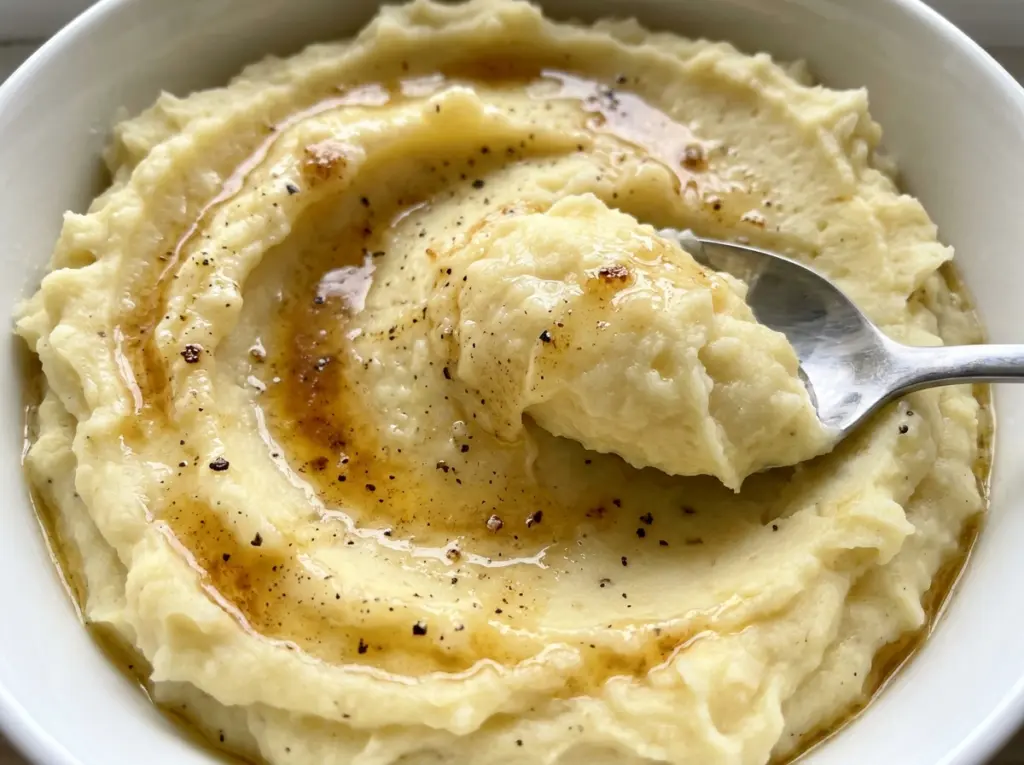
The butter starts to smell nutty before you see much change, then tiny golden flecks appear at the bottom of the pan. That’s the moment to take it off the heat. Brown it a little too far and the flavor turns bitter; stop at the right point and these brown butter mashed potatoes taste toasted and rich without needing anything extra on top.
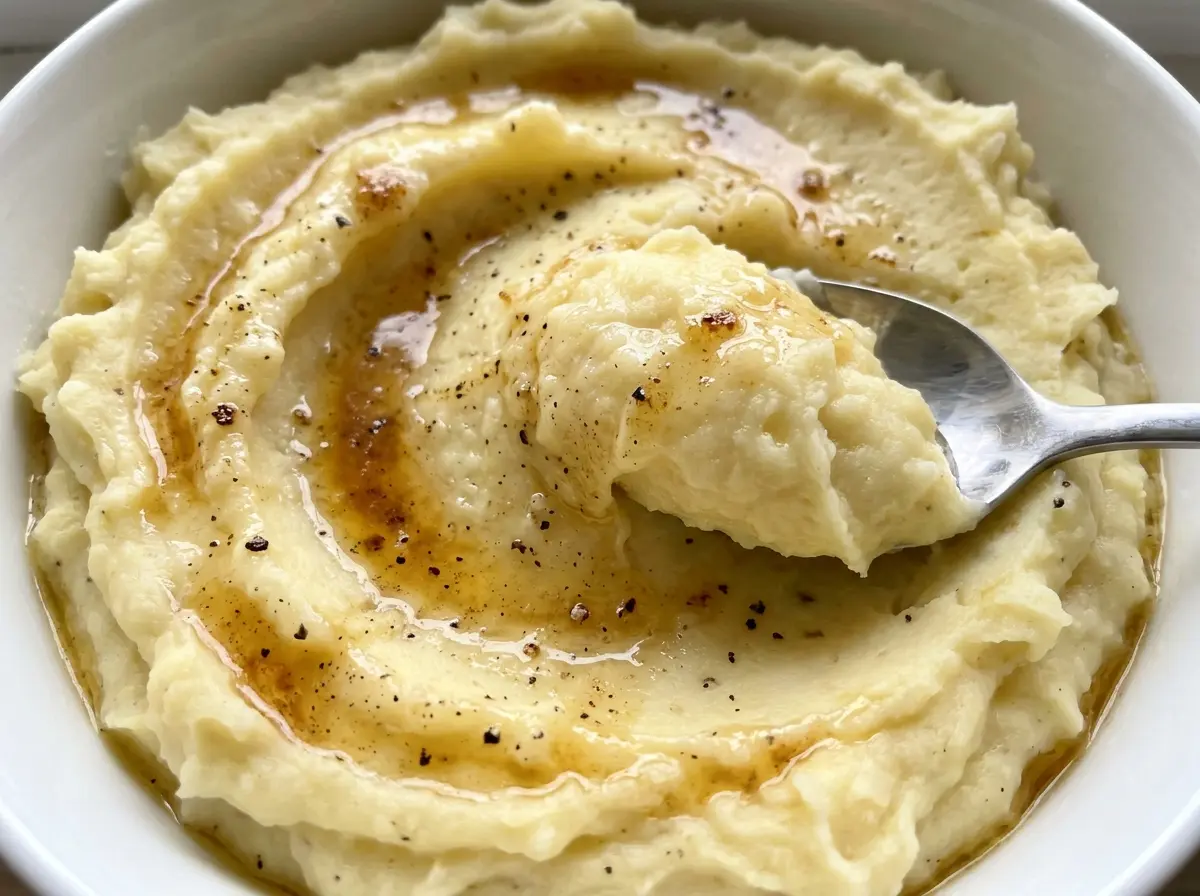
I make the potatoes with Yukon Golds because they mash into a naturally creamy texture, then fold in warm milk and browned butter gradually. Warming the milk in the same saucepan keeps the butter’s toasted bits in the dish instead of leaving them behind. The finish is buttery but not heavy, with black pepper and enough salt to bring the potatoes forward. You’ll have a smooth, soft mash with little flecks of browned butter throughout.
Kitchen Note
After draining, give the potatoes their full minute over low heat and shake the pot gently. You’ll see steam rise as extra water evaporates, which keeps the finished mash from turning loose.
Save these brown butter mashed potatoes for a meal that deserves a creamy mash with a warm, nutty finish.
Why These Potatoes Need Salt in Two Different Places
Potatoes don’t season themselves evenly after they’ve been mashed. Salt in the cooking water gets a chance to flavor the pieces as they soften, while the salt stirred in at the end seasons the finished mash. Those two moments do different jobs, which is why I divide the salt rather than saving all of it for the bowl.
The butter and milk soften the sharp edges of the seasoning, too. If the potatoes taste flat, it’s often because the cooking water was underseasoned or the final seasoning didn’t get mixed through. Using the specified kosher salt in both stages gives the potatoes a rounded, savory taste without relying on a salty topping. Stir the finishing salt in with the pepper and browned butter, then mash just until everything comes together.
What Yukon Golds, Whole Milk, and Butter Bring to the Mash

- Yukon Gold potatoes — Their naturally creamy, buttery texture makes a smooth mash without needing a large amount of milk. Choose firm potatoes without soft spots. Russets can be used, but they turn fluffier and absorb liquid differently, so the finished texture won’t be quite as silky.
- Unsalted butter — This is the source of the browned, nutty flavor, and unsalted butter lets the salt stay under control. Watch the color and smell rather than waiting for a set time alone; butter can brown at different rates depending on the pan and burner.
- Whole milk — Whole milk loosens the potatoes while keeping the mash creamy. Warming it first helps it blend into the potatoes without cooling them. Lower-fat milk works in a pinch, though the mash will be less rich.
- Black pepper — It gives the buttery potatoes a mild, warm bite. Freshly ground pepper has a more noticeable aroma, but ordinary ground black pepper works well here.
- Kosher salt — It seasons both the cooking water and the finished potatoes. The divided use matters more than choosing a specialty salt; use kosher salt for the amount and timing in the recipe card.
From Tender Potatoes to a Smooth Brown Butter Finish
Simmer Until a Fork Slides In Easily
Put the peeled, 1 1/2-inch potato pieces in a 5- to 6-quart pot with the water and 2 teaspoons of the salt. Bring everything to a boil over high heat, then lower the heat and simmer for 15 to 20 minutes. Start checking at the early end of that window; a fork should slide into a piece easily, with no firm center. If the pieces still resist, give them more time rather than trying to mash them undercooked.
Brown the Butter, Then Warm the Milk
While the potatoes simmer, melt the butter in a small saucepan over medium heat, swirling it often. After 4 to 6 minutes, it should smell nutty and show golden-brown flecks; dark, bitter-smelling butter has gone too far. Pour the browned butter into a heatproof bowl. Warm the milk in that same saucepan over low heat until steaming, about 2 minutes.
Let the Drained Potatoes Steam Dry
Drain the tender potatoes and return them to the pot. Set the pot over low heat for 1 minute, shaking it gently so the potatoes don’t stick in one spot. A little steam rising from the pot is a good sign that excess moisture is leaving. Don’t skip straight from draining to adding milk, or the extra water can make the mash thinner than you want.
Mix in the Warm Liquid Gradually
Mash the potatoes first, then add the warm milk and browned butter gradually as you mix. Stir in the remaining salt and the black pepper, then mash just until creamy. Stop once the potatoes look smooth and soft; pressing them long after they’ve come together can make the texture pasty. The brown flecks should be visible throughout the finished mash.
Two Simple Swaps for a Different Kind of Mash
Make It Dairy-Free
Replace the butter with an equal amount of dairy-free plant butter and use unsweetened, unflavored oat milk in place of whole milk. Warm the oat milk as you would the dairy milk. Plant butter won’t brown exactly like dairy butter, so the potatoes will still be creamy but won’t have quite the same toasted, nutty flavor.
Use Half-and-Half for a Richer Mash
Swap half-and-half for the whole milk in the same amount and warm it gently before mixing it in. The potatoes will taste richer and feel a little more luxurious, though the butter flavor won’t seem quite as distinct. Keep adding it gradually so you can stop when the texture looks creamy.
Storage and Reheating
- Refrigerator: Store cooled leftovers in an airtight container for 3 to 4 days. The mash will firm up as it chills.
- Freezer: Freeze in an airtight, freezer-safe container for up to 1 month. The texture may be slightly less smooth after thawing, so stir well as it reheats.
- Reheating: Reheat gently in a covered dish in the microwave, stirring at intervals, or warm in a covered saucepan over low heat. Heat leftovers to 165°F; high heat can dry the edges before the middle is warm.
Questions That Come Up While Making Brown Butter Mashed Potatoes
Brown Butter Mashed Potatoes
Ingredients
Method
- Put the potatoes in a 5- to 6-quart pot and add the water and 2 teaspoons of the salt.
- Bring to a boil over high heat, then reduce the heat and simmer for 15 to 20 minutes, until the potatoes are easily pierced with a fork.
- While the potatoes cook, melt the butter in a small saucepan over medium heat, swirling often, for 4 to 6 minutes, until the butter smells nutty and has golden-brown flecks.
- Pour the browned butter into a heatproof bowl.
- Warm the milk in the same saucepan over low heat until steaming, about 2 minutes.
- Drain the potatoes and return them to the pot.
- Set the pot over low heat for 1 minute, shaking it gently, to evaporate excess moisture.
- Mash the potatoes.
- Gradually mix in the warm milk and browned butter.
- Stir in the remaining 1 teaspoon salt and the pepper, and mash just until creamy.