
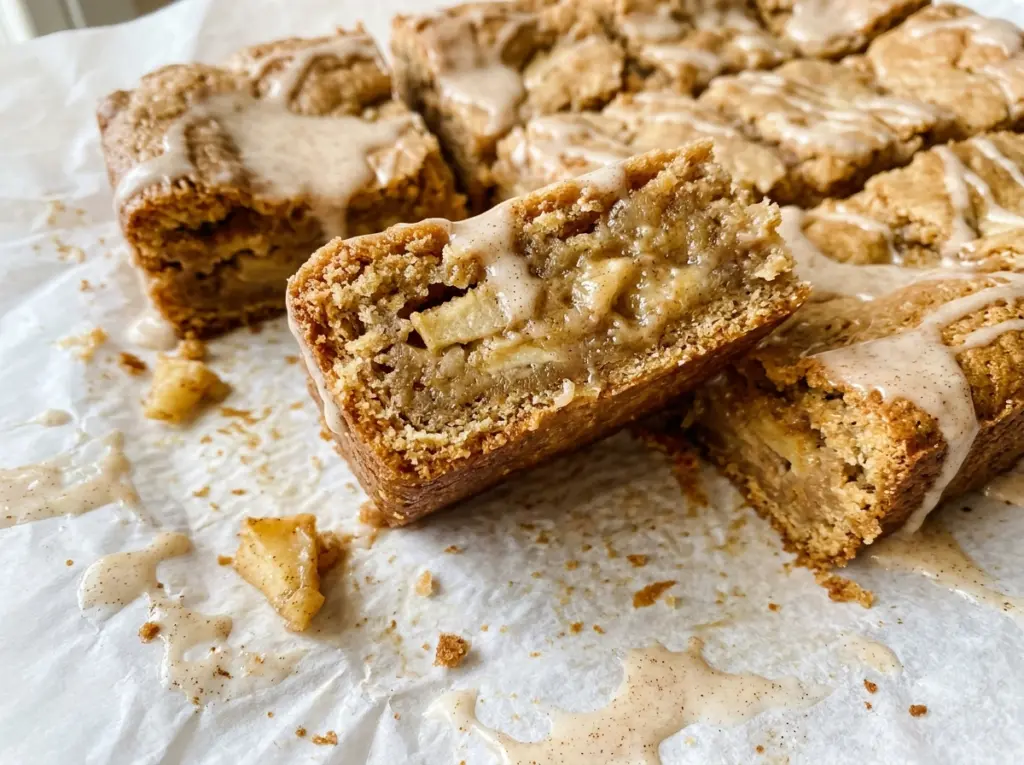
The apple cubes start to hiss in the skillet, then the little puddles around them disappear as they soften. That’s the moment I watch for with these brown butter apple blondies: tender fruit, but no extra liquid following it into the batter.
Brown butter gives the bars a toasted, nutty note, while a whole egg plus an extra yolk keeps the center rich. I cook the apple first, then fold it in only after it has cooled. That way the blondies bake up dense and tender instead of damp around the fruit.
A cinnamon glaze goes over the top once the pan is completely cool. Cut them into 16 squares, and you get soft blondies with little pockets of apple and a thin, spiced finish.
Kitchen Note
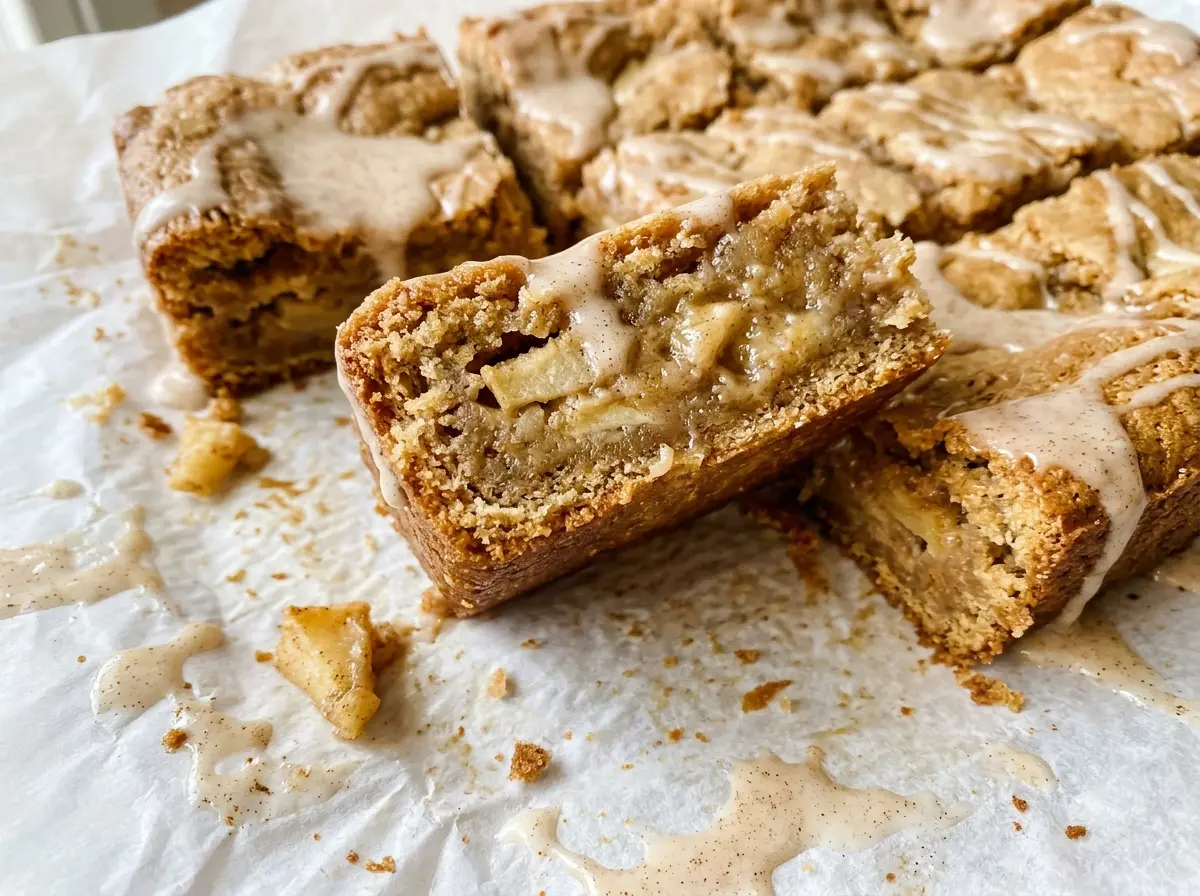
Let the blondies cool completely before you drizzle the glaze. Even a slightly warm top can thin it out and leave you with a sugary film instead of a cinnamon ribbon.
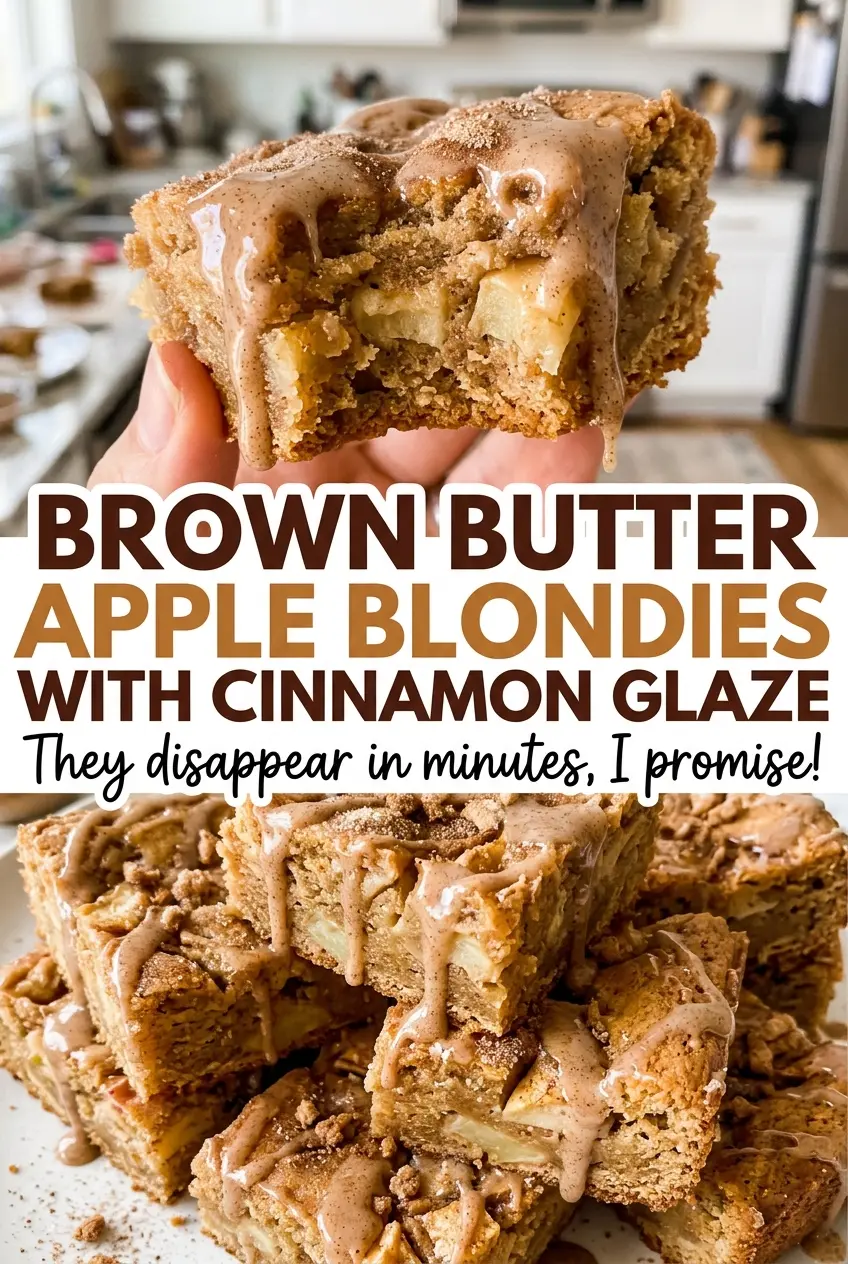
Save these brown butter apple blondies for a bake with tender apple pieces, nutty browned butter, and cinnamon glaze.
Why Raw Apple Pieces Can Leave a Wet Patch in Blondies
Apple seems like a straightforward mix-in, but it carries more water than a handful of chocolate chips or nuts. If raw diced apple goes straight into the batter, it releases that moisture in the oven, right where the pieces sit. The surrounding crumb can turn soft and heavy while the edges are already baked.
Cooking the diced apple in a little oil first gives the extra liquid somewhere to go before the fruit meets the flour. You’re looking for tender pieces and a skillet with no puddle of juice left behind. The apple still brings its fresh, fruity flavor, but it won’t water down the batter as it bakes.
This also helps keep the pieces distinct instead of letting them collapse into a sweet, wet layer. A firm apple and small, even dice matter here: they soften quickly in the skillet and spread through the bars without taking over each bite. It’s a small bit of prep that changes the texture of the whole pan.
What Brown Butter, Egg Yolk, and Firm Apple Bring to These Bars
- Unsalted butter — Browning it adds a toasted flavor that plain melted butter won’t give you. Unsalted butter also lets the fine salt in the batter stay in balance; use a fresh stick rather than a spread, which has a different fat and water content.
- Light brown sugar — Its molasses keeps the blondies soft and gives them a caramel-like background. Pack it into the cup so the amount stays consistent. Dark brown sugar is a workable swap, but brings a deeper molasses taste.
- Egg and egg yolk — The extra yolk contributes richness without adding as much liquid as another whole egg. Room-temperature eggs blend into the warm butter-and-sugar mixture more smoothly than cold ones.
- All-purpose flour and baking powder — Flour gives the bars their structure, while a little baking powder keeps them from baking up too dense. Fold these dry ingredients in only until the last streaks of flour disappear; extra mixing can make the crumb tougher.
- Firm apple — Choose one that feels crisp and holds its shape when cut. Peeling it and cutting it into small, even dice gives you tender bits throughout the blondies rather than chewy pieces of peel or oversized chunks.
From Skillet to Pan: Getting the Apple Blondies Right
Soften the Apple Without Leaving Juice Behind
Heat the neutral oil in an 8-inch nonstick skillet over medium heat, then add the peeled, cored apple cut into 1/4-inch dice. Stir often as it cooks for 4 to 6 minutes. The pieces should feel tender, and any liquid they release should evaporate rather than collect in the skillet. Move the apple to a plate and let it cool completely before it goes into the batter.
Prepare the Pan and Brown the Butter
Heat the oven to 350°F, line an 8-inch square metal pan with parchment, then spray the parchment and exposed sides. Melt the butter in a 2-quart saucepan over medium heat, swirling often for 5 to 7 minutes. Watch for golden-brown flecks and a nutty smell; take it off the heat as soon as those cues appear. Pour the butter into a large heatproof bowl, scraping in the browned bits, then stir in the brown sugar and let the mixture cool until warm, about 10 minutes.
Mix the Batter Just Until Combined
Whisk the room-temperature egg, egg yolk, and vanilla into the warm butter mixture until it looks smooth. Fold in the flour, baking powder, and salt only until you can’t see dry flour. Add the cooled apple and fold gently so the pieces stay distributed rather than crushed. Spread the batter evenly in the prepared pan; a level surface helps the edges and center bake at the same pace.
Bake to Moist Crumbs, Then Glaze
Bake at 350°F for 32 to 38 minutes, until the edges are golden and set. A toothpick in the center should come out with a few moist crumbs, not wet batter; waiting for a completely clean toothpick can leave the blondies dry. Cool them completely in the pan on a wire rack, about 1 1/2 hours. Whisk the powdered sugar, milk, and cinnamon until smooth, then drizzle the glaze over the cooled slab.
Three Small Changes That Give These Blondies a Different Character
Use Dark Brown Sugar for a Deeper, Toastier Bar
Replace the packed light brown sugar with the same amount of packed dark brown sugar. The extra molasses gives the blondies a fuller caramel note and makes the apple taste a little less sweet by contrast. The bars may be slightly softer, so let them cool fully before slicing.
Swap in a Firm Pear
Use a firm pear in place of the apple, keeping the peel-and-dice preparation the same. Cook the pieces until tender and any released liquid has evaporated; pears vary in juiciness, so use the skillet cues rather than relying only on the clock. The finished bars have a gentler, floral fruit note.
Make the Blondies Dairy-Free
Use stick-style dairy-free butter in place of the unsalted butter and oat milk instead of the milk in the glaze, using the same amounts. Plant-based butter won’t brown exactly like dairy butter, so you’ll lose some of the signature toasted, nutty flavor. The bars still bake with tender apple pieces and a cinnamon finish.
Storage and Reheating
- Refrigerator: Store in an airtight container for up to 4 days. The chilled bars will be firmer, and the glaze may soften slightly.
- Freezer: Freeze unglazed squares, wrapped tightly and placed in an airtight container, for up to 2 months. Thaw in the refrigerator, then glaze once they’re no longer cold and damp on top.
- Reheating: Let chilled squares sit at room temperature for about 20 minutes before serving. Avoid microwaving after glazing; the topping melts before the center warms through.
Questions That Come Up When Baking Apple Blondies
Brown Butter Apple Blondies with Cinnamon Glaze
Ingredients
Equipment
Method
- Heat the neutral oil in an 8-inch nonstick skillet over medium heat, then add the apple and cook, stirring often, for 4-6 minutes, until tender and any released liquid has evaporated.
- Transfer the apple to a plate and let it cool completely.
- Heat the oven to 350°F.
- Line an 8-inch square metal baking pan with parchment paper.
- Coat the parchment and exposed sides of the pan with nonstick cooking spray.
- Melt the butter in a 2-quart saucepan over medium heat, swirling often, for 5-7 minutes, until golden-brown flecks form and it smells nutty.
- Pour the browned butter into a large heatproof bowl, scraping in the browned bits.
- Stir the brown sugar into the browned butter.
- Let the mixture cool until warm, about 10 minutes.
- Whisk in the egg, egg yolk, and vanilla until smooth.
- Fold in the flour, baking powder, and salt just until no dry flour remains.
- Fold in the cooled apple.
- Spread the batter evenly in the prepared pan.
- Bake at 350°F for 32-38 minutes, until the edges are golden and set and a toothpick inserted in the center comes out with a few moist crumbs.
- Cool the blondies completely in the pan on a wire rack, about 1 1/2 hours.
- Whisk the powdered sugar, milk, and cinnamon in a small bowl until smooth.
- Drizzle the glaze over the cooled blondies.