
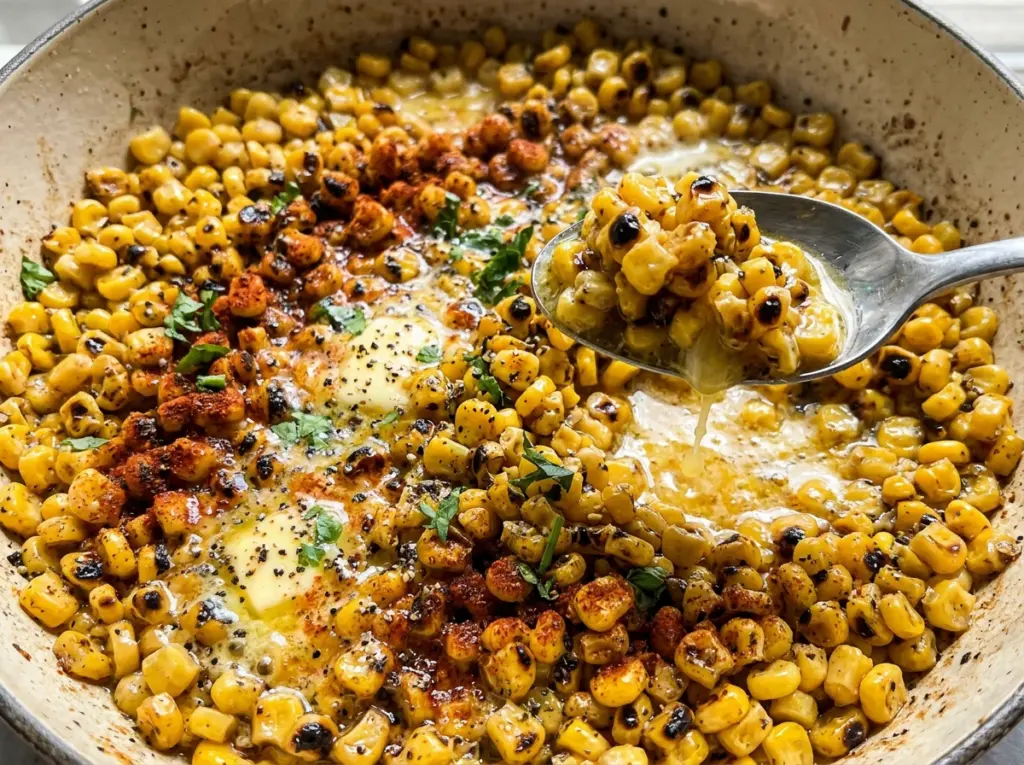
The corn starts to sizzle as soon as it hits the hot skillet, but the first few minutes are quiet work: leave it alone and let the kernels pick up those dark, browned spots. I used to stir too early, which kept the corn moving but left it pale. Now I give it that first uninterrupted stretch, then stir just often enough to brown it evenly.
For this blackened corn with butter and spices, fresh kernels go into a preheated cast-iron skillet with a little oil. Butter and the spices come in after the corn has browned, so they coat the kernels without spending the whole cooking time over high heat. The finished corn is buttery, warmly spiced, and dotted with the kind of char that gives every bite a little contrast.
It’s a straightforward skillet side, but the order matters: let the corn brown first, then finish it with the fragrant butter and spices. That keeps the spices aromatic and the kernels pleasantly distinct.
Kitchen Note
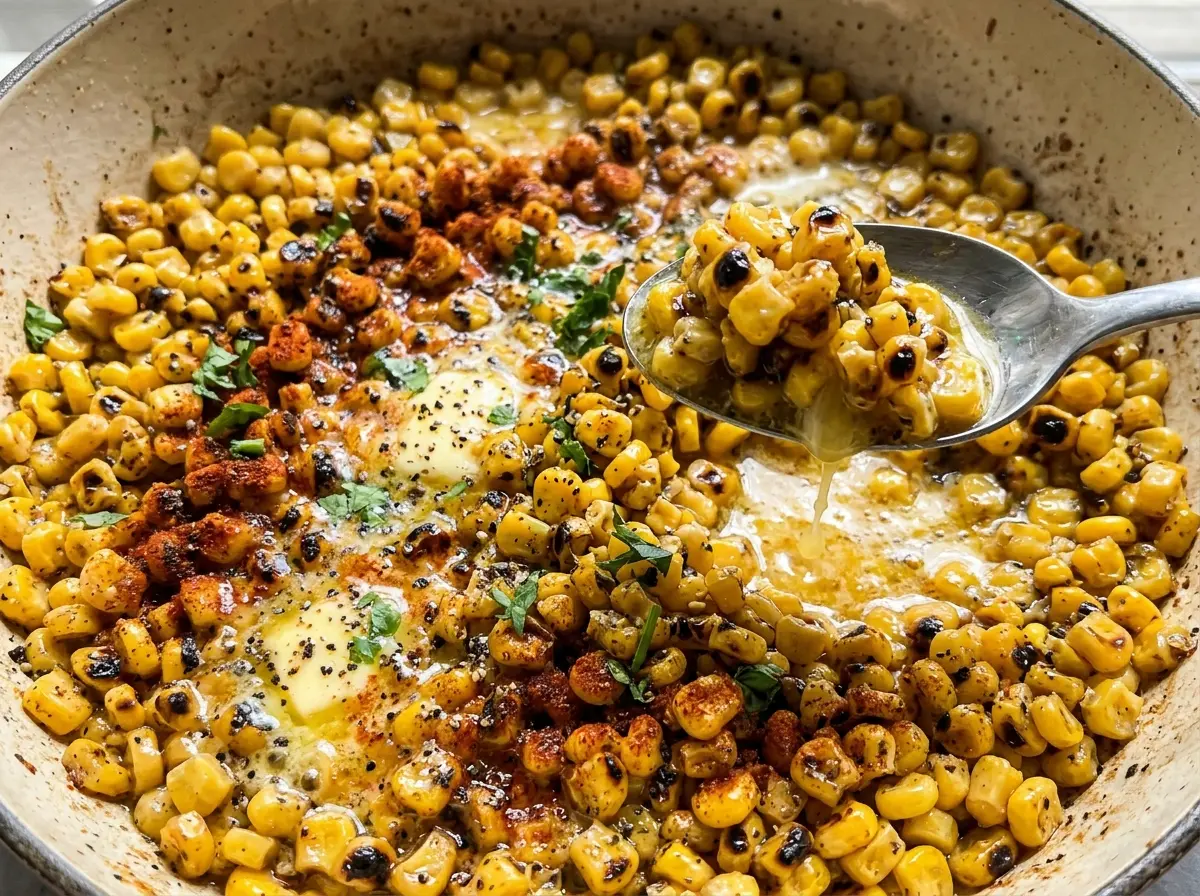
Once the butter and spices go in, keep stirring and watch the clock. In 30 to 45 seconds, the butter should be melted and the spices fragrant; cooking them much longer can dull their aroma.
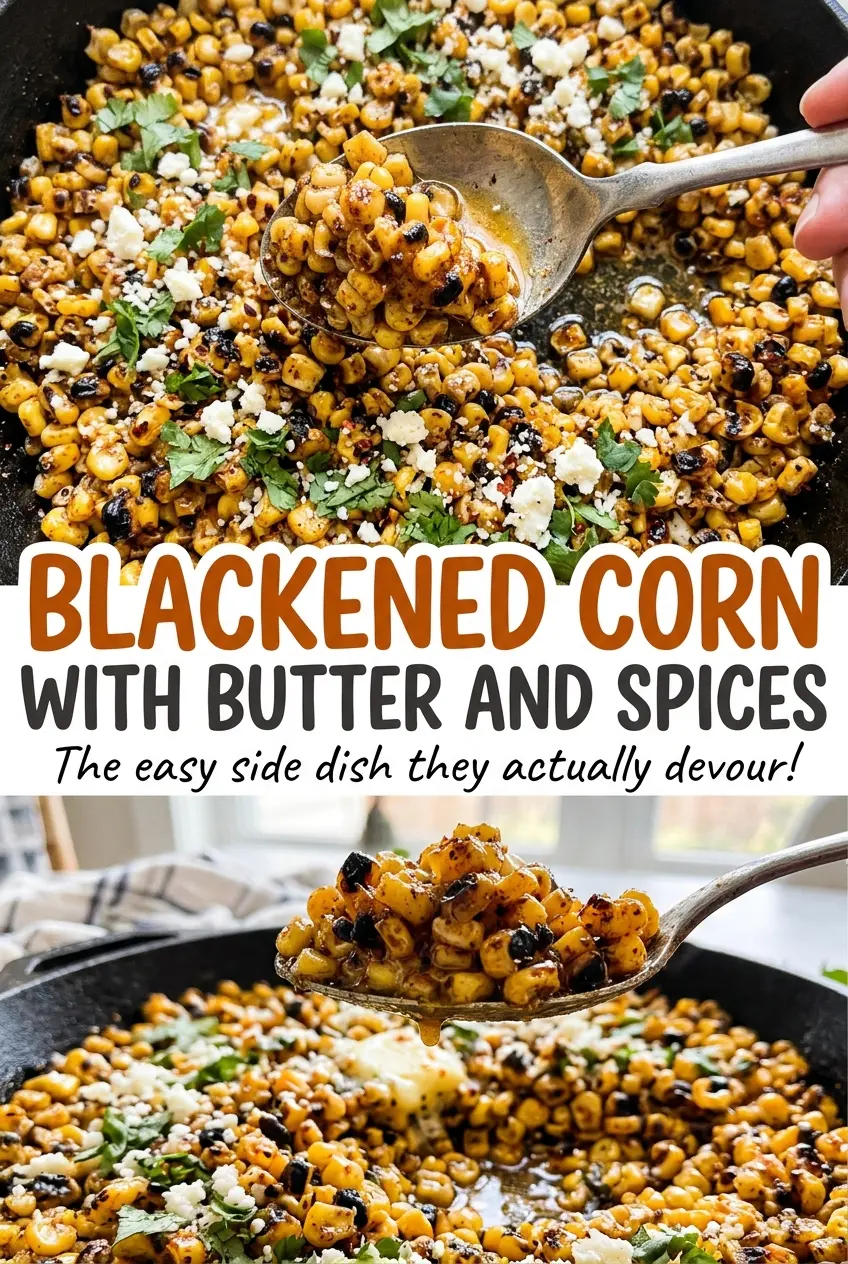
Save this blackened corn with butter and spices for a skillet side with browned kernels and a quick, fragrant spice finish.
Why Stirring Too Soon Leaves the Corn Pale
Browned spots come from contact with the hot skillet, so the corn needs a little time in one layer before it gets stirred. Moving the kernels around right away interrupts that contact. The first three minutes of undisturbed cooking give them a chance to color; after that, stirring every one to two minutes helps more kernels meet the pan without letting the batch sit untouched too long.
Use the visual cue, not just the timer: the kernels should have browned spots before you add the butter and spices. A 12-inch cast-iron skillet gives four cups of corn room to spread out. If the kernels are piled up, they won’t all touch the pan at once, and the browning will be less even. Stir to coat them with the oil, then spread them back into an even layer for that first stretch.
This balance—patient at the beginning, more attentive afterward—is what separates browned corn from corn that’s simply hot. Once the kernels are spotted with color, the butter and seasonings finish the dish quickly without getting in the way of the char.
Fresh Corn, Butter, and the Spices That Make This Skillet Work
- Fresh corn — Fresh kernels give this skillet dish its sweet, juicy bite and brown directly against the pan. Choose ears with plump kernels; the freshest corn is nice, but there’s no need to seek out a specialty variety. Cut the kernels from about six ears, keeping them in a bowl so they don’t scatter across the counter. Frozen corn isn’t a like-for-like swap here because its extra surface moisture can get in the way of browning.
- Vegetable oil — The neutral taste lets the corn and spices come through, and it coats the kernels before they hit the skillet. A basic store-brand vegetable oil works well; a strongly flavored oil would change the finished taste. Stir the kernels until they’re lightly coated, then spread them out.
- Unsalted butter — Butter gives the spice coating a rounded, rich finish that oil alone won’t quite reproduce. Unsalted butter also lets the kosher salt stay in control. Use a fresh stick from the refrigerator; there’s no special brand requirement. For a dairy-free version, replace the butter with vegetable oil, as described below.
- Paprika — Paprika brings the warm color and a mellow pepper flavor that anchors the seasoning. A standard grocery-store paprika is fine; smoked paprika would make the dish taste noticeably smokier than this version.
- Garlic powder, onion powder, and dried thyme — These dry seasonings distribute through the melted butter and cling to the kernels. Use garlic and onion powders, not granulated versions, for the fine coating intended here; dried thyme gives a gentle herbal note without adding moisture.
- Cayenne, black pepper, and kosher salt — Cayenne supplies the sharper heat, black pepper adds a different, more direct peppery bite, and salt pulls the corn and butter together. Freshly ground black pepper is welcome, but ordinary black pepper works. Keep the kosher salt measurement as written, since coarse and fine salts don’t measure identically by volume.
Build the Browned Corn Before Adding the Spice Butter
Preheat the Cast-Iron Skillet
Set a 12-inch cast-iron skillet over medium-high heat for 3 minutes. Starting with a properly heated pan helps the kernels begin browning when they land instead of slowly warming in a cool skillet. While it heats, have the measured seasonings ready to add together later. The pan is ready for the oil and corn once that preheating time is up.
Give the Kernels Their First Three Minutes
Add the vegetable oil and corn, stir to coat, and spread the kernels into an even layer. Cook undisturbed for 3 minutes; resist the urge to keep checking and stirring, because that’s the stretch when contact with the pan matters most. If the corn is crowded into a mound, spread it out again so more kernels reach the skillet. After those first minutes, look for the beginning of browned spots.
Stir Until the Corn Has Browned Spots
Stir the corn and continue cooking for 5 to 7 minutes, stirring every 1 to 2 minutes. Each pause lets kernels sit against the hot surface, while each stir shifts new ones into contact. Keep an eye on the color rather than expecting every kernel to look the same; browned spots across the batch are the cue to move on. Don’t add the butter early, since it belongs in the finishing stage.
Coat the Kernels in Fragrant Spiced Butter
Reduce the heat to medium-low, then add the butter, paprika, garlic powder, onion powder, thyme, cayenne, black pepper, and salt. Stir for 30 to 45 seconds, just until the butter melts and the spices smell fragrant. The seasoning should coat the hot kernels rather than sit in a dry pile. Pull the skillet from the heat once that brief finish is complete so the spices stay aromatic.
Two Easy Ways to Adapt the Spice and Butter
Make the skillet corn dairy-free
Replace the unsalted butter with the same amount of vegetable oil. The corn will still carry the spice blend, though the finish will taste less rich and buttery. Add the replacement oil with the seasonings after lowering the heat, then stir until everything coats the kernels.
Keep the seasoning mild
Leave out the cayenne if you want the paprika, garlic, onion, and thyme to come through without that extra kick. The corn will still have a peppery edge from the black pepper, but it won’t have cayenne’s sharper heat.
Storage and Reheating
- Refrigerator: Refrigerate leftovers within 2 hours and keep them in a covered container for 3 to 4 days. The kernels soften in storage, so they won’t have quite the same fresh-from-the-skillet texture.
- Freezer: Freeze cooled corn in an airtight container for up to 2 months for best quality. Thaw it in the refrigerator before reheating; the thawed kernels will be softer than freshly cooked corn.
- Reheating: Warm leftovers in a skillet over medium-low heat, stirring often until hot, or microwave them in short intervals and stir between each. Avoid prolonged high heat, which can dry out the kernels and scorch the butter and spices.
Questions That Come Up When Making Blackened Corn
Blackened Corn with Butter and Spices
Ingredients
Equipment
Method
- Heat a 12-inch cast-iron skillet over medium-high heat for 3 minutes.
- Add the vegetable oil and corn, stir to coat, and spread the kernels in an even layer.
- Cook undisturbed for 3 minutes.
- Stir and continue cooking for 5 to 7 minutes, stirring every 1 to 2 minutes, until the kernels have browned spots.
- Reduce the heat to medium-low.
- Add the butter, paprika, garlic powder, onion powder, thyme, cayenne, black pepper, and salt; stir for 30 to 45 seconds, until the butter is melted and the spices smell fragrant.