

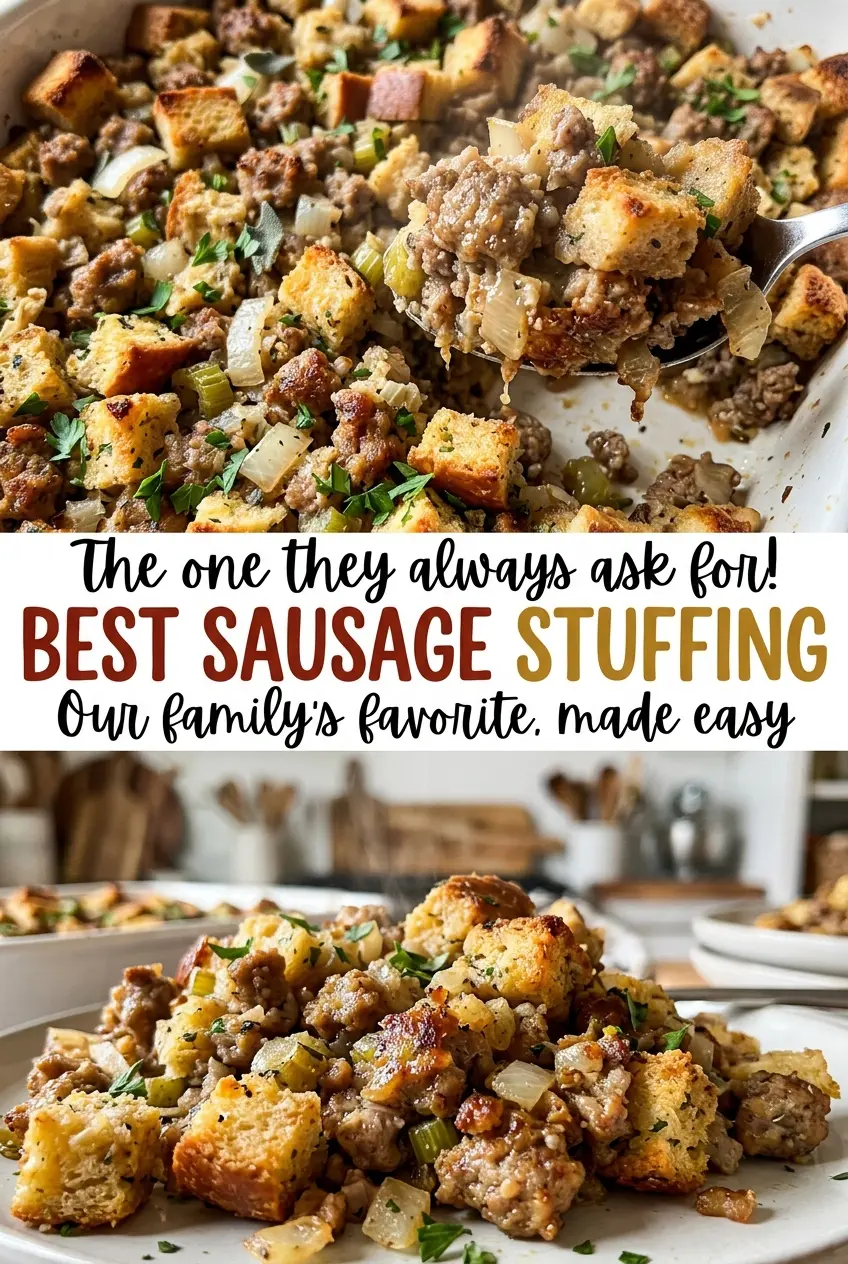
The bread cubes are the first clue that this stuffing is on track: after their time in the oven, they should feel dry all the way through, not just toasted at the edges. If they still feel soft in the middle, they’ll soak up broth unevenly and the finished center can turn heavy. I let them dry fully before anything gets mixed together, and that gives Best Sausage Stuffing its tender middle and golden top.
Mild Italian sausage brings plenty of savory seasoning, while onion, celery, sage, and thyme make the whole kitchen smell like stuffing should. I cook those vegetables in the sausage skillet, so the butter picks up all that browned flavor before it goes into the bread. The eggs help the broth cling to the cubes and give the baked stuffing enough structure to scoop neatly. It’s a satisfying, savory side dish for eight, with crisp edges and a moist center.
Kitchen Note
I set the tablespoon of butter for the baking dish aside before I start cooking. It’s easy to melt all the butter into the skillet by habit, and separating it first means the dish is ready when the stuffing is mixed.
Save Best Sausage Stuffing for a savory, golden-topped side with crisp edges and a tender center.
Why the Bread Has to Dry All the Way Through Before the Broth Goes In
Stuffing has to absorb liquid without collapsing into a soft, dense mass. That’s why the bread’s texture before mixing matters just as much as the broth: dry cubes can take up moisture while keeping enough shape to give each serving some definition. Bread that’s only browned on the outside may still be damp inside, and those soft centers can turn gummy once the eggs and broth are added.
Firm white bread is a good fit because its mild flavor lets the sausage and herbs stand out. The oven-drying step takes moisture out without relying on a stale loaf that may have dried unevenly on the counter. Stirring the cubes once helps them dry more evenly across the baking sheets. When they feel dry throughout, they’re ready to take on the broth rather than releasing extra moisture into the casserole.
Once the bread is dry, toss the mixture gently. The goal is evenly moistened cubes, not mashed bread. A large bowl gives you room to fold everything together without crushing the pieces, so you get a cohesive bake that still has distinct bites of bread and sausage.
The Ingredients That Keep Sausage Stuffing Savory, Not Heavy
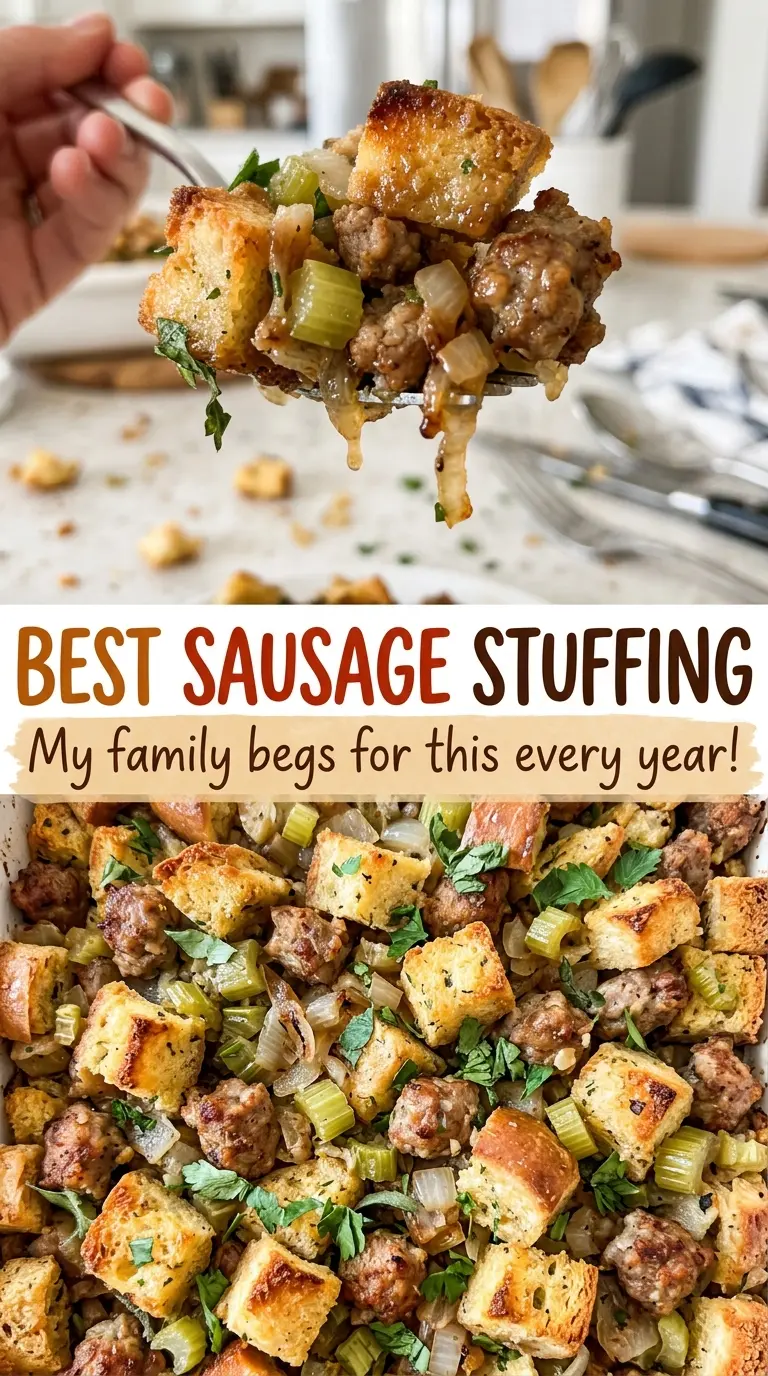
- Firm white bread — Its clean, mild taste leaves room for the sausage and dried herbs. A sturdy loaf matters more than an expensive one; very soft bread is more likely to break up during tossing. If you need a swap, sturdy sourdough works and brings a pleasant tang, though the flavor will be more pronounced.
- Bulk mild Italian sausage — This adds savory seasoning and small, meaty crumbles throughout the dish. Fresh bulk sausage from the grocery store is fine; there’s no need for a specialty brand. If you can only find links, use mild Italian links and remove the casings before crumbling the meat in the skillet.
- Unsalted butter, onion, and celery — Butter carries the flavor of the softened vegetables into the bread, and unsalted butter leaves you in control of the seasoning. Choose fresh, firm celery and a fresh onion; there’s little to gain from a premium variety here. Finely chopping both helps them soften evenly and keeps large, crunchy pieces out of the finished stuffing.
- Dried sage and thyme — Dried herbs are easy to distribute through the softened vegetables and give this stuffing its familiar savory character. Check that your jars still smell fragrant; old dried herbs lose their aroma. Add them after the onion and celery soften, so the butter can carry their scent through the mixture.
- Low-sodium chicken broth and eggs — Low-sodium broth lets the sausage and seasoning stay in balance, and a store-brand carton works well. Warming the broth helps it mix smoothly with the whisked eggs. The eggs bind the moistened bread as it bakes, so the stuffing holds together when scooped.
From Dry Bread to a Golden, Set Center
Dry the bread cubes evenly
Heat the oven to 300°F and grease a 9×13-inch baking dish with 1 tablespoon of butter. Spread the bread cubes over two rimmed baking sheets and bake for 35 to 45 minutes, stirring once halfway through. Check a few cubes from the center of each sheet; they should feel dry throughout, not soft in the middle. If they’re not there yet, give them more time rather than relying on a darker color alone.
Brown the sausage in small crumbles
Set a 12-inch skillet over medium heat and add the sausage, breaking it into small pieces as it cooks. Let the crumbles brown for 8 to 10 minutes, stirring and breaking up any large pieces that form. Use a food thermometer to confirm the sausage reaches 160°F. Transfer it to a large bowl once cooked, leaving the browned bits in the skillet for the vegetables.
Soften the vegetables in the seasoned butter
Add the remaining butter to the skillet, then stir in the finely chopped onion and celery. Cook for 8 to 10 minutes, until both have softened; they shouldn’t still taste raw or crunch sharply. Stir in the sage, thyme, salt, and black pepper, and cook for 1 minute. Keep the skillet at medium heat so the herbs become fragrant without scorching.
Moisten the bread without crushing it
Raise the oven temperature to 350°F. Add the dried bread and vegetable mixture to the sausage in an 8-quart bowl, then whisk the eggs into the warmed broth and pour it over everything. Toss gently until the bread is evenly moistened; if you stir too aggressively, the cubes will break down. Transfer the mixture to the prepared baking dish and cover it tightly with foil.
Uncover for a crisp, golden top
Bake covered for 25 minutes, then remove the foil and bake for another 20 to 25 minutes. The top should look golden, and the center should reach 165°F. If the edges are browning but the middle hasn’t finished, give the center time to bake through instead of taking the dish out early. Rest the stuffing for 10 minutes before serving so it’s easier to scoop.
Easy Swaps That Keep the Stuffing Balanced
Use hot Italian sausage for a spicier pan
Swap the mild Italian sausage for hot Italian sausage. The bread, vegetables, and herbs still balance the dish, but each bite will have a more noticeable kick; sausage brands vary in heat, so choose according to how spicy you like your food.
Make it vegetarian with plant-based sausage
Use bulk plant-based Italian-style sausage and vegetable broth in place of the meat sausage and chicken broth. Brown the plant-based sausage according to its package directions, then continue with the vegetables and remaining steps. The result keeps the herb-and-bread character, though it will taste less rich than the version made with pork sausage.
Trade white bread for sturdy sourdough
Cut sturdy sourdough into the same size cubes and dry them thoroughly before mixing. Its tang gives the stuffing a sharper, more rustic flavor that plays well with the sausage. Since loaves vary in density, check that the cubes are evenly moistened when you toss everything together.
Storage and Reheating
- Refrigerator: Refrigerate leftovers within 2 hours and keep them covered for 3 to 4 days. The bread softens as it sits, so the crisp top won’t stay crisp.
- Freezer: Freeze cooled portions in an airtight container for up to 3 months for best texture. Thaw in the refrigerator before reheating.
- Reheating: Reheat covered in a 350°F oven until hot throughout. Keeping it covered helps the bread stay moist; reheating uncovered from start to finish can dry out the edges.
Questions That Come Up While Making Sausage Stuffing
Best Sausage Stuffing
Ingredients
Equipment
Method
- Heat the oven to 300°F.
- Grease a 9x13-inch baking dish with 1 tablespoon butter.
- Spread the bread cubes over 2 rimmed baking sheets and bake for 35-45 minutes, stirring once halfway through, until dry throughout.
- In a 12-inch skillet over medium heat, cook the sausage, breaking it into small crumbles, for 8-10 minutes until browned and it reaches 160°F.
- Transfer the sausage to a large bowl.
- Add the remaining 5 tablespoons butter to the skillet, then add the onion and celery and cook for 8-10 minutes until softened.
- Stir in the sage, thyme, salt, and pepper and cook for 1 minute.
- Increase the oven temperature to 350°F.
- Add the dried bread and vegetable mixture to the sausage in an 8-quart bowl.
- Whisk the eggs into the broth, pour it over the bread mixture, and toss gently until evenly moistened.
- Transfer the mixture to the prepared baking dish.
- Cover the dish tightly with foil and bake for 25 minutes.
- Uncover and bake for 20-25 minutes until the top is golden and the center reaches 165°F.
- Rest the stuffing for 10 minutes before serving.