
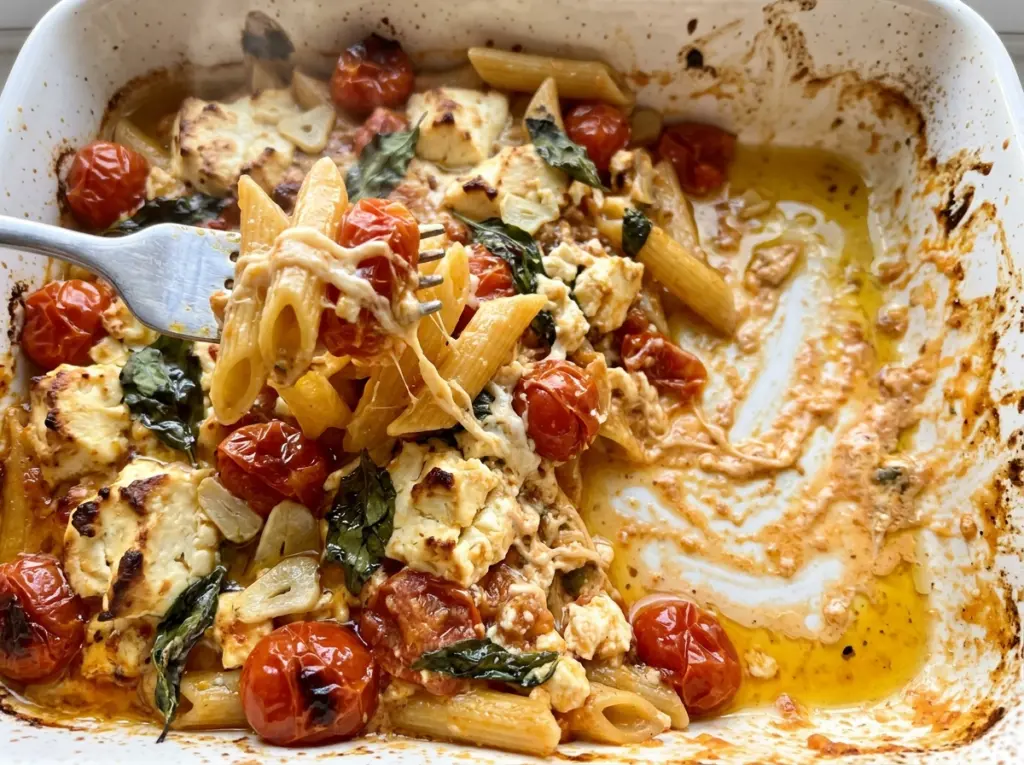
The tomatoes go into the oven glossy with olive oil and come out collapsed, with little puddles of sweet-tart juice around the feta. That liquid is what makes Baked Feta Pasta more than pasta topped with a slab of cheese: once the tomatoes and feta are mashed together, the baking dish holds the start of a creamy sauce.
I like that the oven does most of the work while a pot of pasta cooks. Keep the tomatoes and their juices in the baking dish, and don’t drain away the pasta water before setting some aside. Toss everything together while it’s warm, then finish with fresh basil. The sauce clings to the short pasta, with soft feta, roasted garlic, and bright tomato in every bite.
Kitchen Note
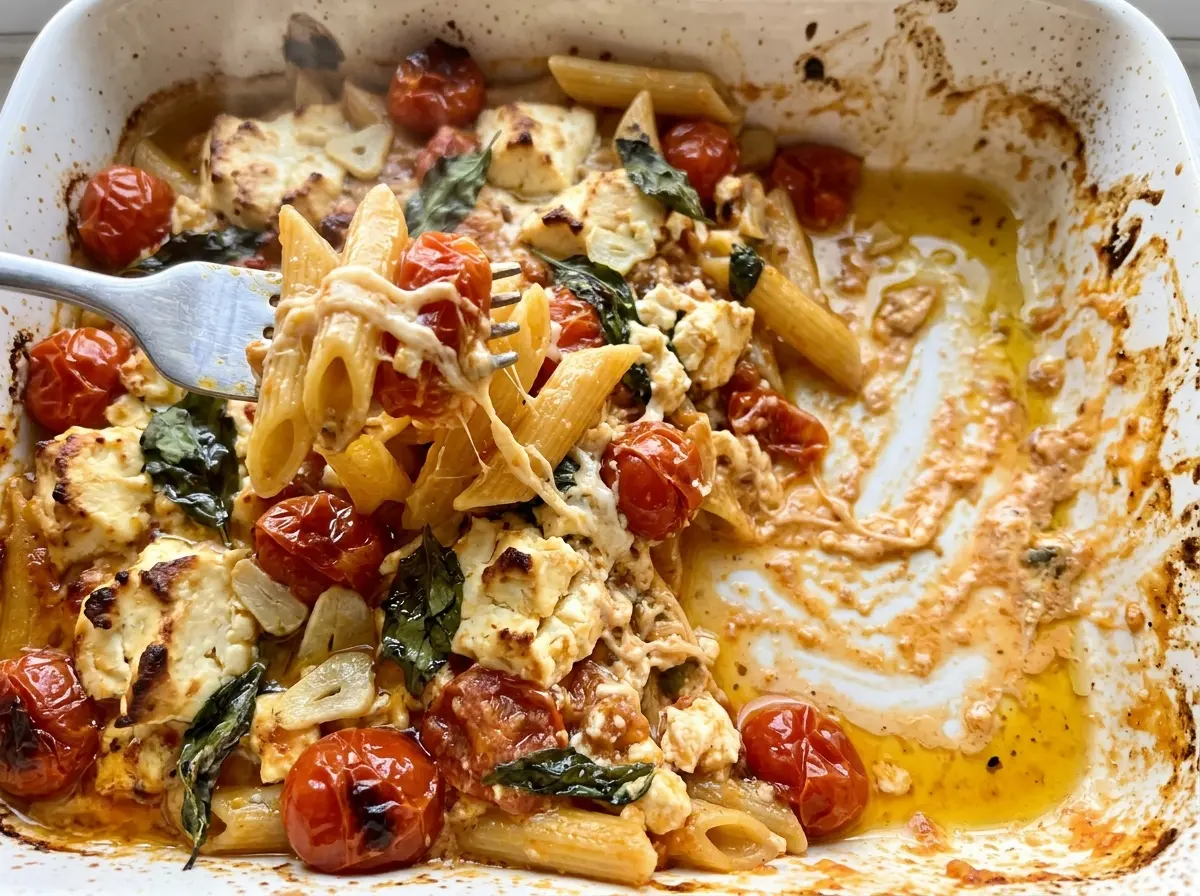
Set a measuring cup beside the stove before you drain the pasta. That reserved cooking water is easy to forget, and it helps the sauce coat the noodles instead of sitting in clumps.
Save this Baked Feta Pasta for a night when you want roasted tomato sauce, soft feta, and fresh basil with very little stovetop fuss.
The tomato juices are the sauce—don’t drain them away
Cherry tomatoes release plenty of liquid as they bake, and that liquid belongs in the finished dish. It carries the olive oil, roasted garlic, and pepper through the sauce, so scrape the baking dish well when you mash the feta and tomatoes. A few tomato skins and soft pieces are part of the texture; you’re not aiming for a perfectly smooth purée.
The sauce comes together in two stages. First, the warm tomato juices and softened feta make a thick, savory base. Then the pasta cooking water loosens it and helps it cling to the noodles. If you drain the tomatoes or leave their juices behind, you lose the part that brings the feta and pasta together. Keep everything in the baking dish, toss the pasta right into it, and give the noodles time to pick up the sauce.
The feta, oil, and pasta each have a different job
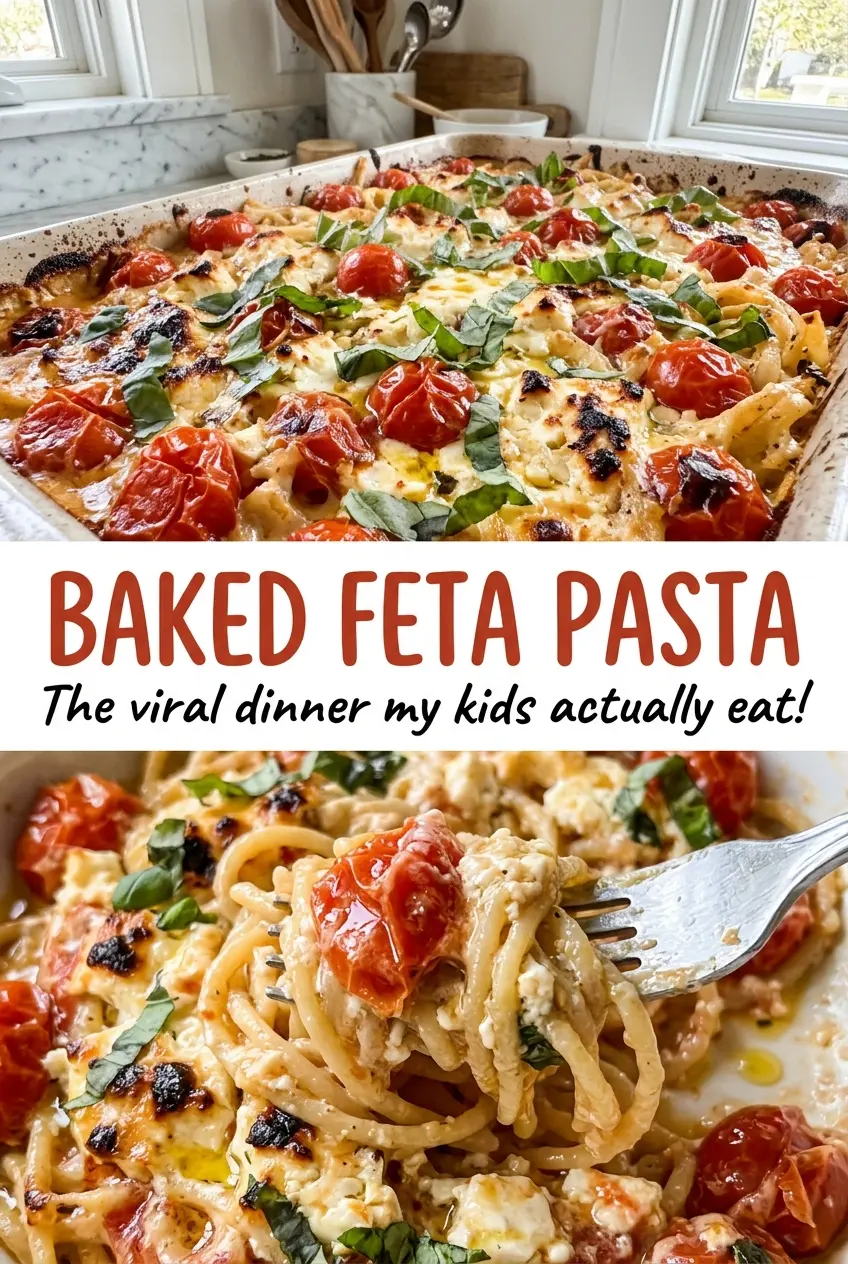
- Cherry tomatoes — Their small size lets them soften and burst in the oven, releasing the juices that form the base of the sauce. Choose tomatoes that are firm and unblemished; there’s no need to peel them.
- Block feta — A block softens in the center of the tomatoes and is easy to mash into the roasted juices. Crumbled feta doesn’t give you the same central piece to soften, so stick with a block for this method.
- Olive oil — It coats the tomatoes and carries the garlic and pepper as everything roasts. A familiar everyday olive oil works well here; a costly finishing oil won’t change the basic technique.
- Thinly sliced garlic — Slicing it thin lets the pieces soften in the oil and tomato juices while the dish bakes. Keep the slices in the baking dish when you mash the sauce so their flavor is spread through it.
- Short pasta — Rigatoni and fusilli are both good choices because the sauce can cling to their surfaces and tuck into their shape. Choose a shape that stays pleasantly firm when cooked al dente.
- Fresh basil — Stir it in at the end, when the hot pasta is already coated. Its fresh, herbal taste stands out against the warm roasted tomatoes and feta.
- Red pepper flakes and black pepper — They add gentle heat and a savory pepper note without taking over the tomatoes. Use fresh-tasting pepper flakes from a jar that hasn’t been sitting open for ages.
Roast the tomatoes first, then bring the pasta to the dish
Coat the tomatoes and settle the feta in the center
Heat the oven to 400°F and put the cherry tomatoes in a 9×13-inch baking dish. Add the olive oil, thinly sliced garlic, red pepper flakes, and black pepper, then toss until the tomatoes are coated. Set the feta block in the middle so the tomatoes surround it. The tomatoes should have room around them rather than being packed into a smaller dish.
Roast until the tomatoes burst
Bake the dish for 35 to 40 minutes, until the tomatoes have burst and the feta is soft. Some tomatoes may collapse more than others, so look for plenty of softened fruit and liquid in the dish rather than expecting every tomato to look identical. If the feta still feels firm in the middle, give the dish the full baking time. The garlic should be soft enough to stir into the sauce.
Cook the pasta until it still has a little bite
Bring a large pot of water to a boil, add the kosher salt, and cook the short pasta according to the package directions until al dente. Start checking near the timing on the package; pasta that goes too soft will lose its bite once it’s tossed with the hot sauce. Before draining, reserve 1/4 cup of the cooking water. Then drain the pasta.
Mash, toss, and finish with basil
In the baking dish, mash the soft feta and tomatoes together, stirring the garlic through the mixture until the sauce is creamy. Add the drained pasta and reserved cooking water, then toss until the noodles are coated. The sauce should look loose enough to move around the pasta, not sit as a dense mound. Stir in the chopped fresh basil at the end.
Small changes that keep the feta-tomato sauce in balance
Use gluten-free short pasta
Swap in 12 ounces of gluten-free short pasta and cook it according to its package directions until al dente. Its texture can soften faster than wheat pasta, so check it as it cooks and reserve the cooking water before draining. The roasted feta and tomato sauce stays the same.
Make a milder pan
Leave out the red pepper flakes if you want the tomatoes and feta to lead without the warm kick. The rest of the roasting method stays the same, and the sauce keeps its savory garlic-and-pepper character from the black pepper.
Pick a pasta shape with plenty of texture
Rigatoni gives you broad tubes for catching sauce, while fusilli winds it around its twists. Either works with the same amount of sauce; cook whichever short shape you choose until al dente and toss it in the baking dish while warm.
Storage and Reheating
- Refrigerator: Refrigerate leftovers within 2 hours and use them within 3 to 4 days. The pasta will absorb some sauce as it sits, so it won’t be as loose as it was fresh.
- Freezer: You can freeze leftovers in an airtight container for up to 2 months, though the pasta may soften and the feta sauce may turn a little grainy after thawing. Thaw overnight in the refrigerator for the most even reheating.
- Reheating: Warm a portion gently in the microwave or in a pan with a small splash of water, stirring as it heats. Heat leftovers to 165°F; high heat can dry the pasta before the center is hot.
Questions that come up while making baked feta pasta
Baked Feta Pasta
Ingredients
Equipment
Method
- Heat the oven to 400°F and put the cherry tomatoes in a 9x13-inch baking dish.
- Add the olive oil, garlic, red pepper flakes, and black pepper to the dish, then toss to coat the tomatoes.
- Place the feta in the center of the tomatoes and bake for 35 to 40 minutes, until the tomatoes have burst and the feta is soft.
- Bring a large pot of water to a boil, add the kosher salt and pasta, and cook according to the package directions until al dente.
- Before draining the pasta, reserve 1/4 cup of the cooking water.
- Drain the pasta.
- Mash the feta and tomatoes together in the baking dish, stirring in the garlic until the sauce is creamy.
- Add the pasta and reserved cooking water to the baking dish and toss until the pasta is coated.
- Stir in the basil.