
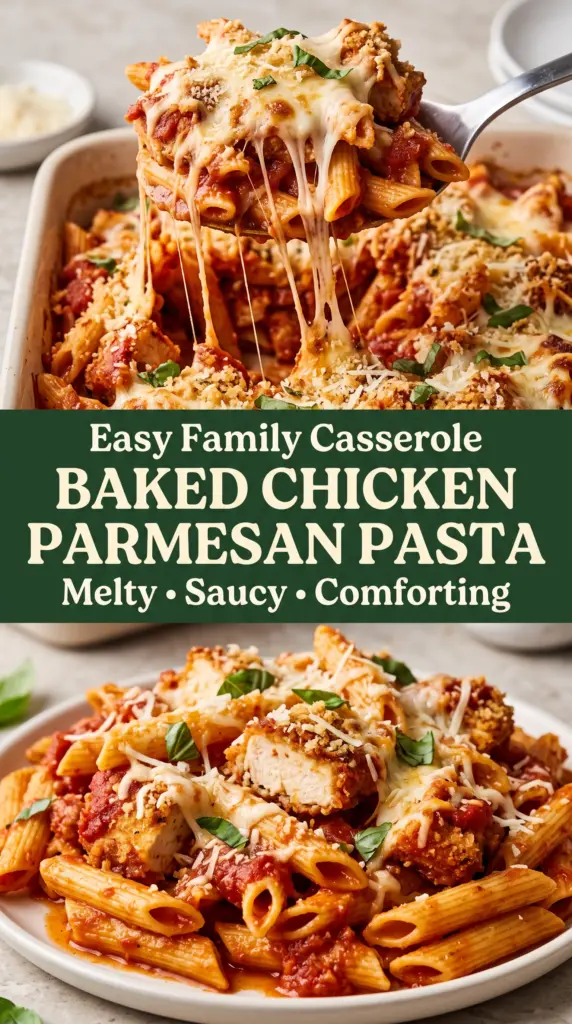
Baked Chicken Parmesan Pasta hits the table with everything people want from a good baked pasta: tender chicken, saucy noodles, and a top layer of cheese that bubbles and browns instead of turning greasy. It eats like a cross between chicken parmesan and a comforting pasta bake, but it’s easier to get right because the chicken cooks in the skillet first and the pasta finishes in the oven with the sauce where it belongs.
The part that makes this version work is small but important: the penne gets pulled from the water before it’s fully done, so it has room to soak up the marinara without turning soft. The chicken is browned before the sauce goes in, which gives the whole dish a deeper, more savory base than just stirring raw chicken into a casserole dish and hoping for the best. A little Parmesan mixed through the pasta keeps the sauce from tasting flat, and the breadcrumb finish gives the top just enough crunch to stand up to all that melted mozzarella.
Below, I’ve laid out the exact timing that keeps the pasta from getting mushy, plus a few smart swaps for when you need to work with what’s in the fridge. If you’ve ever had baked pasta come out dry on top and watery underneath, this method fixes that.
The pasta stayed saucy all the way through and the top baked up with those golden spots on the mozzarella I always hope for. I usually struggle with baked pasta drying out, but this one was perfect even after sitting for a few minutes.
Save this baked chicken parmesan pasta for the night when you want bubbling cheese, saucy penne, and a crisp breadcrumb top in one pan.
The Pasta Stays Better When You Undercook It First
The biggest mistake with baked pasta is treating the oven like it can do all the work. It can’t. By the time the casserole has bubbled enough for the cheese to melt and brown, fully cooked pasta would already be soft and bloated. Pulling the penne from the pot two minutes early gives it a firm center that finishes in the sauce instead of collapsing into it.
The other thing that matters here is not packing the pasta down in the baking dish. A loose layer lets the heat move through the casserole evenly, so the sauce bubbles up around the edges and the cheese melts across the top instead of forming a heavy, dense lid. If the noodles are pressed tight, the center takes longer to heat and the top can overcook before everything underneath is hot.
The broil at the end is there for color, not for doneness. Once the cheese is fully melted and the edges are bubbling, that short blast creates those browned spots that make the whole dish taste more finished.
What Each Ingredient Is Actually Doing in This Dish
- Penne pasta — Penne holds up well in a baked casserole because the ridges catch sauce and the shape stays intact better than delicate noodles. Short pasta is the right call here; long pasta tends to clump and overcook in a dish like this.
- Chicken breast — Bite-size pieces cook fast and stay tender when they’re browned first. Chicken thighs also work if you want a juicier result, and they’re a little more forgiving if you’re nervous about overcooking.
- Marinara sauce — Use a sauce you’d actually eat on its own. Since it’s the main seasoning for the pasta, a thin or flat jarred sauce will taste thin or flat in the finished bake too.
- Parmesan and mozzarella — Parmesan seasons the sauce and mozzarella gives you the melt. If you skip the Parmesan, the dish loses depth; if you skip the mozzarella, it won’t have that stretchy, baked top people expect.
- Italian-seasoned breadcrumbs — These bring a little crunch over the cheese layer. Plain breadcrumbs work if that’s what you have, but they need a pinch more Italian seasoning and a light drizzle of olive oil to toast properly.
- Fresh basil — Add it after baking, not before. Basil turns dark and loses its bright flavor in the oven, so it works best as a fresh finish.
Building the Bake So the Cheese Melts Before the Pasta Overcooks
Cook the Pasta Just Short of Done
Boil the penne until it still has a firm bite in the center, then drain it right away. That undercooked middle is what lets the pasta absorb sauce in the oven without going soft or splitting open. If you cook it all the way now, the bake will push it past the point where it still feels good on the fork.
Brown the Chicken Before the Sauce Goes In
Get a little color on the chicken in the skillet before adding the garlic and marinara. Those browned bits on the pan are the start of the sauce, and they add more flavor than simmering pale chicken in sauce from the beginning. If the chicken starts to steam, the pan is crowded; work in batches so it can actually brown.
Let the Sauce Loosen the Pasta, Not Drown It
Stir the cooked pasta, chicken, Parmesan, and part of the mozzarella into the marinara while it’s still hot. The sauce should coat everything and pool lightly in the bottom of the pan, not turn soupy. If it looks overly wet at this stage, it usually means the pasta wasn’t drained well enough or the sauce was already too thin.
Bake Until the Edges Bubble, Then Broil Briefly
Once the casserole is in the baking dish, the goal is heat through and melt, not long baking. Pull it when the sauce is bubbling around the edges and the mozzarella has melted completely. The broiler only needs a minute or two for those browned spots on top; leave it alone for even a few seconds too long and the breadcrumbs will burn before the cheese finishes coloring.
How to Adapt This for a Lighter Pan, a Different Protein, or a Meatless Night
Gluten-Free Version
Use your favorite gluten-free penne and check that your marinara and breadcrumbs are certified gluten-free. Gluten-free pasta can soften faster in the oven, so keep the boil even shorter than you would with regular pasta and watch the bake closely once it starts bubbling.
Chicken Thigh Swap
Boneless skinless thighs bring a little more richness and stay juicy if you’re worried about dry chicken breast. They may take a minute or two longer to cook through, but the tradeoff is a softer, more forgiving bite in the finished bake.
Vegetarian Pasta Bake
Skip the chicken and fold in sautéed mushrooms, zucchini, or spinach instead. The dish loses the savory chew of the meat, so a little extra Parmesan and a stronger marinara help keep the flavor bold.
Storage and Reheating
- Refrigerator: Store covered for up to 4 days. The pasta will absorb more sauce as it sits, so expect a thicker, less saucy texture on day two.
- Freezer: It freezes well for up to 2 months if wrapped tightly and cooled completely first. Freeze in portions for the best texture, since a full pan takes longer to reheat evenly.
- Reheating: Reheat covered in a 350°F oven with a splash of marinara or water to loosen the sauce. The common mistake is blasting it uncovered in the microwave, which dries the cheese and makes the pasta tough around the edges.
Answers to the Questions Worth Asking
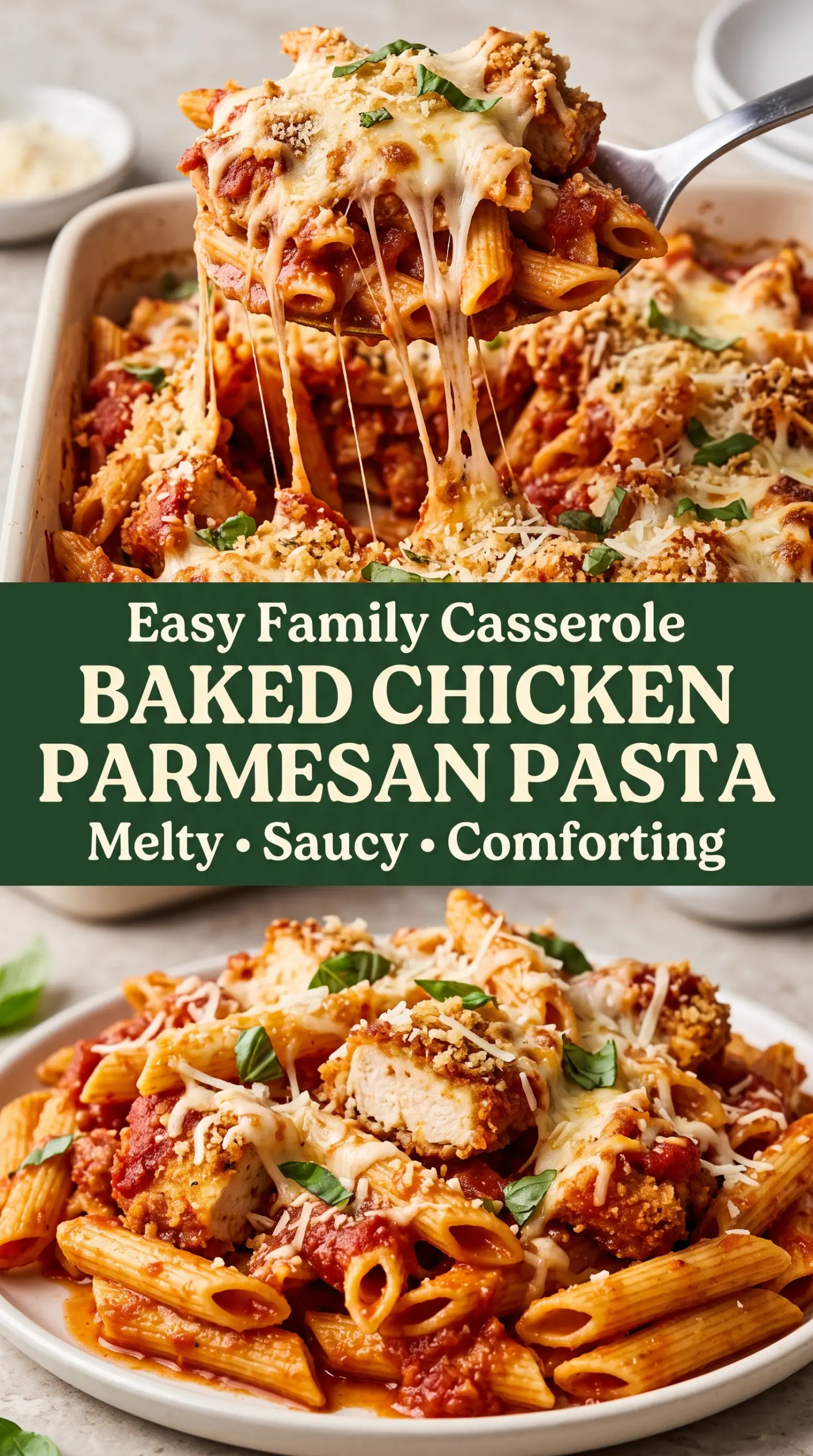
Baked Chicken Parmesan Pasta
Ingredients
Equipment
Method
- Preheat the oven to 400°F and lightly grease a 9×13-inch baking dish.
- Boil the penne pasta in salted water for 2 minutes less than the package directions, then drain and set aside.
- Heat the olive oil in a large skillet over medium-high heat.
- Season the chicken breast with Italian seasoning, garlic powder, salt, and black pepper.
- Cook the chicken for 5–6 minutes until lightly golden and cooked to 165°F.
- Add the garlic and cook for 30 seconds until fragrant.
- Stir in the marinara sauce and simmer for 2 minutes.
- Add the cooked penne pasta, 1/4 cup Parmesan cheese, and 1 cup mozzarella cheese, then stir to combine.
- Transfer the pasta mixture to the prepared baking dish and spread it evenly without pressing it down.
- Sprinkle the remaining 1 cup mozzarella cheese and 1/4 cup Parmesan cheese over the pasta.
- Finish with the Italian-seasoned breadcrumbs.
- Bake for 15–18 minutes until the sauce bubbles around the edges and the cheese is completely melted.
- Broil for 1–2 minutes until the cheese develops golden-brown spots, watching closely to prevent burning.
- Rest for 5 minutes.
- Scatter the fresh basil over the top and serve.