
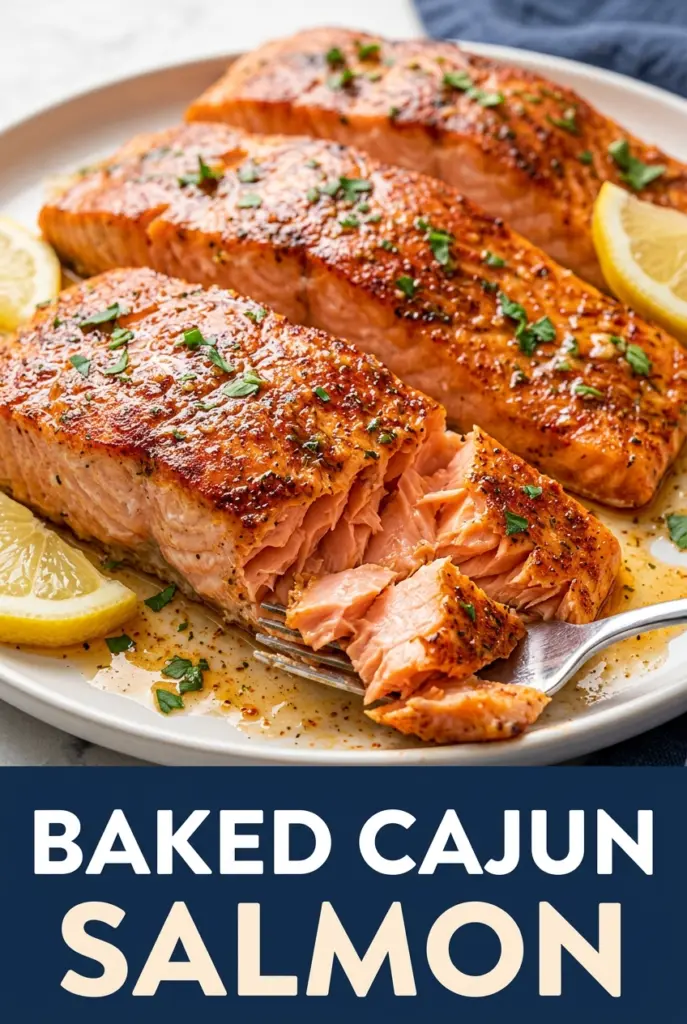
Flaky baked salmon with Cajun butter and lemon is one of those dinners that looks like you worked harder than you did. The spice coating turns fragrant and a little smoky in the oven, the butter keeps the fish moist, and the lemon cuts through the richness so every bite stays bright. When it comes out right, the top is deeply seasoned, the edges are just starting to caramelize, and the center still breaks into clean, tender flakes.
What makes this version worth repeating is the balance. A lot of Cajun salmon recipes lean too heavily on spice and forget the fish underneath; this one uses enough heat to taste bold without burying the salmon’s natural flavor. The melted butter and olive oil mixture also helps the seasonings cling, while the high oven temperature cooks the fillets quickly before they dry out.
Below, I’ll walk through the small choices that matter here: how to keep the seasoning from sliding off, how to tell when the salmon is done without overbaking it, and a few easy ways to adjust the spice level if you want a milder or hotter result.
The Cajun butter stayed right on top of the salmon and the fillets came out flaky and moist after 12 minutes. The lemon slices around the pan gave just enough freshness without watering anything down.
Save this Baked Cajun Salmon for a fast salmon dinner with smoky spice, buttery edges, and fresh lemon on top.
The Difference Between Blackened Edges and Burnt Spice
The biggest mistake with baked Cajun salmon is treating the spice coating like a dry rub and then blasting the fish too long. Cajun seasoning has paprika and garlic in it, and those ingredients can go from fragrant to bitter fast if the fillets sit in the oven past the point of doneness. At 425°F, the salmon cooks quickly enough to set the seasoning on the surface without turning the spices harsh.
Patting the salmon dry matters more than most people think. Any surface moisture dilutes the butter mixture and keeps the seasoning from sticking, which is how you end up with a pale, slippery top instead of a well-coated fillet. Skin-side down gives the flesh direct heat from above while protecting the bottom from overcooking, so the fish stays tender even if your fillets aren’t all exactly the same thickness.
What Each Ingredient Is Actually Doing in This Dish
- Salmon fillets — Use fillets that are close in thickness so they finish at the same time. Wild or farmed both work here; the key is freshness and even cuts. If your fillets are thinner on one end, tuck the tail end under slightly so it doesn’t dry out before the thickest part is done.
- Melted butter — This carries the spices and gives the top a richer, rounder finish than oil alone. Butter also helps the seasoning brown lightly in the oven. If you need a dairy-free version, use all olive oil, but expect a cleaner, less lush finish.
- Olive oil — The oil keeps the butter from feeling heavy and helps the coating brush on smoothly. It also adds a little buffer so the seasoning doesn’t scorch as fast. A good everyday olive oil is fine here.
- Cajun seasoning — This is the backbone of the dish, so use one you like on its own. Some blends are saltier than others, which matters because this recipe already includes added salt. If your blend is very salty, reduce the kosher salt slightly.
- Smoked paprika — This deepens the color and gives the salmon that smoky edge that makes the spice blend taste fuller. Regular paprika won’t hurt the recipe, but it loses some of the warmth and depth. If you like a little more heat, use hot smoked paprika.
- Lemon — The lemon is not garnish here. It cuts through the butter and lifts the spices so the fish tastes bright instead of heavy. Slice half of it and bake the slices around the salmon, then squeeze the rest over the top at the end.
The 12 Minutes That Matter Most
Getting the Pan Ready
Heat the oven fully before the salmon goes in. A hot oven gives the spice coating a head start and helps the fish cook through before it has time to dry out. Line the sheet pan with parchment so the buttery seasoning doesn’t glue itself to the pan, and keep the fillets spaced apart so the heat can move around them.
Building the Cajun Butter
Stir the melted butter, olive oil, garlic, Cajun seasoning, smoked paprika, oregano, salt, and black pepper together until the mixture looks evenly speckled and glossy. If the butter starts to cool and separate, give it another stir right before brushing. The garlic should be minced small enough that it clings to the fish instead of falling onto the pan and burning.
Coating and Baking the Salmon
Brush the seasoning mixture over the tops and sides of the fillets in a generous layer. Don’t leave it only on the surface; coating the sides helps the salmon taste seasoned all the way through. Bake until the flesh turns opaque and flakes with gentle pressure from a fork, usually 10 to 14 minutes depending on thickness. If you wait for it to look completely firm in the center, you’ve probably gone too far.
Finishing With Lemon and Parsley
Squeeze the remaining lemon over the salmon as soon as it comes out of the oven. That fresh hit of acid wakes up the butter and spices instantly. Finish with chopped parsley for color and a clean herb note that keeps the dish from tasting heavy.
How to Adapt This for Different Tables and Different Spice Levels
Milder Cajun Salmon
Cut the Cajun seasoning back to 1 teaspoon and lean a little harder on the smoked paprika and lemon. You still get the savory, smoky profile, but the heat stays in the background. This is the version to use if your seasoning blend runs hot or you’re serving people who don’t love much spice.
Dairy-Free Version
Swap the butter for more olive oil and brush the fish a little more lightly so the seasoning doesn’t look greasy. You’ll lose some richness, but the spices and lemon still carry the dish well. This is an easy change that keeps the salmon tender without changing the baking time.
Sheet Pan Dinner Add-Ons
Tuck quick-cooking vegetables like asparagus, zucchini, or green beans around the salmon for the last 10 minutes of baking. Keep them lightly oiled and season them separately so they don’t get overloaded with spice from the fish. This turns the recipe into a full meal without changing the salmon itself.
Storage and Reheating
- Refrigerator: Store leftovers in an airtight container for up to 3 days. The spice crust softens a little, but the salmon stays useful for salads, rice bowls, and wraps.
- Freezer: Salmon freezes well for up to 2 months if you wrap it tightly and place it in a freezer-safe container. Thaw it in the refrigerator overnight before reheating so it doesn’t dry out.
- Reheating: Warm it gently in a 300°F oven, covered loosely with foil, just until heated through. High heat turns leftover salmon chalky fast, so avoid blasting it in the microwave unless you’re using it for flakes in another dish.
Answers to the Questions Worth Asking
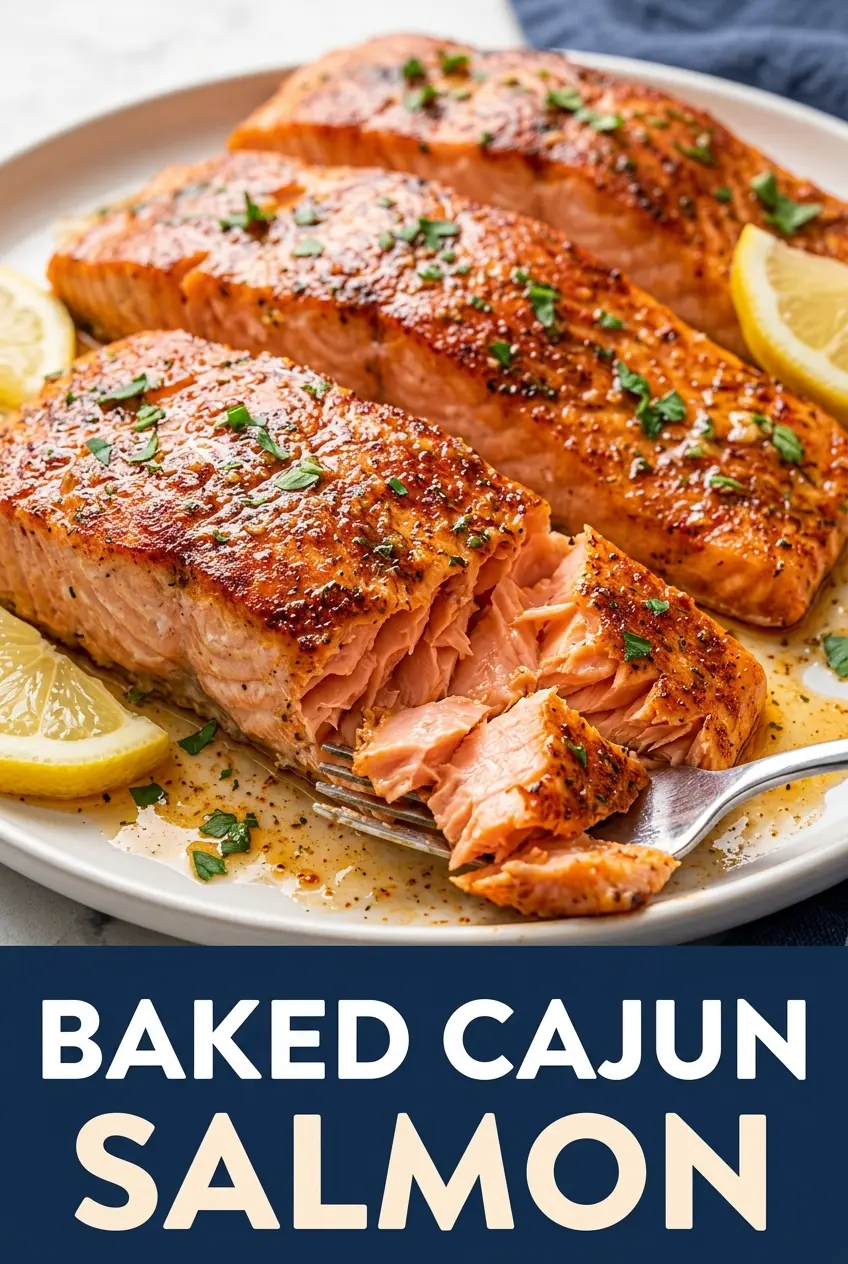
Baked Cajun Salmon
Ingredients
Equipment
Method
- Preheat the oven to 425°F and line a rimmed baking sheet with parchment paper so the salmon doesn’t stick.
- Pat the salmon fillets dry and arrange them skin-side down on the prepared baking sheet.
- Combine the melted unsalted butter, olive oil, garlic, Cajun seasoning, smoked paprika, dried oregano, kosher salt, and black pepper in a small bowl.
- Brush the Cajun butter mixture generously over the tops and sides of each salmon fillet so the surface looks well-coated.
- Slice half of the lemon into thin slices and arrange the slices around the salmon while keeping the seasoned surface visible.
- Bake the salmon at 425°F for 10–14 minutes, until the flesh turns opaque and flakes easily with a fork.
- Squeeze the remaining lemon half over the baked salmon so it looks glossy and fresh.
- Sprinkle the chopped fresh parsley over the salmon and serve while warm.