
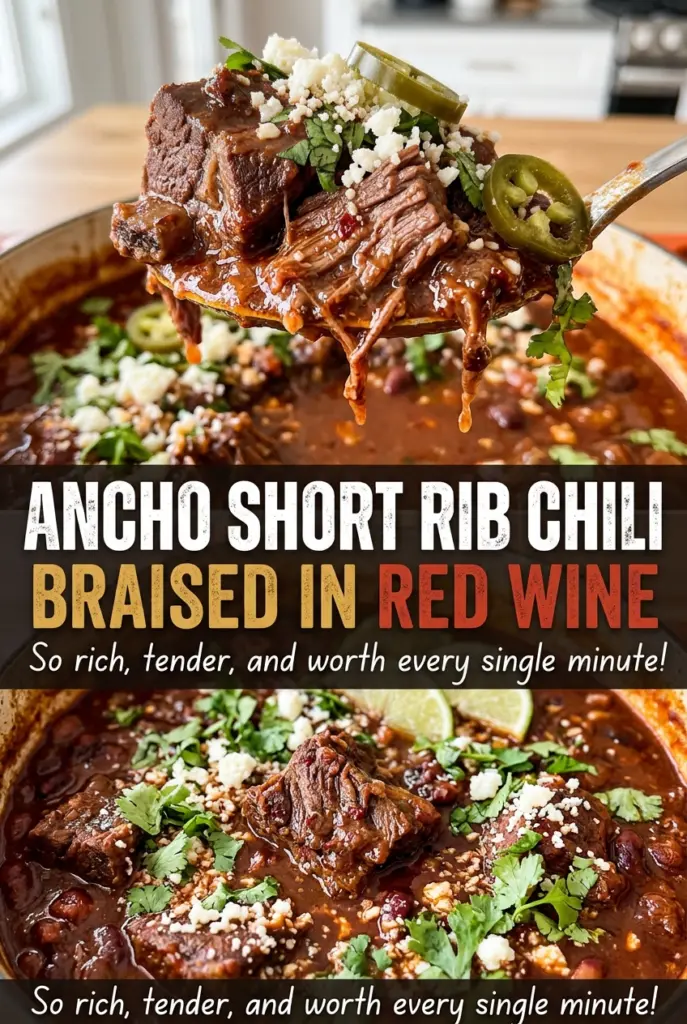
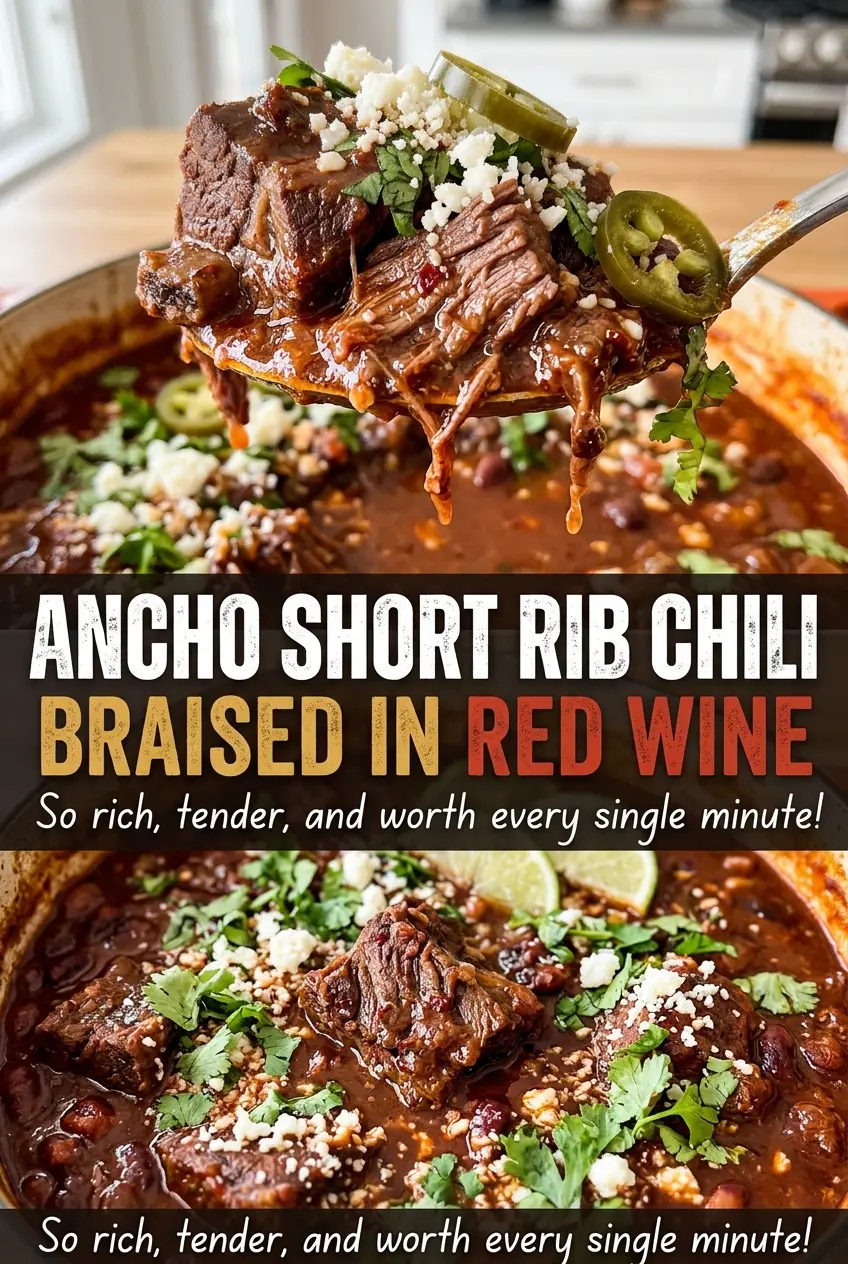
When the red wine hits the hot Dutch oven, it lifts up all the browned bits left from the short ribs and fills the kitchen with a deep, savory smell. I build this ancho short rib chili braised in red wine in that same pot, so the base picks up every bit of flavor from the seared meat before it goes into the oven.
The ancho chiles get soaked, then blended with their soaking water until smooth. That puree brings a rounded chile flavor through the whole pot instead of leaving little dry flakes behind. Bone-in short ribs turn tender during the long, covered braise, and pinto beans go in near the end so they keep their shape while the chili thickens. The result is rich, spoonable chili with tender shreds of beef in every bite.
Kitchen Note
Give the chili its full 10-minute rest off the heat. It settles into a thicker, easier-to-ladle consistency, and the first bowl won’t be scalding hot.
Save this ancho short rib chili for the long braise, tender beef, and deep red-wine chile broth.
Why the Ancho Chiles Belong in the Braising Liquid
Dry chile flakes can season the outside of a dish, but they don’t give this chili the same even, rounded flavor. Soaking whole ancho chiles softens their leathery texture, and blending them with that soaking water makes a smooth puree that disperses through the tomatoes and broth. You get a chile-rich base rather than pockets of seasoning.
That soaking water matters, too. The chiles have been sitting in it for 20 minutes, so it carries some of their earthy, gently fruity character. Blending the water in means none of that flavor gets left behind in the bowl. Ancho chiles are prized more for that deep, dried-fruit flavor than for sharp heat, which lets the wine and beef stay prominent. If you’ve had chili turn out harsh or dusty from adding dry chile powder directly to the pot, this approach gives the chile time to soften and become part of the sauce.
What the Short Ribs, Ancho, and Wine Each Bring
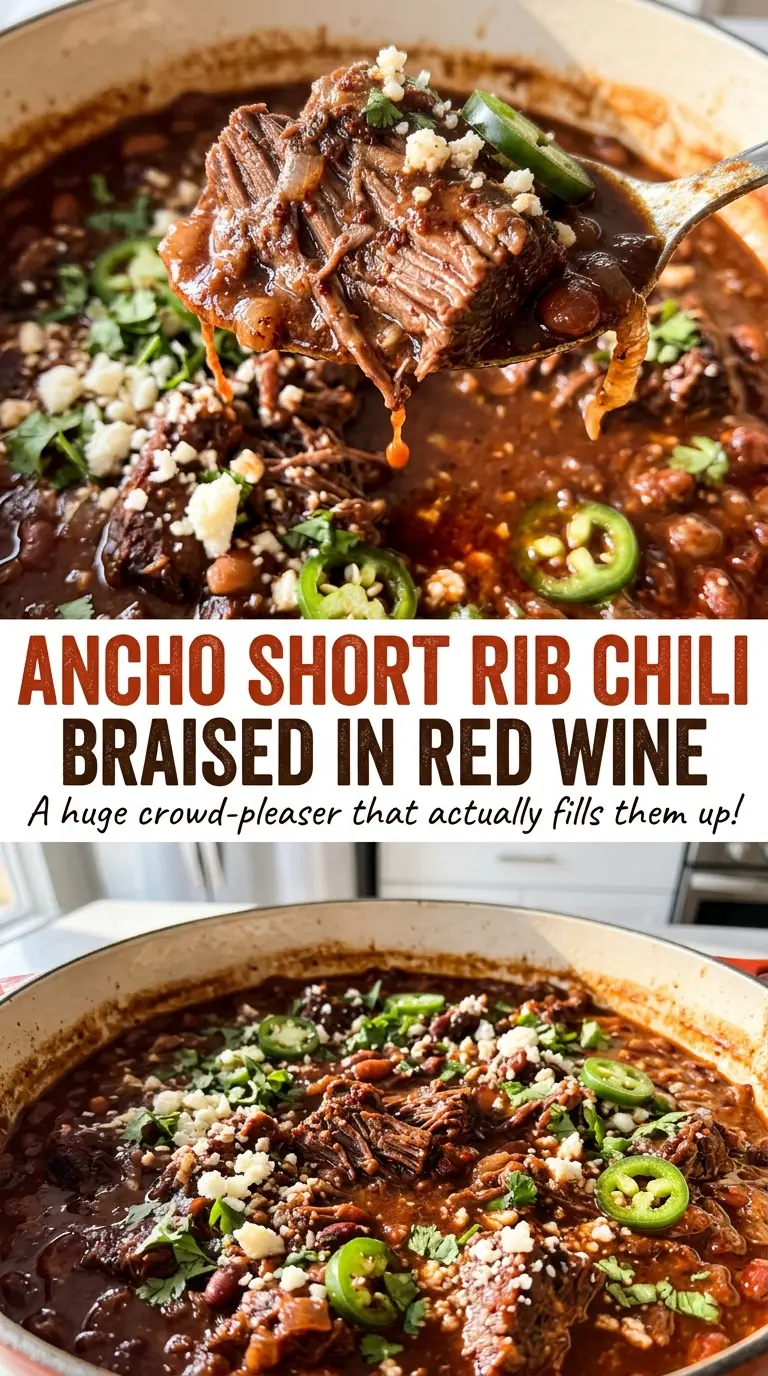
- Bone-in beef short ribs — Their generous marbling gives the long braise body and leaves the meat tender enough to pull into bite-size shreds. Patting the ribs dry before seasoning helps them brown instead of releasing moisture into the pot. Choose meaty ribs; there’s no need to seek out a premium label.
- Dried ancho chiles — Ancho is the defining chile here, with a mellow, earthy flavor that blends smoothly into the braising liquid. Use whole dried chiles that still feel pliable rather than brittle and dusty when possible. Stem, seed, and tear them before soaking so they soften evenly.
- Dry red wine — Wine adds acidity and depth that balance the beef. A reasonably priced dry red is right for the pot; a sweet wine would push the chili in a different direction. The beef broth gives the braise its savory backbone, while low-sodium broth leaves more room to season with the kosher salt.
- Crushed tomatoes and tomato paste — Tomato paste cooks with the aromatics to build a concentrated base, while crushed tomatoes add body during the braise. A standard can of crushed tomatoes works well; the smooth texture is a good fit for shredded beef.
- Pinto beans and apple cider vinegar — The pinto beans make the finished chili heartier, and adding them near the end helps them keep their shape. The vinegar goes in after the beef returns to the pot, where its bright tang cuts through the rich meat and tomato base.
- Onion, garlic, cumin, and oregano — Diced onion gives the base sweetness as it softens, and the garlic and dried spices need only a brief cook to become fragrant. Mince the garlic before it goes into the pot so it can cook evenly without burning.
How to Layer the Braise Without Losing the Browned Flavor
Soften the Anchos Into a Smooth Purée
Put the stemmed, seeded, torn ancho pieces in a heatproof bowl and cover them with boiling water. Let them soak for 20 minutes, then preheat the oven to 325°F while they soften. Blend the chiles with their soaking water until the mixture looks smooth, with no leathery pieces remaining, and set it aside. A few unblended strips can leave the finished chili uneven in texture.
Brown the Ribs and Build the Pot Base
Pat the short ribs dry and season them all over with kosher salt and black pepper. Heat the neutral oil in a 7-quart Dutch oven over medium-high heat, then brown the ribs in batches for 3 to 4 minutes per side and move them to a plate. If the pot is crowded, the ribs will steam rather than develop a dark crust. Add the diced onion and cook over medium heat for 5 to 7 minutes, stirring occasionally, until softened; stir in the garlic, tomato paste, cumin, and oregano for 1 minute.
Reduce the Wine Before the Long Braise
Pour in the red wine and scrape up the browned bits from the bottom of the pot; those bits dissolve into the liquid and deepen the base. Let the wine simmer for 4 to 5 minutes so it reduces slightly. Stir in the crushed tomatoes, beef broth, and ancho puree, then add the bay leaf and browned ribs. Cover the Dutch oven and braise at 325°F for 3 to 3 1/2 hours, until the meat is fork-tender and pulling away from the bones.
Shred the Beef and Finish the Chili
Move the ribs to a plate, skim excess fat from the chili, and discard the bay leaf. Remove and discard the bones, then shred the meat into bite-size pieces. Stir the pinto beans into the pot and simmer uncovered over medium-low heat for 15 to 20 minutes, until the chili thickens slightly. Return the beef, stir in the apple cider vinegar, and cook for 3 to 5 minutes until heated through; take the pot off the heat and let it rest for 10 minutes.
Easy Changes for a Different Pot of Short Rib Chili
Skip the wine for an alcohol-free version
Replace the red wine with 2 cups of the low-sodium beef broth. Pour it in after the aromatics and scrape the browned bits from the pot as usual; the base won’t have the wine’s same depth, but the apple cider vinegar still brings a bright finish.
Trade pinto beans for black beans
Use a drained and rinsed 15-ounce can of black beans in place of the pinto beans. They’ll give the bowl a slightly firmer bite and a more pronounced bean flavor; add them at the same point so they warm through as the chili thickens.
Make it lower in carbohydrates by leaving out the beans
Omit the pinto beans and keep the uncovered simmer so the tomato-rich sauce can thicken. The finished chili will be less chunky and bean-forward, with the shredded short ribs taking center stage.
Storage and Reheating
- Refrigerator: Store leftovers in an airtight container for 3 to 4 days. The chili will firm up as it chills, then loosen as it warms.
- Freezer: Freeze in airtight, freezer-safe containers for up to 3 months. Leave a little room at the top for expansion and thaw overnight in the refrigerator for the most even reheating.
- Reheating: Warm gently in a covered saucepan over low heat, stirring occasionally, until it reaches 165°F. Avoid a hard boil, which can break down the beans and make the beef seem dry.
Questions That Come Up With This Red Wine Chili
Ancho Short Rib Chili Braised in Red Wine
Ingredients
Equipment
Method
- Place the ancho chiles in a heatproof bowl, cover with the boiling water, and soak for 20 minutes.
- Preheat the oven to 325°F.
- Blend the softened chiles with their soaking water until smooth.
- Set the ancho purée aside.
- Pat the short ribs dry.
- Season the short ribs all over with the kosher salt and black pepper.
- Heat the neutral oil in a 7-quart Dutch oven over medium-high heat.
- Brown the ribs in batches, about 3 to 4 minutes per side.
- Transfer the ribs to a plate.
- Add the yellow onion to the pot and cook over medium heat for 5 to 7 minutes, stirring occasionally, until softened.
- Stir in the garlic, tomato paste, ground cumin, and dried oregano and cook for 1 minute.
- Pour in the dry red wine.
- Scrape up the browned bits and simmer for 4 to 5 minutes to reduce slightly.
- Stir in the crushed tomatoes, beef broth, and ancho purée.
- Add the bay leaf and browned ribs.
- Cover and braise in the oven for 3 to 3 1/2 hours, until the meat is fork-tender and pulling away from the bones.
- Transfer the ribs to a plate.
- Skim excess fat from the chili.
- Discard the bay leaf.
- Remove and discard the rib bones.
- Shred the meat into bite-size pieces.
- Stir the pinto beans into the pot.
- Simmer uncovered over medium-low heat for 15 to 20 minutes, until the chili thickens slightly.
- Return the shredded meat to the pot.
- Stir in the apple cider vinegar.
- Cook for 3 to 5 minutes until heated through.
- Remove the pot from the heat and let the chili rest for 10 minutes before serving.