
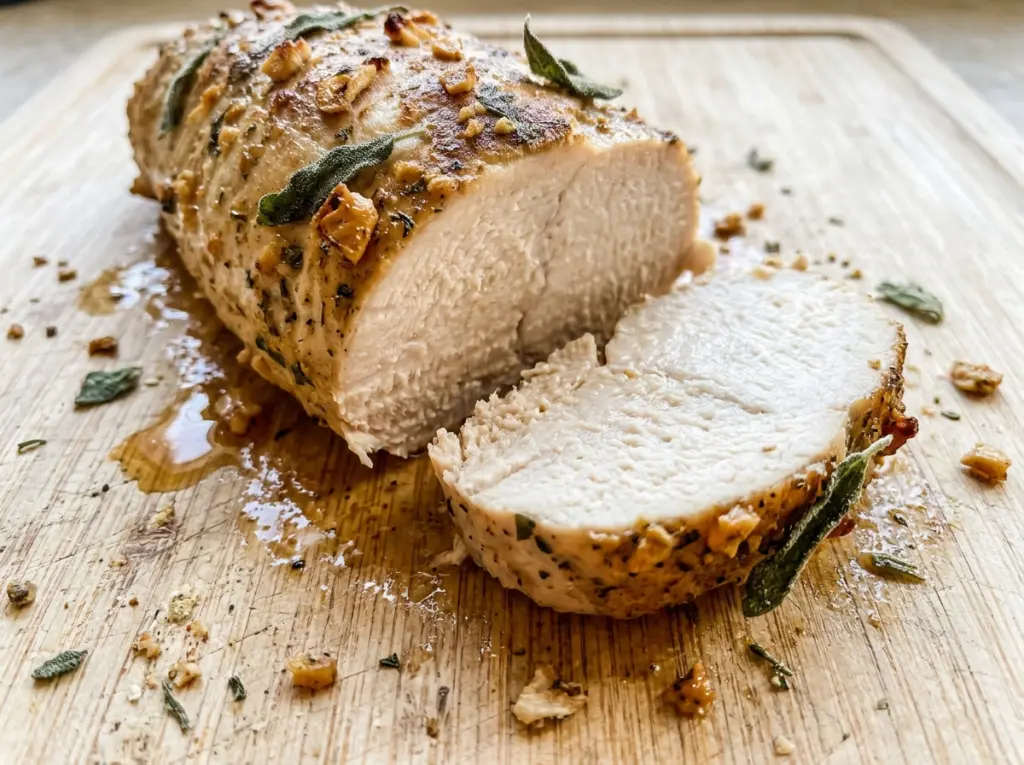
The outside of a turkey tenderloin can look ready before the thickest part has finished cooking. That’s why I don’t rely on color or the timer alone for this air fryer turkey tenderloin with garlic and sage. A quick temperature check gives you a clear answer without leaving this lean cut in the heat longer than it needs.
The coating is deliberately simple: olive oil helps the minced garlic and fresh sage cling to the meat, while salt and pepper season each bite. Patting the tenderloin dry first gives that mixture a better surface to hold onto. Turning it halfway through helps the air reach both sides as it cooks.
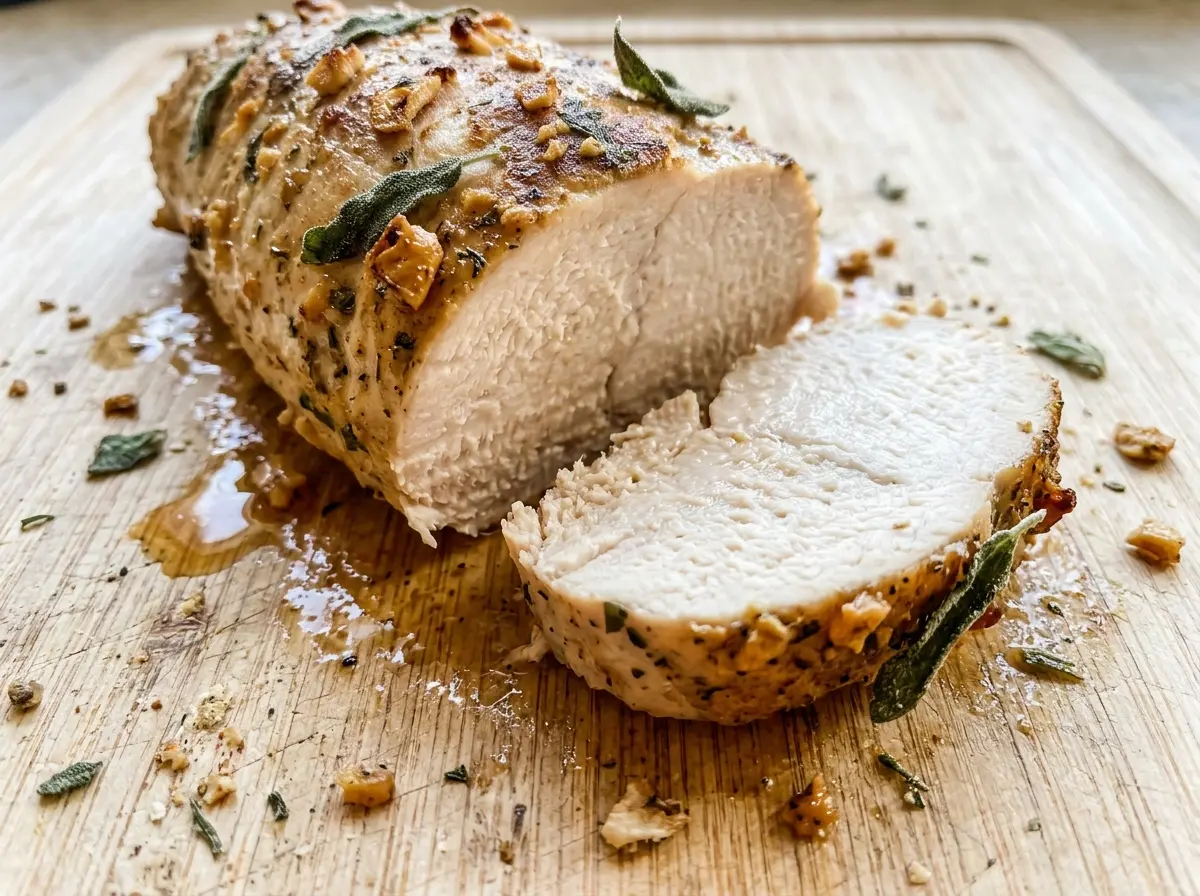
Give the cooked turkey a five-minute rest before slicing, then cut across the tenderloin into pieces that stay tender on the plate. The garlic and sage make a fragrant crust around juicy turkey, and the whole recipe serves four.
Kitchen Note
Let the turkey rest for the full five minutes before slicing. Cutting into it straight from the basket lets more of the juices run onto the board instead of staying with the meat.
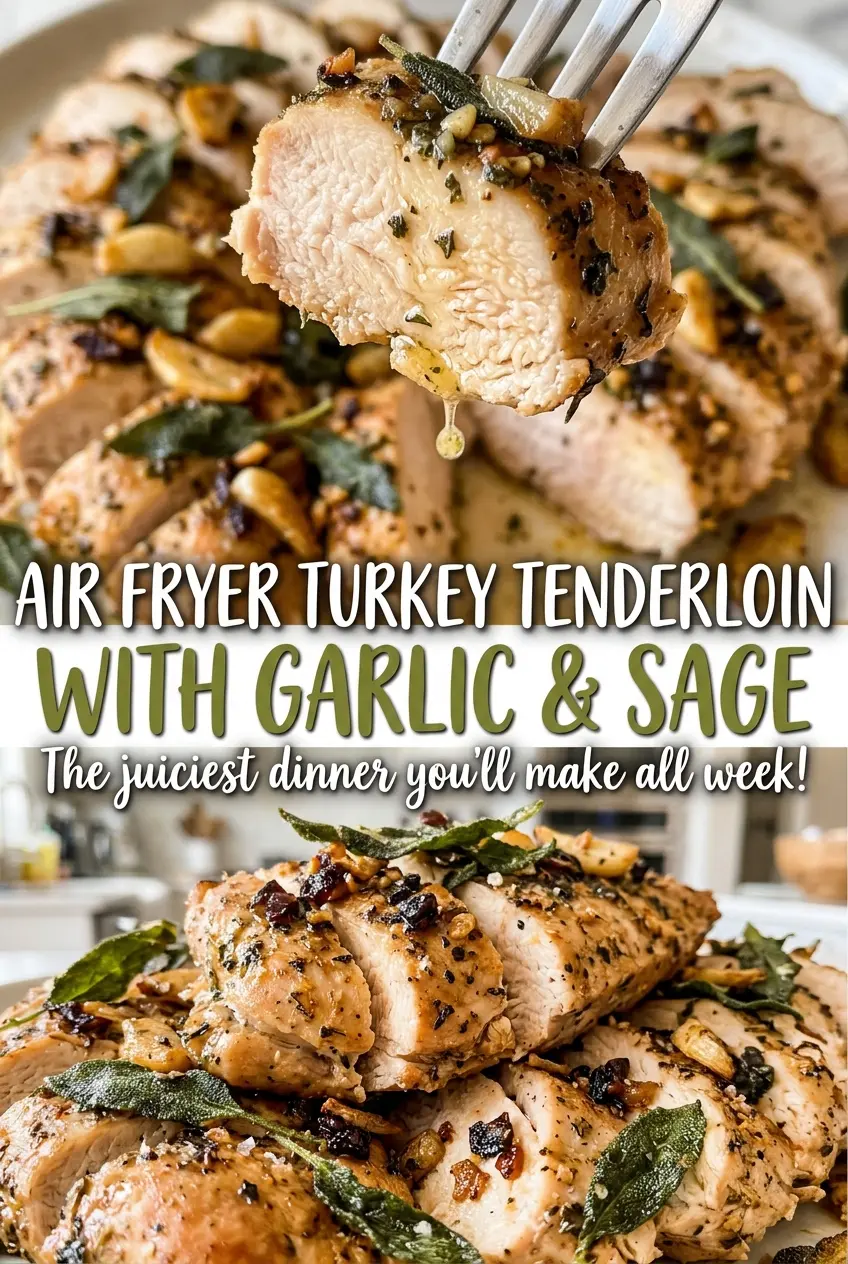
Save this garlic-and-sage turkey tenderloin for a simple air fryer dinner with a fragrant, savory coating.
Why the Air Fryer Timer Can’t Tell You When Turkey Is Done
A timer gives you a useful range, but it can’t account for every tenderloin’s thickness or every air fryer’s cooking pattern. That matters with turkey tenderloin because the thinner end and the thickest section don’t warm at exactly the same pace. If you wait for the outside to look a certain color, you’re guessing at what’s happening in the center.
Use the timing as a guide and let an instant-read thermometer settle the question. Check the thickest part, where the meat takes longest to cook, rather than relying on a reading near the tapered end. The turn halfway through is useful for another reason: it gives the two sides a chance to cook more evenly. If the turkey needs a few extra minutes, keep cooking and check again instead of pulling it early just because the first timer has ended.
That approach also helps you avoid the opposite problem. Lean turkey can become dry when it stays in the air fryer after it’s cooked through. A thermometer takes the guesswork out of both decisions: whether it needs more heat and when it’s time to take it out.
What the Garlic, Sage, and Olive Oil Each Bring
- Turkey tenderloin — This is the cut to buy for the timing and method here. Choose a tenderloin that’s close to the same size so the cooking window stays useful; a much larger or differently shaped cut won’t necessarily cook at the same pace.
- Olive oil — It helps the garlic, sage, salt, and pepper spread over the meat instead of falling off in dry patches. A mild everyday olive oil works well; a strongly flavored oil will bring more of its own taste to the coating.
- Fresh garlic — Minced garlic distributes through the oil and gives the outside a clear savory aroma. Keep the pieces small so they’re spread around rather than left in a few large clumps. For a garlic-free version, leave it out rather than replacing it with another ingredient.
- Fresh sage — Finely chopped sage has a green, woodsy flavor that suits turkey without taking over the whole coating. Fresh leaves are important to this version; dried sage is more concentrated, so it isn’t a one-for-one swap. If you don’t have fresh sage, leave it out instead of guessing at a replacement amount.
From Dry Surface to Juicy Slices: The Air Fryer Process
Preheat and Dry the Tenderloin
Preheat the air fryer to 380°F before adding the turkey. While it heats, pat the tenderloin dry with paper towels; a wet surface makes it harder for the oil-and-herb mixture to cling evenly. Take a moment to dry around the whole piece, including its underside. Keeping the tenderloin whole follows the cooking time used here.
Mix and Rub on the Seasoning
Stir the olive oil, minced garlic, chopped fresh sage, kosher salt, and black pepper together in a small bowl. The mixture should look evenly combined, with the herbs and garlic dispersed through the oil. Rub it over the entire tenderloin, turning the meat in your hands as needed to cover the sides. If the garlic or sage is gathered in one spot, spread it out so the coating is more balanced.
Air Fry, Then Turn Halfway Through
Set the tenderloin in the air fryer basket and cook at 380°F for 20 to 28 minutes, turning it halfway through. Use an instant-read thermometer in the thickest part; the turkey is ready when that spot reaches 165°F. The exact finish within the time range can vary, so check the temperature rather than assuming the shortest or longest time will suit every tenderloin. If it hasn’t reached the target, return it to the basket and continue cooking.
Rest Before Slicing
Transfer the cooked turkey to a cutting board and let it rest for five minutes. Keep it whole during the rest rather than slicing right away. Then slice across the tenderloin into even pieces. If you cut it while it’s piping hot, more juice can escape onto the board.
Simple Ways to Adapt the Garlic and Sage Coating
Make It Garlic-Free
Leave out the minced garlic and rub the olive oil, fresh sage, salt, and pepper over the turkey. The result is gentler and more herb-forward, though it won’t have the same savory garlic aroma. If you’re avoiding garlic because of an allergy, use clean hands and utensils and prevent contact with garlic during prep.
Let the Garlic Lead
For a more direct garlic-and-pepper flavor, leave out the sage and keep the other ingredients in the coating. This is a good option if you don’t enjoy sage’s woodsy taste; the turkey will still have the same air fryer method, but the seasoning will taste simpler and sharper.
Storage and Reheating
- Refrigerator: Store cooked turkey in a covered container for 3 to 4 days. Sliced pieces may dry out sooner than a larger piece, so keep leftovers together until you’re ready to eat them.
- Freezer: Freeze cooled turkey in an airtight freezer-safe container for up to 2 to 3 months for best quality. Thaw it in the refrigerator before reheating.
- Reheating: Warm slices covered in the microwave in short intervals, checking between bursts so they heat through without getting tough. Reheat only what you plan to serve; repeated heating can dry the turkey out.
Questions That Come Up When Cooking Turkey Tenderloin
Air Fryer Turkey Tenderloin with Garlic and Sage
Ingredients
Equipment
Method
- Preheat the air fryer to 380°F.
- Pat the turkey tenderloin dry with paper towels.
- In a small bowl, stir together the olive oil, garlic, sage, salt, and pepper, then rub the mixture over the turkey.
- Place the tenderloin in the air fryer basket and cook at 380°F for 20 to 28 minutes, turning it halfway through, until the thickest part reaches 165°F on an instant-read thermometer.
- Transfer the turkey to a cutting board and rest for 5 minutes before slicing.