
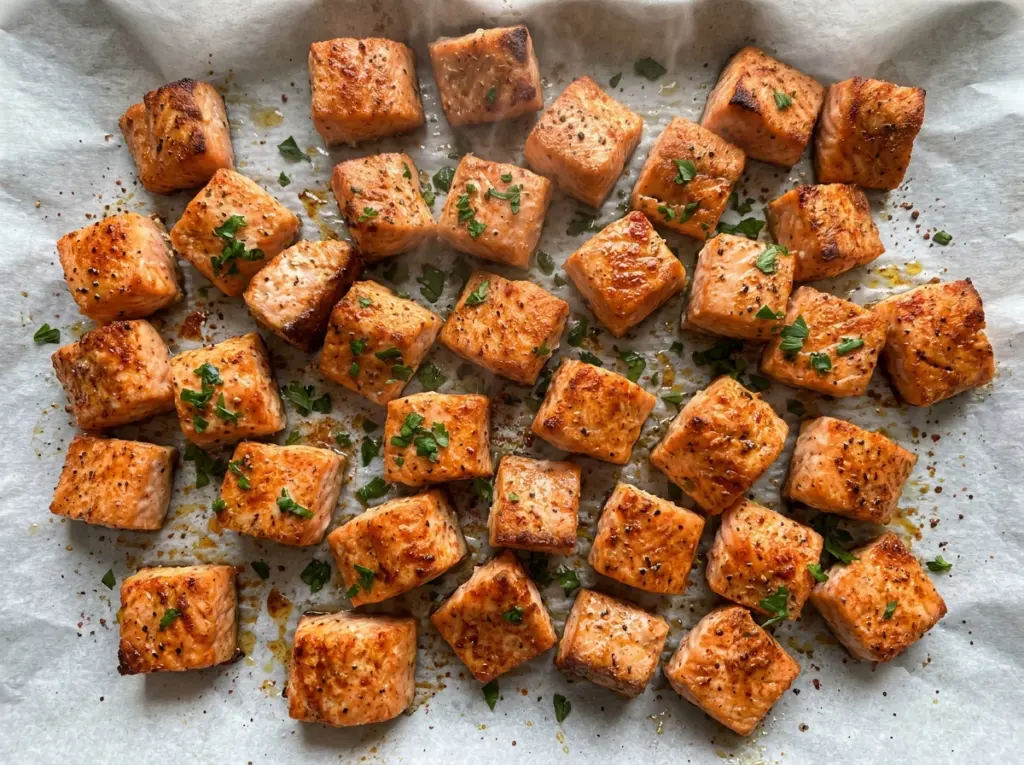
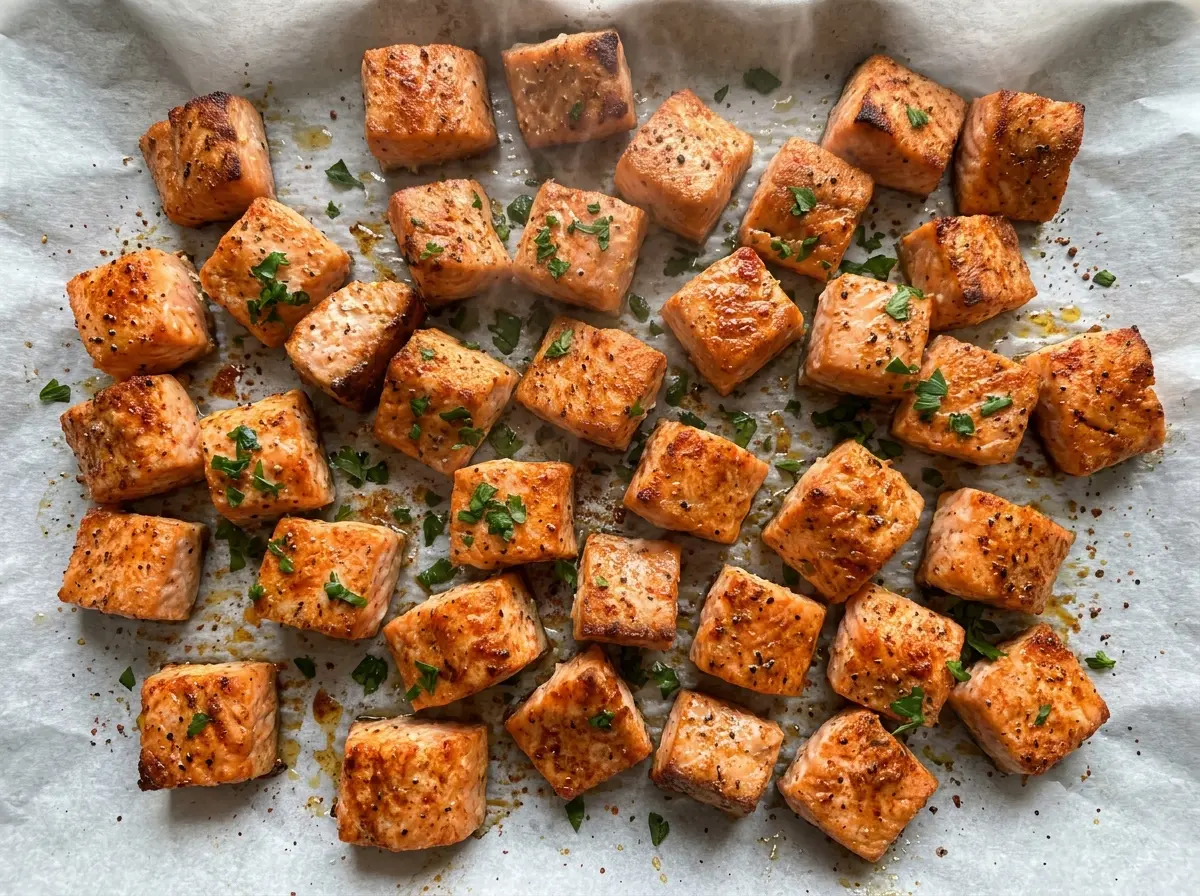
At 400°F, salmon bites cook quickly, which is exactly what I want on a night when dinner needs to be simple. The basket has to stay in a single layer, though; pile the cubes together and the crowded pieces won’t cook as evenly. I split the salmon into batches when needed, so each bite has room around it.
For these Air Fryer Salmon Bites, I toss the cubes with just enough olive oil to help the paprika, garlic powder, salt, and pepper coat the surfaces. There’s no breading to fuss with and no pan to watch. Patting the salmon dry first helps the seasoning cling instead of sliding off, and cutting the pieces close to the same size keeps the batch cooking on a similar schedule. The result is tender, flaky salmon with a savory, lightly spiced coating.
Kitchen Note
Press paper towels against the salmon cubes until their surfaces feel dry, especially along the cut sides. Don’t rub or squeeze them; a gentle blot keeps the pieces intact and gives the oil and spices a better surface to cling to.
Save these Air Fryer Salmon Bites for a fast dinner with tender centers and a paprika-garlic coating.
Why the Largest Salmon Cube, Not the Clock, Tells You When to Stop
Salmon cubes don’t always match perfectly, even when you cut them carefully. A slightly thicker piece takes longer to cook through than a smaller one, and the paprika can tint the outside before the center is ready. That’s why I check the largest cube rather than judging the whole batch by its color or the timer alone.
Slide an instant-read thermometer into the center of the biggest piece, aiming for the thickest part without touching the basket. The target is 145°F. If the largest cube is there, the smaller ones will generally be ready too; if not, give the batch a little more time and check again. Keeping the pieces close to 1 inch makes that check more meaningful because you’re not asking a much larger chunk to cook alongside tiny pieces.
The 6-to-8-minute window is a guide, not a reason to pull the salmon before it reaches temperature. Air fryer baskets and cube sizes vary, so let the thermometer settle the question. That small check protects the tender texture you want without relying on a browned-looking edge as proof.
What the Salmon, Olive Oil, and Dry Spices Bring to the Basket
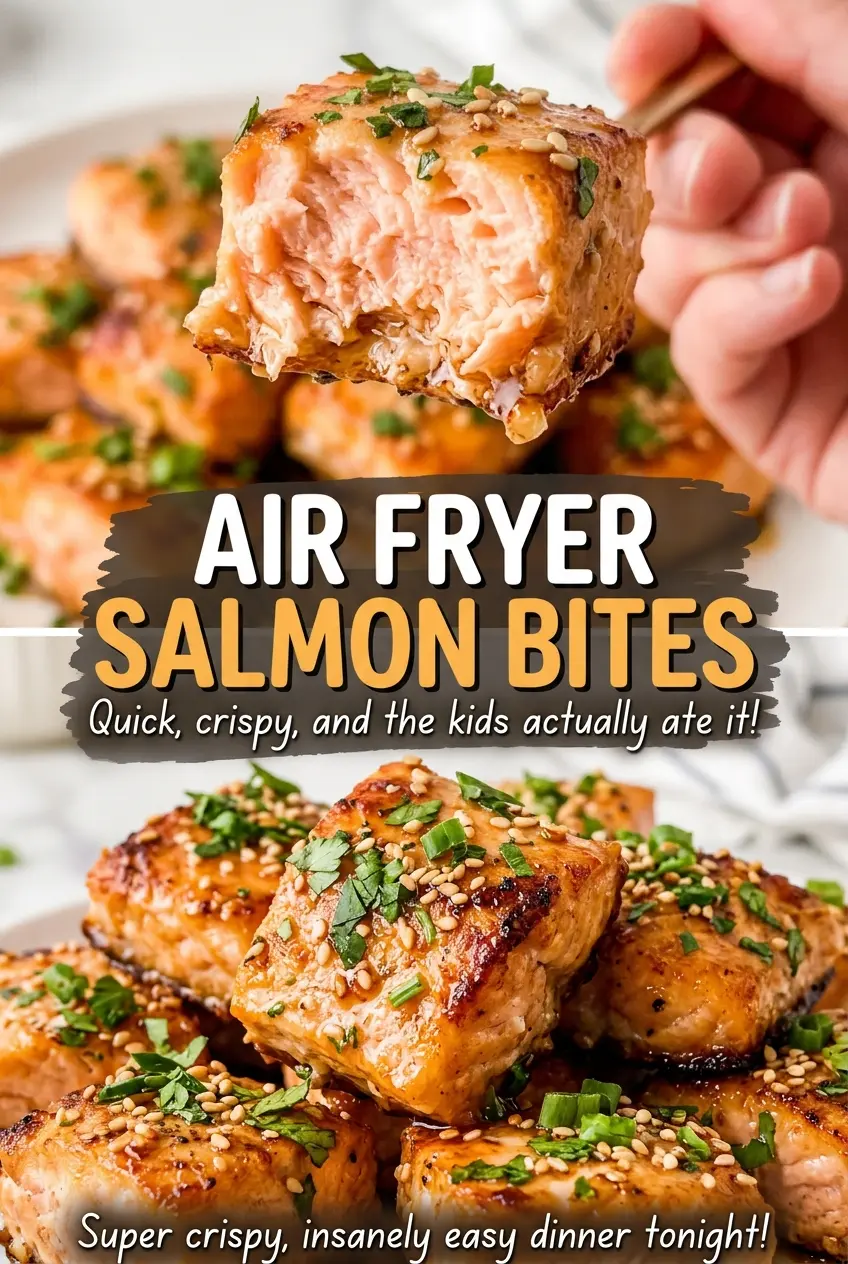
- Skinless salmon fillet — A reasonably even, firm fillet is easier to cut into uniform cubes than a thin tail piece. Fresh or previously frozen salmon both work once fully thawed; there isn’t a direct non-fish substitute that will cook on the same schedule or give the same flaky texture.
- Olive oil — It helps the dry seasonings coat the salmon and adds a mild, rounded taste. Avocado oil is a practical swap at the same amount if that’s what you keep on hand; a strongly flavored oil would compete with the paprika and garlic.
- Paprika — Regular paprika gives the bites their warm color and gentle peppery flavor without making them hot. Smoked paprika is an easy one-for-one swap if you want a deeper, woodsy note; the salmon itself remains the main flavor.
- Garlic powder — The fine powder spreads evenly over small cubes and is less likely to scorch than fresh minced garlic in the hot basket. Onion powder can stand in at the same amount, with a sweeter, more mellow savory taste.
- Black pepper — Freshly ground pepper gives a sharper aroma, but pre-ground pepper works just fine here because the cook is short. Use the kosher salt listed in the recipe for a straightforward seasoning; different salt crystals can measure differently, so don’t swap in an equal volume of fine table salt without adjusting.
The Short Air-Fryer Cook, From Dry Cubes to a Two-Minute Rest
Preheat the Basket and Blot the Salmon
Preheat a 6-quart air fryer to 400°F for 3 minutes. While it heats, pat the salmon cubes dry with paper towels, including their cut sides. Keep the pieces intact rather than pressing hard on them. A dry surface makes the next toss less slippery and helps the seasoning stay where you put it.
Coat Every Side With the Seasoning
Put the salmon in a bowl with the olive oil, paprika, garlic powder, kosher salt, and black pepper. Toss gently until the cubes have an even, thin coating; if you see a mound of spices in one spot, turn those pieces through it again. Handle the cubes carefully, since salmon can flake apart before it ever reaches the basket. The coating should look lightly glossy, not pooled with oil.
Cook in a Single Layer and Shake Gently
Arrange the salmon in one layer in the preheated basket, leaving a little breathing room between pieces. Work in batches if the basket can’t hold them without crowding; piled-up cubes won’t cook as evenly. Cook at 400°F for 6 to 8 minutes, gently shaking the basket halfway through. The shake should turn or shift the bites without tossing them hard against the sides. Check the largest piece in the center for 145°F before you take the batch out.
Let the Bites Rest Before Serving
Transfer the cooked salmon out of the basket and let it rest for 2 minutes. The short pause gives the hot pieces a moment to settle after cooking and makes them easier to handle without breaking. If you cooked more than one batch, check each batch before serving rather than assuming the first and last cooked identically. Serve the bites while they’re warm and tender.
Small Seasoning Changes That Shift the Flavor
Make the Garlic More Prominent
Increase the garlic powder slightly while keeping the olive oil and other seasonings the same. The bites will taste more savory and garlicky, though a heavier dusting can make the surface taste powdery, so toss thoroughly and keep the coating light.
Turn Up the Black Pepper
Use a little more black pepper than the base amount for a sharper, more pepper-forward bite. It adds warmth without introducing another seasoning, but the pepper will stand out more clearly against the mild salmon and paprika.
Make a Lower-Sodium Batch
Omit the kosher salt rather than replacing it with another salty seasoning. The paprika, garlic powder, and pepper still add aroma, but the salmon will taste less rounded and noticeably less seasoned than the standard batch.
Storage and Reheating
- Refrigerator: Keep cooked salmon in an airtight container for 3 to 4 days. The flesh will firm up as it chills, so it won’t have quite the same tender texture as a fresh batch.
- Freezer: Freeze cooled bites in a sealed freezer-safe container for up to 2 to 3 months for best quality. Thaw them in the refrigerator before reheating.
- Reheating: Warm in the microwave in short bursts at reduced power, checking often so the small pieces don’t dry out. Reheat leftovers to 165°F; prolonged high heat is the quickest way to make salmon tough.
Questions That Come Up Before the First Batch
Air Fryer Salmon Bites – Cozy Dinner Recipe
Ingredients
Equipment
Method
- Preheat a 6-quart air fryer to 400°F for 3 minutes.
- Pat the salmon cubes dry with paper towels.
- Toss the salmon with the olive oil, paprika, garlic powder, salt, and pepper until evenly coated.
- Arrange the salmon in a single layer in the air fryer basket, working in batches if needed.
- Cook at 400°F for 6 to 8 minutes, gently shaking the basket halfway through, until the largest pieces reach 145°F in the center.
- Let the salmon rest for 2 minutes before serving.