
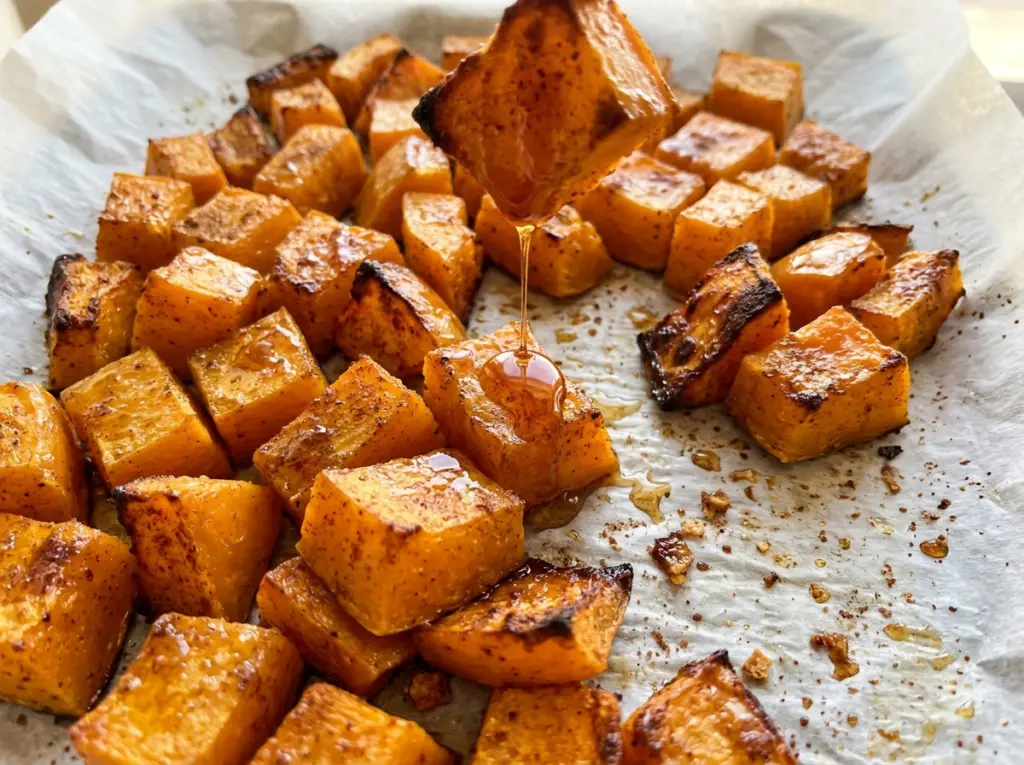
The squash starts out firm and pale, but a few minutes in the air fryer bring out browned corners and a soft, almost creamy middle. I like that contrast here: the cinnamon sticks to the oiled cubes, while the maple syrup goes on at the end, where its sweetness stays bright. This air fryer butternut squash with maple syrup and cinnamon turns a simple vegetable into a side dish with very little hands-on work.
Even pieces matter more than fancy seasoning. Cutting the squash into 1-inch cubes gives the pieces a better chance of finishing together, instead of having small ones soften too far while the big ones are still firm. I toss the hot squash with the maple syrup in a bowl rather than coating it before cooking, so the cubes keep their browned edges and get an even, glossy finish. The result is tender squash with a little caramelized color and a warm cinnamon-maple coating.
Kitchen Note
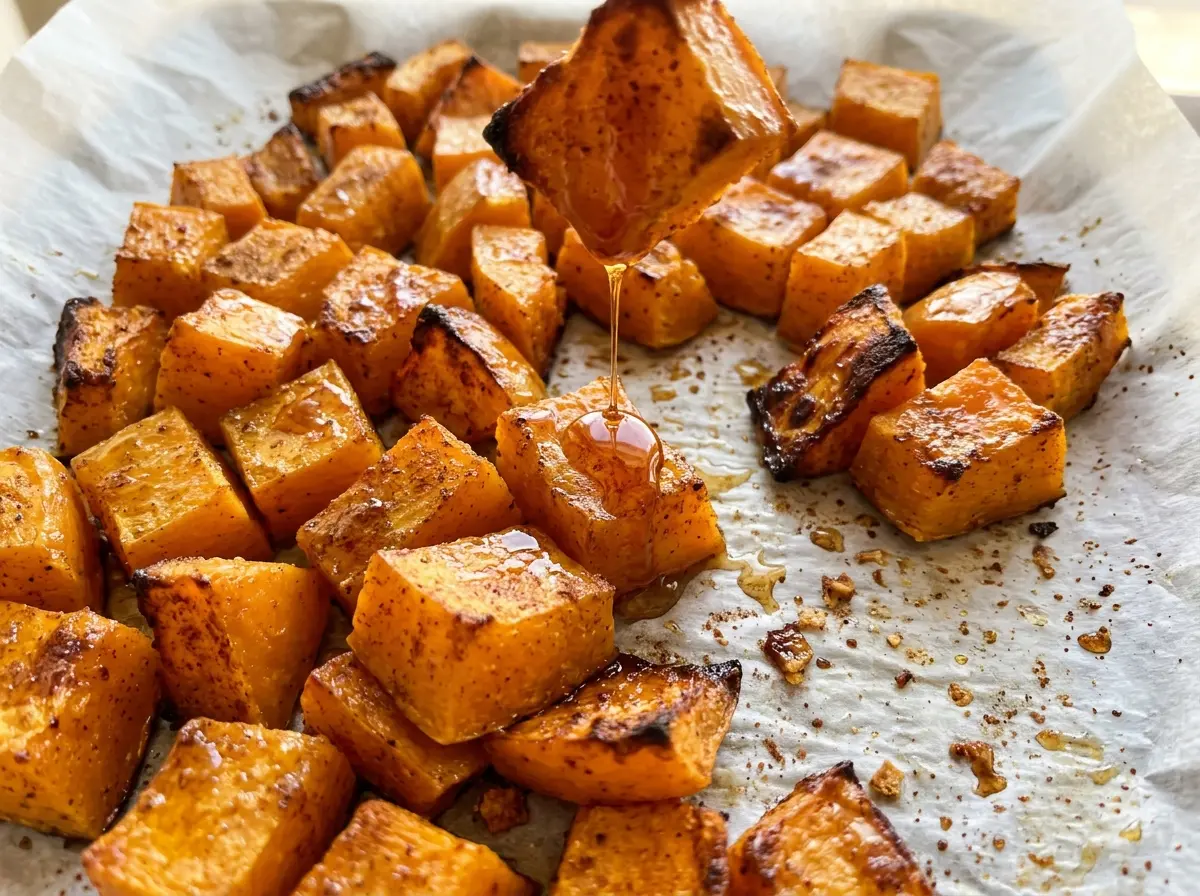
Keep the maple syrup out of the air fryer. Drizzle it over the cooked squash in a serving bowl and toss there; the cubes stay browned instead of sitting in a sugary coating as they cook.
Save this cinnamon-maple butternut squash for a side with tender centers, browned edges, and a sweet finish.
Why Uneven Squash Cubes Brown Before They Turn Tender
Butternut squash pieces don’t all cook at the same pace if they’re cut to noticeably different sizes. A small piece has more exposed surface relative to its center, so it can soften and brown before a chunky piece is tender. With 1-inch cubes, the pieces are similar enough in size to cook more evenly during the short air-frying window.
That size also gives the outside time to pick up color without leaving the middle firm. If a few pieces are much larger than the rest, trim them down rather than relying on extra cooking time for the whole batch. Extending the cook for oversized cubes can push the smaller pieces past tender. A little care with the knife makes the basket easier to manage and gives you a more consistent mix of browned edges and soft centers.
What the Squash, Oil, Cinnamon, and Maple Each Bring
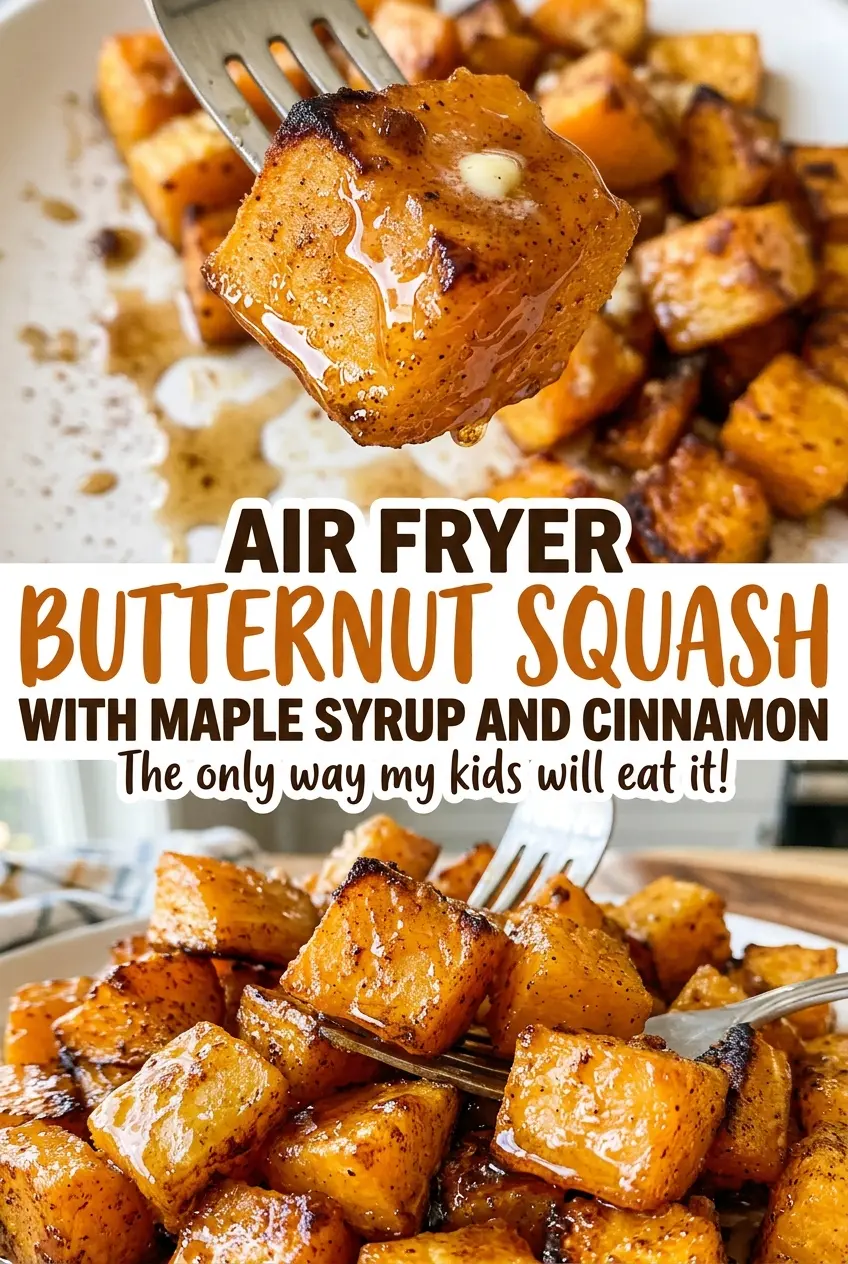
- Butternut squash — Choose squash that feels firm, with no soft or sunken spots. Peeling, removing the seeds, and cutting it into even cubes are what make it ready to cook and help the pieces finish together. Fresh pre-cut squash is convenient if the pieces are close to the same size; trim any oversized pieces before seasoning.
- Olive oil — A light coating helps the cinnamon and salt cling to the squash and keeps the surfaces from drying out in the hot air. Use an everyday olive oil; a delicate, expensive bottle won’t make a noticeable difference here. A neutral oil such as avocado oil works in the same amount if you prefer a milder taste.
- Ground cinnamon — Ground cinnamon spreads easily over the cut surfaces and gives the squash its warm, sweet-spice note. Use a fresh, fragrant jar if yours has been sitting open for years; stale cinnamon tastes flat. Ground ginger can replace it in the same amount, with a sharper, less familiar warmth.
- Pure maple syrup — Pure maple syrup gives the finished squash a distinct maple aroma and a loose coating that’s easy to toss through the cubes. Grade doesn’t need to be precious, but choose pure maple syrup rather than pancake syrup for its cleaner maple taste. Honey can stand in measure-for-measure, though its sweetness is more floral.
Air-Frying the Cubes Before the Maple Finish
Preheat Before the Squash Goes In
Preheat the air fryer to 400°F before you add the squash. Starting with a hot air fryer helps the cooking begin right away, rather than leaving the cubes to warm slowly in a cool basket. While it heats, you can get the squash peeled, seeded, and cut into 1-inch cubes. Keep the pieces close in size so they have a fair chance of finishing together.
Coat the Cubes Evenly
Toss the squash with the olive oil, cinnamon, and kosher salt until the pieces are evenly coated. You’re looking for a light sheen, with cinnamon visible across the surfaces rather than gathered in a few dry patches. If the seasoning collects at the bottom of the bowl, keep tossing until it clings to the oiled squash. An even coating means each bite gets the same balance of spice and seasoning.
Air-Fry in a Single Layer
Arrange the cubes in a single layer in the basket, working in batches if needed. Air-fry at 400°F for 12 to 16 minutes, shaking the basket halfway through. Look for browned edges and centers that are tender when pierced; if the pieces are still firm, continue cooking within the stated range. A crowded basket won’t give the cubes the same exposure, so don’t pile them up to save a batch.
Toss with Maple Syrup in the Bowl
Transfer the hot squash to a serving bowl once it’s tender and browned at the edges. Drizzle the maple syrup over the cubes, then toss until the pieces have a light, even coating. The squash is hot enough to help the syrup spread as you turn it. Serve it while the edges still have some definition and the centers are soft.
Three Simple Ways to Change the Sweet-Spice Balance
Make It Lower in Added Sugar
Leave out the maple syrup for a less-sweet version. The squash will have a drier finish and the cinnamon will stand out more, but the cubes still cook the same way. This is the simplest adjustment if you want the squash’s natural sweetness to do the work.
Trade Maple for Honey
Use honey in the same amount as the maple syrup and add it to the cooked squash in the serving bowl. It brings a floral sweetness instead of maple’s woodsy note, with a slightly stickier coating. Keep the honey out of the air fryer and toss it through at the end.
Give It a Savory, Smoky Edge
Replace the cinnamon with the same amount of ground smoked paprika. The squash turns savory and gently smoky, while the maple syrup still brings a sweet contrast at the finish. This one changes the character of the dish without changing the air-frying method.
Storage and Reheating
- Refrigerator: Store leftovers in an airtight container for 3 to 4 days. The squash softens as it sits, and the maple coating may settle at the bottom.
- Freezer: Freeze in an airtight container for up to 2 months. It’s safe to freeze, but thawed squash will be softer and won’t have the same browned-edge texture.
- Reheating: Warm a portion in the air fryer or microwave until heated through. Avoid reheating the whole batch multiple times; repeated warming makes the cubes softer.
Questions That Come Up When Making Air Fryer Butternut Squash
Air Fryer Butternut Squash with Maple Syrup and Cinnamon
Ingredients
Equipment
Method
- Preheat the air fryer to 400°F.
- Toss the squash with the olive oil, cinnamon, and salt until evenly coated.
- Arrange the squash in a single layer in the air fryer basket, working in batches if needed.
- Air-fry at 400°F for 12 to 16 minutes, until tender and browned at the edges.
- Shake the basket halfway through cooking.
- Transfer the squash to a serving bowl.
- Drizzle with the maple syrup.
- Toss to coat.