
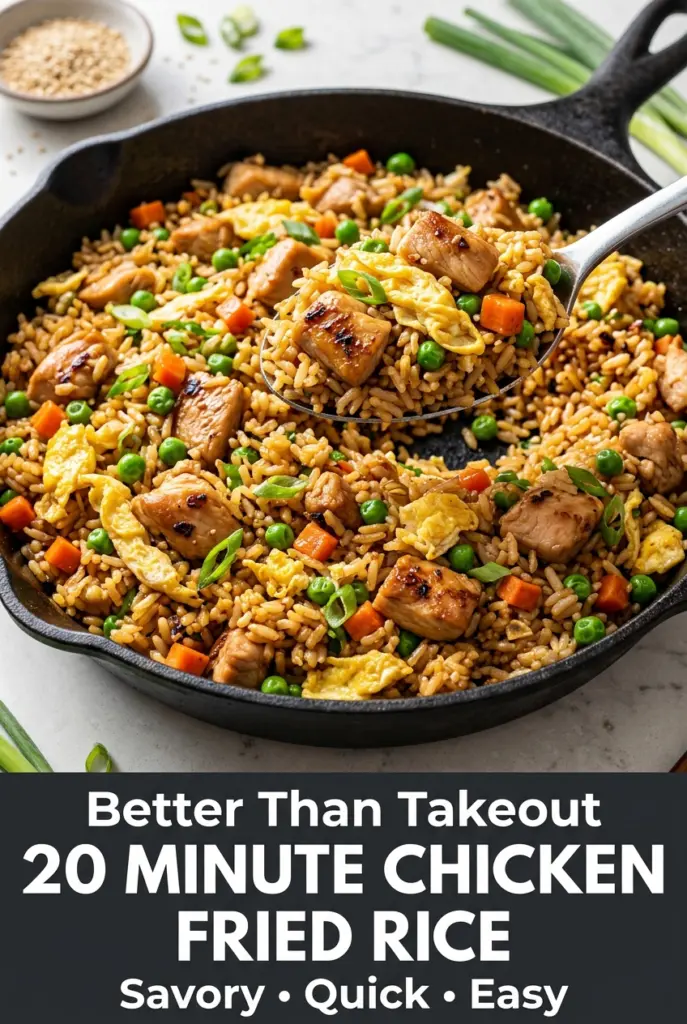
Chicken fried rice earns its place in the weeknight rotation because it turns a handful of cold leftovers into a hot skillet dinner with chewy rice, tender chicken, soft egg, and those little browned edges that taste like takeout in the best way. The trick is getting the rice dry enough to fry instead of steam, then moving fast enough that everything stays distinct instead of collapsing into a heavy pan of mush.
This version keeps the ingredient list tight and the technique straightforward. Small chicken pieces cook quickly and stay juicy, the eggs are scrambled first so they stay tender, and the vegetables go in just long enough to lose their raw edge without going soft. Using low-sodium soy sauce and toasted sesame oil at the end gives you control over the salt and keeps the sesame flavor bright instead of cooked off.
Below, I’m breaking down the one detail that matters most, plus the swaps that still give you a good skillet of fried rice when the fridge isn’t cooperating. Once you get the rhythm of it, this turns into one of those dinners you can make without thinking too hard.
The rice stayed separate and fluffy, and the chicken was still juicy after tossing everything back in. I used day-old rice like you suggested and the whole pan tasted like real takeout, not mushy leftovers.
Save this chicken fried rice for the nights when you need a fast skillet dinner with crispy rice, tender chicken, and zero takeout wait time.
The Rice Has to Be Cold, or It Won’t Fry
The biggest mistake with fried rice is using rice that is still warm or even slightly damp. That moisture turns to steam in the pan, and steam keeps the grains soft and sticky instead of separate and lightly toasted. Cold rice, especially rice that has had time to dry out in the fridge, gives you the loose texture you want.
The other thing that matters is heat. Once the rice goes in, the pan should stay hot enough that you can hear it sizzle as you toss it. If the skillet looks crowded, the rice will sit in a mound and steam from the middle outward. A wide skillet or wok gives the rice room to move, which is half the battle.
- Cold cooked rice — Day-old long-grain white rice is ideal because the grains stay distinct. Fresh rice can work in a pinch if you spread it on a tray and chill it until dry to the touch, but it won’t fry as cleanly.
- Toasted sesame oil — This is used at the end because its flavor fades if it cooks too long. Regular sesame oil isn’t the same here; the toasted version gives the dish that unmistakable nutty finish.
- Frozen peas and carrots — These are one of the few places where the frozen bag is the smart choice. You want vegetables that heat through quickly without turning watery, and frozen works better than fresh diced carrots for that speed.
- Low-sodium soy sauce — The low-sodium version gives you room to season the chicken and still keep the whole dish balanced. If you use regular soy sauce, cut back a little and taste before adding more.
Build It in the Right Order So Nothing Turns Rubbery
Cook the Chicken First
Start with the chicken in hot oil and give it enough space to sear instead of crowding. You want golden edges and an opaque center, not pale steaming pieces. If the pan cools down or the chicken starts leaking a lot of liquid, keep cooking until the liquid evaporates before moving on. Pull it out as soon as it reaches 165°F so it stays juicy when it goes back in later.
Scramble the Eggs Before the Rice
The eggs go in on their own because they need a brief, gentle cook. Soft scrambled eggs disappear into fried rice if you cook them until dry, so stop when they still look a little glossy. Transfer them out right away. They will finish heating with the rice, and that keeps them tender instead of bouncy.
Toast the Rice, Then Finish Fast
Once the rice hits the skillet, spread it out and let it sit for a few seconds before tossing. That little pause helps the grains pick up a bit of color. After that, toss often and keep the heat up so the rice doesn’t clump. Add the soy sauce and sesame oil near the end, then toss just until every grain looks coated and the pan smells savory and nutty.
Make It Gluten-Free
Use gluten-free tamari in place of soy sauce. The flavor stays savory and balanced, and the sesame oil still carries the dish, so you won’t miss much. Just check that your sesame oil and any frozen vegetable blend are labeled gluten-free if that matters for your kitchen.
Swap the Chicken for Shrimp
Shrimp works well if you want a lighter version, but it cooks even faster than chicken. Add it after the onions and cook only until it turns pink, then remove it so it doesn’t turn rubbery. Stir it back in at the end with the eggs.
Use Brown Rice for a Heartier Bowl
Brown rice gives you more chew and a nuttier taste, but it needs to be just as cold and dry as white rice. The dish will feel a little heavier and less fluffy, which works well if you want something more filling. Add a splash more oil if the grains seem too tight in the pan.
Skip the Chicken and Keep It Vegetarian
Leave out the chicken and add diced tofu or extra vegetables if you want a vegetarian version. Firm tofu should be pressed and browned first so it keeps some texture in the skillet. The result is still satisfying, but it will lean a little lighter and less meaty than the original.
Storage and Reheating
- Refrigerator: Store leftovers in an airtight container for up to 4 days. The rice firms up a bit as it chills, which is normal.
- Freezer: It freezes well for about 2 months if you cool it first and pack it flat in sealed containers. The vegetables soften slightly after thawing, but the texture still holds up.
- Reheating: Reheat in a skillet with a teaspoon or two of oil over medium-high heat, breaking up the rice as it warms. The microwave works, but it can make the rice gummy unless you cover it loosely and stop to stir halfway through.
Questions I Get Asked About This Recipe
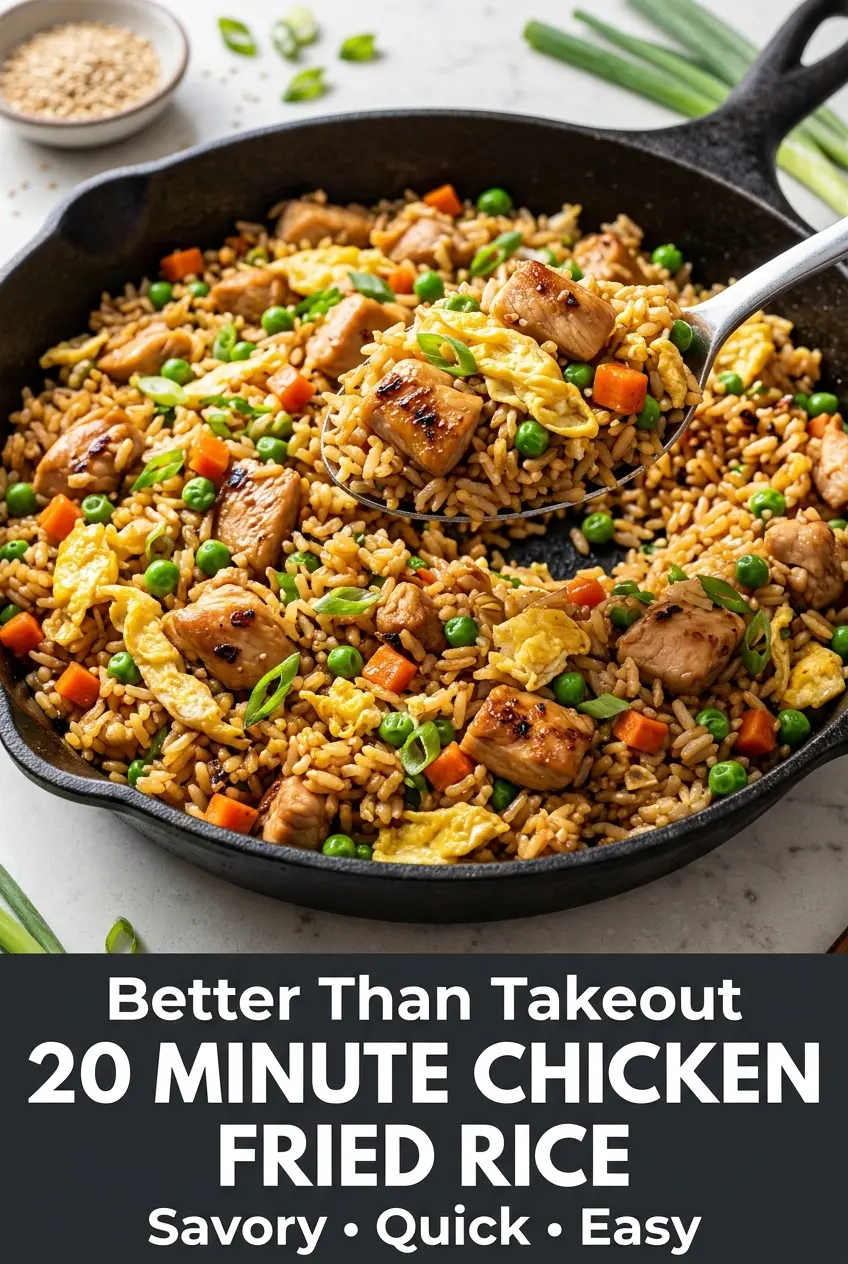
20 Minute Chicken Fried Rice
Ingredients
Equipment
Method
- Heat 1 tbsp vegetable oil in a large skillet over medium-high heat. Season the chicken breast with salt and black pepper.
- Cook the chicken for 5–6 minutes, stirring occasionally, until golden and cooked to 165°F. Transfer it to a plate.
- Add the beaten eggs to the skillet and cook for 1–2 minutes, stirring gently, until softly scrambled. Transfer them to the plate with the chicken.
- Heat the remaining 1 tbsp vegetable oil. Add the yellow onion and cook for 2 minutes until slightly softened.
- Stir in the garlic and frozen peas and carrots. Cook for 1–2 minutes until the garlic is fragrant and the vegetables are hot.
- Add the cold cooked long-grain white rice. Cook over high heat for 2–3 minutes, tossing frequently until the grains separate and begin to lightly toast.
- Return the chicken breast and eggs to the skillet. Pour in the low-sodium soy sauce and toasted sesame oil.
- Toss everything for 1–2 minutes until evenly coated and hot. Stir in the green onions and serve immediately.