
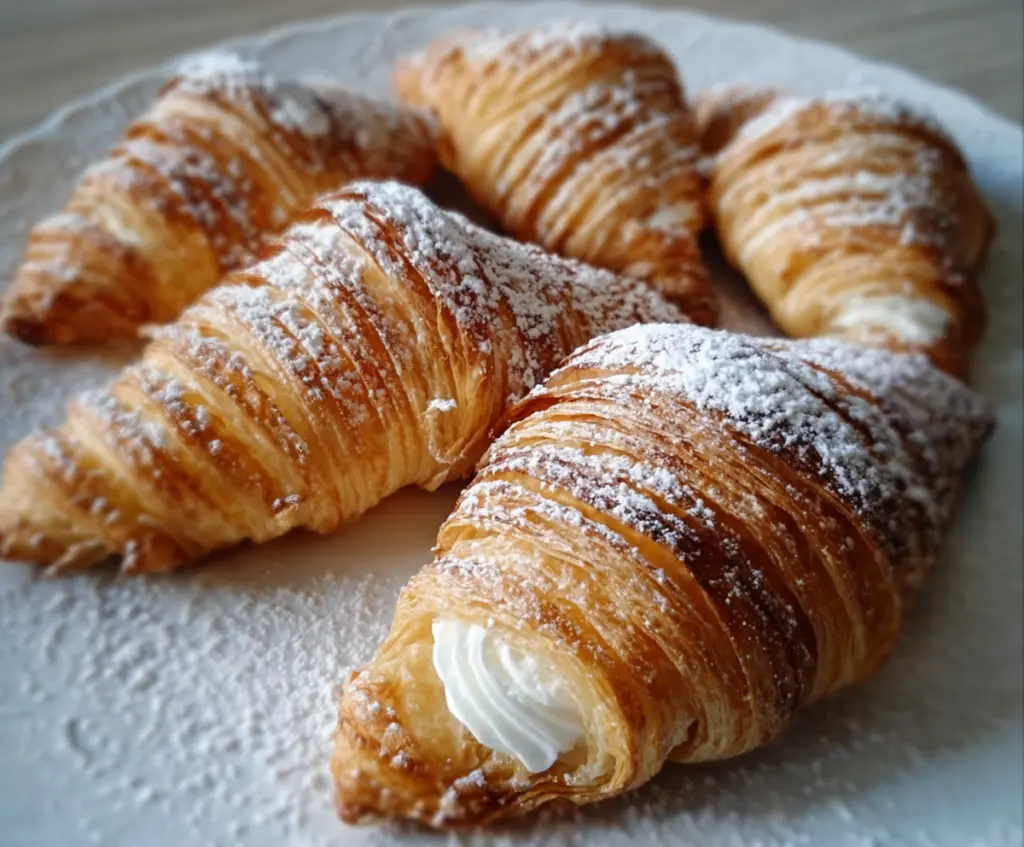
Authentic Italian Sfogliatelle are delicate, shell-shaped pastries known for their crisp, flaky layers and a sweet, creamy ricotta filling that often has hints of citrus and cinnamon. These treats come from the region of Naples and are instantly recognizable by their beautiful ridges that resemble a seashell. When you bite into one, you get that wonderful contrast between the flaky outside and the soft, flavorful filling inside.
I love making sfogliatelle because, even though they look fancy, they are a fun challenge. The dough is rolled really thin and folded several times to get those signature layers, which is a bit like a mini baking workout! I always find it satisfying to see how the dough puffs up in the oven, creating all those crispy layers. For me, the best part is the filling – sweet, creamy, and just a little tangy from the ricotta and citrus zest. It reminds me of my travels in Italy and sitting in a quiet café enjoying a warm pastry.
One of my favorite ways to enjoy sfogliatelle is fresh from the oven, with a light dusting of powdered sugar on top and a cup of strong espresso or cappuccino on the side. They make a perfect morning treat or an afternoon pick-me-up. Serving them warm really brings out the crispiness and the delightful flavors. If you’ve never tried making these at home, give it a go – sharing sfogliatelle with friends and family always brings smiles around the table, and I promise they’re worth the little effort it takes!
Key Ingredients & Substitutions
- Dough Flour
- Use all-purpose flour for the right balance of strength and tenderness. If needed, you can substitute part of it with bread flour for more structure, but stick mostly to all-purpose.
- Butter
- Choose unsalted butter for better control of salt. Cold butter is essential for the layers. You can swap for European-style butter for extra flavor.
- Ricotta Cheese
- Use well-drained, high-quality ricotta. If unavailable, a thick mascarpone or ricotta salata can be mixed with cream cheese for similar texture.
- Semolina Flour
- This adds body to the filling. If you don’t have semolina, you can try fine cornmeal or omit it, but semolina is best.
- Candied Orange Peel
- Traditional but optional—it adds a lovely citrus touch. You can use finely chopped dried apricots or omit if preferred.
How Can I Create Those Crisp, Flaky Sfogliatelle Layers?
The secret lies in laminating the dough with cold butter to create many thin layers. Here’s how you get it right:
- Roll dough thin and enclose a cold butter block in the center.
- Roll and fold the dough into thirds four times, chilling between each fold to keep the butter firm.
- Keep work surfaces and hands cool to prevent melting the butter.
- Once laminated, roll the dough very thin and cut into strips to assemble the shells.
- Bake at a high temperature so the layers puff up and become golden and crisp.
Patience and keeping the dough cold are key. This layering technique gives sfogliatelle their signature shell-like texture, and you’ll see the delicate ridges form beautifully when baked.
Equipment You’ll Need
- Rolling pin – crucial for rolling the dough very thin to create the signature layers.
- Pastry brush – helps with spreading water or egg wash if needed and managing dough edges.
- Sharp knife or pizza cutter – for cutting precise dough strips and shaping the shells easily.
- Mixing bowls – you’ll use these for the dough and filling without making a mess.
- Baking sheet lined with parchment paper – ensures even baking and easy cleanup.
- Pastry board or clean, flat surface – to roll and shape the delicate dough without sticking.
Flavor Variations & Add-Ins
- Add lemon zest instead of orange for a brighter, tangy twist in the filling.
- Mix in chopped pistachios or toasted almonds for extra crunch and a nutty flavor.
- Use a bit of ricotta mixed with chocolate chips for a sweeter, dessert-style filling.
- Try a spiced filling using nutmeg or star anise for mild warming notes, great for cooler months.

Authentic Italian Sfogliatelle
Ingredients You’ll Need:
For the Dough:
- 2 cups all-purpose flour
- 1/4 teaspoon salt
- 2/3 cup water, room temperature
- 1 tablespoon unsalted butter, softened
- 1 teaspoon white vinegar or lemon juice
For the Butter Layers (Laminated Butter):
- 3/4 cup (1 1/2 sticks) unsalted butter, cold
For the Filling:
- 1 1/4 cups ricotta cheese, well drained
- 1/2 cup semolina flour
- 3/4 cup sugar
- 1/4 cup candied orange peel, finely chopped (optional but traditional)
- 1 teaspoon vanilla extract
- 1/2 teaspoon ground cinnamon
- 2 large eggs, lightly beaten
- Zest of 1 orange and 1 lemon
- Pinch of salt
For Finishing:
- Powdered sugar for dusting
- Whipped cream for filling (optional extra as shown in image)
How Much Time Will You Need?
This recipe takes about 2 to 3 hours total. You’ll spend roughly 1 hour preparing and resting the dough, 45 minutes to prepare and chill the laminated dough layers, about 30 minutes making the filling and shaping the pastry, plus 25-30 minutes baking time. It’s a bit of a process but worth every minute for those crisp, flaky layers and delicious filling!
Step-by-Step Instructions:
1. Prepare the Dough:
Combine the flour and salt in a bowl. Add water, softened butter, and vinegar or lemon juice. Mix until a smooth dough forms. Knead for several minutes, then cover with plastic wrap and let it rest at room temperature for 1 hour.
2. Prepare the Butter Block for Lamination:
Place the cold butter between two sheets of parchment paper. Use a rolling pin to pound it into a 6×6 inch square. Chill until firm but flexible.
3. Laminate the Dough:
On a lightly floured surface, roll the rested dough into a rectangle about twice the size of the butter block. Place the butter in the center and fold the dough over to enclose it. Roll this package out into a long rectangle, then fold into thirds like a letter. Wrap and chill 20 minutes.
Repeat this rolling, folding, and chilling process 3-4 times to create thin layers. Keep the dough cold at all times to prevent butter from melting.
4. Make the Filling:
In a saucepan, mix semolina flour with 1 cup water and a pinch of salt. Cook over medium heat while stirring until thickened (5-7 minutes). Let it cool.
In a mixing bowl, blend the ricotta, sugar, candied peel, vanilla, cinnamon, orange and lemon zest. Add the cooled semolina and beaten eggs, mixing until smooth.
5. Shape Sfogliatelle Shells:
Roll out the laminated dough very thinly into a roughly 12×16 inch rectangle. Cut strips about 2 inches wide. Lay strips slightly overlapping on a rolling pin to form a cylinder of layered dough. Pinch edges to seal and cut into 3-inch segments.
Flatten each segment and shape into a shell by folding edges to form a conical shape, leaving the center hollow for filling.
6. Fill and Bake:
Preheat oven to 400°F (200°C). Fill each shell carefully with 1-2 tablespoons of the ricotta filling. Place shells seam-side down on a parchment-lined baking sheet.
Bake for 25-30 minutes until golden brown and crispy.
7. Finish and Serve:
Let the sfogliatelle cool slightly. Dust with powdered sugar. Optionally, fill or top with whipped cream for extra richness, then serve warm alongside espresso or coffee.
Can I Use Frozen Ricotta for the Filling?
It’s best to use fresh, well-drained ricotta for the filling. If you only have frozen ricotta, thaw it completely in the fridge overnight and drain any excess liquid before using to avoid a runny filling.
How Should I Store Leftover Sfogliatelle?
Store leftover sfogliatelle in an airtight container at room temperature for up to 1 day to maintain crispness. For longer storage, keep them in the fridge up to 3 days and gently reheat in a low oven to refresh the crisp layers.
Can I Make the Dough Ahead of Time?
Yes! You can prepare the laminated dough up to the shaping step, wrap it tightly, and refrigerate for up to 24 hours. Let it come to room temperature before shaping and baking for best results.
Can I Substitute Semolina Flour in the Filling?
Semolina adds structure and texture to the filling. If you don’t have it, you can omit it or substitute with fine cornmeal, but the texture might be slightly less traditional.